- Köchel Number
- K9 19b | K6 19b
- Genre
- Orchestral Music
- Form
- Symphonies
- Key
- C Major
- Date
- 13 May 1765
- Place
- London
- Age
- 9
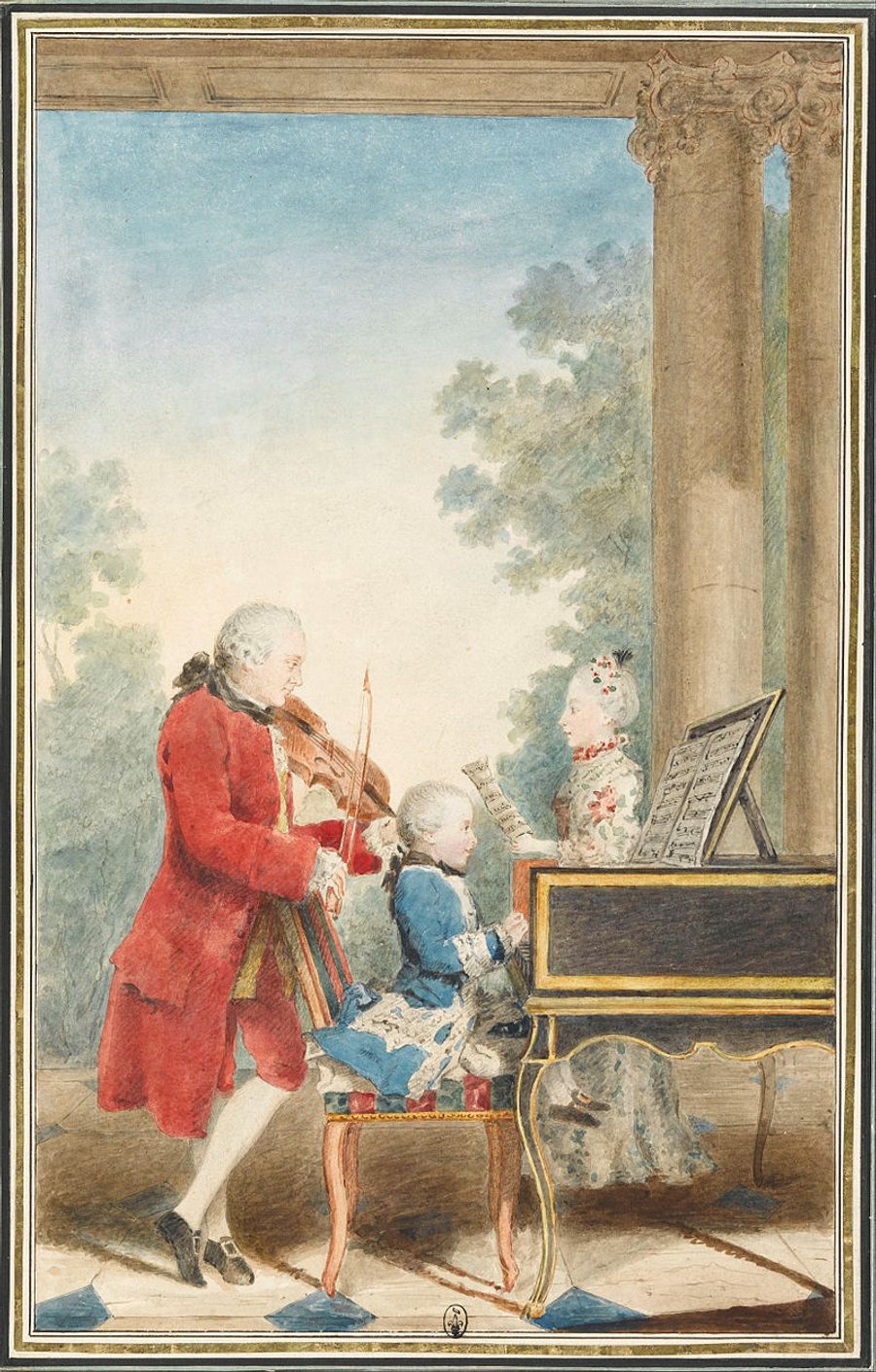
Mozart’s Symphony in C (fragment), K. 19b, is a tantalizing remnant from his London stay of 1765, written when he was nine years old. Only a tiny opening survives—just enough to hint at a public, orchestral ambition that far exceeded what the source material now allows us to hear.
What Is Known
K. 19b is generally dated to early 1765 in London, during the Mozart family’s extended English visit, and is associated with the young Wolfgang Amadeus Mozart’s first attempts at the symphony as a public genre.[1] What survives is not a complete score but merely an incipit: a three-bar Allegro opening in C major, preserved through an eighteenth-/nineteenth-century catalogue tradition rather than through a performable manuscript source.[2]
Because the fragment is so short, essentials that normally define a symphony—overall form, number of movements, and even the exact instrumentation—cannot be established from the music itself. Alfred Einstein suggested an orchestra like Mozart’s other London symphonies (strings with pairs of oboes and horns), while later discussion has noted that festive C major scoring could also invite trumpets and timpani; neither proposal can be verified from the surviving bars.[1]
Musical Content
The surviving music consists of a brief C-major Allegro gesture—more a “curtain-raiser” than a theme in full. It projects a square, march-like confidence typical of mid-1760s symphonic openings, suggesting Mozart’s rapid absorption of the London orchestral style he encountered as a child prodigy.[1] Beyond that initial upbeat profile, however, the fragment ends before any tonal plan, contrast of ideas, or orchestral dialogue can emerge, leaving its larger design—and its exact place within Mozart’s London juvenilia—an open question.
Sources
[1] Wikipedia: 'Symphony, K. 19b (Mozart)' — summary of source history, dating, and scholarly remarks on possible scoring and style.
[2] Wikipedia: 'Mozart symphonies of spurious or doubtful authenticity' — notes that only a three-bar Allegro opening survives and that attribution has been debated due to limited evidence.