- Köchel Number
- K9 19d | K6 19d
- Genre
- Piano Music
- Form
- Works for Two Pianos & Piano Four Hands
- Key
- C Major
- Date
- 13 May 1765
- Place
- London
- Age
- 9
The Piano Sonata in C major for Four-Hands (K. 19d) is a work traditionally linked to Wolfgang Amadeus Mozart (1756–1791) during the family’s London stay in 1765, when he was nine. Its attribution, however, remains doubtful, and the piece is often discussed with caution in modern reference literature.[1]
Mozart's Life at the Time
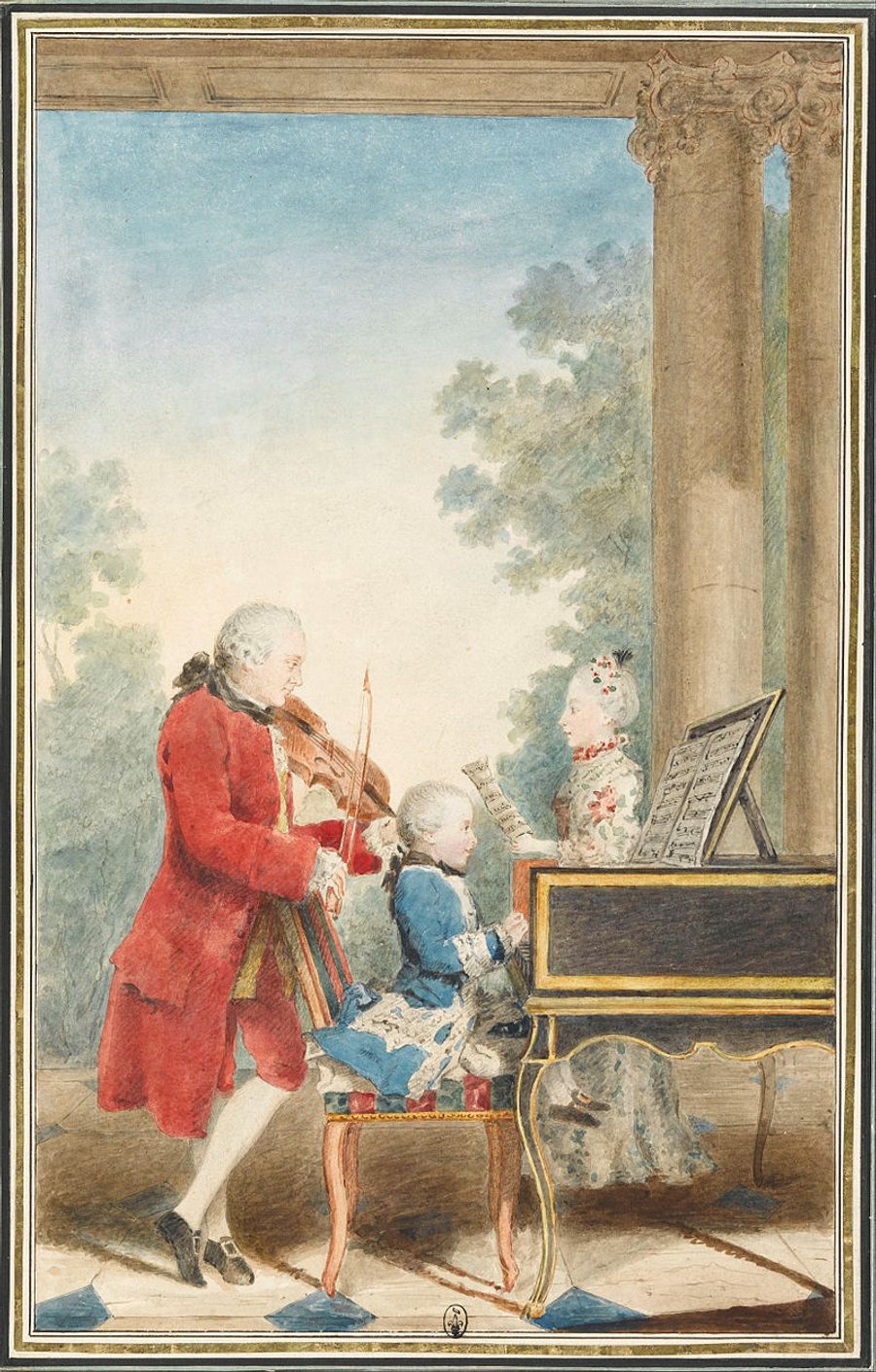
In 1765 the nine-year-old Mozart was in London as part of the Mozart family’s Grand Tour, appearing publicly with his sister Maria Anna (“Nannerl”) as a keyboard duo. Later documentary discussions of the London concerts have prompted speculation that a four-hand piece may have been among their display works, but scholars remain careful about identifying any specific surviving sonata with certainty.[2][3]
Musical Character
What survives under the title Sonata in C major (K. 19d) presents itself as a compact keyboard duet in an early galant idiom, written to be played a quattro mani at one instrument. In performance terms, its interest lies less in harmonic daring than in the lively, audience-facing interplay between primo and secondo—textures that can invite showmanship (including hand-crossing effects) and a clear sense of conversational exchange.[4]
Taken at face value, the work fits plausibly beside the kind of brilliant, easily grasped keyboard writing that would have served the Mozarts well in London salons; yet because the provenance is uncertain, it is best heard as a fascinating document of the milieu around the child Mozart rather than as firm evidence of his hand.[1]
Sources
[1] Wikipedia: "Sonata in C major for keyboard four-hands, K. 19d" (overview; notes traditional London dating and doubtful status)
[2] MozartDocuments: 13 March 1765 (context for London performances; mentions speculative inclusion of K. 19d and notes uncertain authenticity)
[3] MozartDocuments: 4 August 1765 (Croÿ reference to a four-hand keyboard piece; discussion connected to the authenticity question of K. 19d)
[4] Oinas, Music and Practice (PDF): discussion of hand-crossing/showmanship in early sonatas, citing K. 19d as an example