- Köchel Number
- K9 19a | K6 19a
- Genre
- Orchestral Music
- Form
- Symphonies
- Key
- F Major
- Date
- Early 1765
- Place
- London
- Age
- 9
Mozart’s Symphony in F major (K. 19a) was likely written in London in early 1765, when he was nine, during the family’s celebrated English stay. A slight, three-movement work in the early symphonic idiom, it shows a child composer absorbing London’s fashionable style—bright outer movements, a brief lyric slow movement, and straightforward orchestral writing.
Mozart's Life at the Time
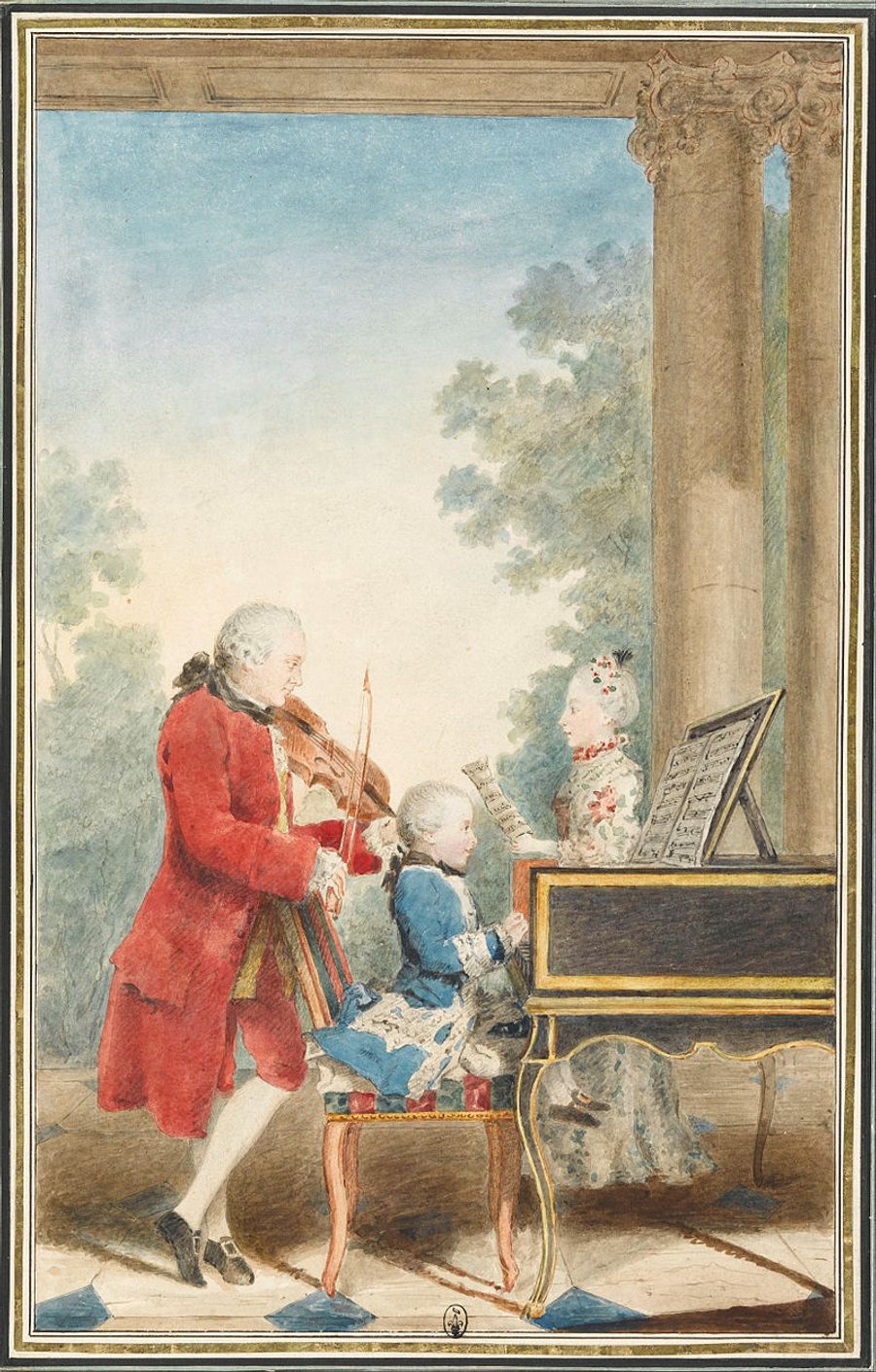
In 1765, the nine-year-old Wolfgang Amadeus Mozart (1756–1791) was in London as part of the Mozart family’s grand tour, appearing in public as a keyboard prodigy while also producing a handful of compact symphonies for the local taste [1]. The surviving source tradition for K. 19a is closely bound to Leopold Mozart’s copying and presentation of the boy’s works; a copy in Leopold’s hand was discovered in 1980–81, bringing this otherwise “lost” symphony back into view [1] [2].
Musical Character
K. 19a is a short, three-movement symphony in the expected fast–slow–fast plan: Allegro assai, Andante, Presto [3]. The opening Allegro assai is built from crisp, repeated-note and arpeggiated gestures that suit the bright, public tone of London orchestral music, while the Andante offers a simpler singing line and lighter texture before the quick Presto closes with athletic, overtly rhythmic writing [1]. Heard as juvenilia, its chief interest lies less in thematic individuality than in how confidently Mozart handles phrase symmetry, cadence planning, and a clean separation of foreground melody from accompaniment patterns—skills he would deepen rapidly in the symphonies and concertos of the next decade [2].
Sources
[1] Wikipedia: overview, London dating (probable), three movements, discovery history (copy in Leopold’s hand).
[2] Naxos booklet PDF (“Mozart in London”): notes on rediscovery (1981) and context of the work among early London pieces.
[3] Digital Mozart Edition (Mozarteum): NMA IV/11/1 table of contents listing K. Anh. 223 (19a) and movement headings.