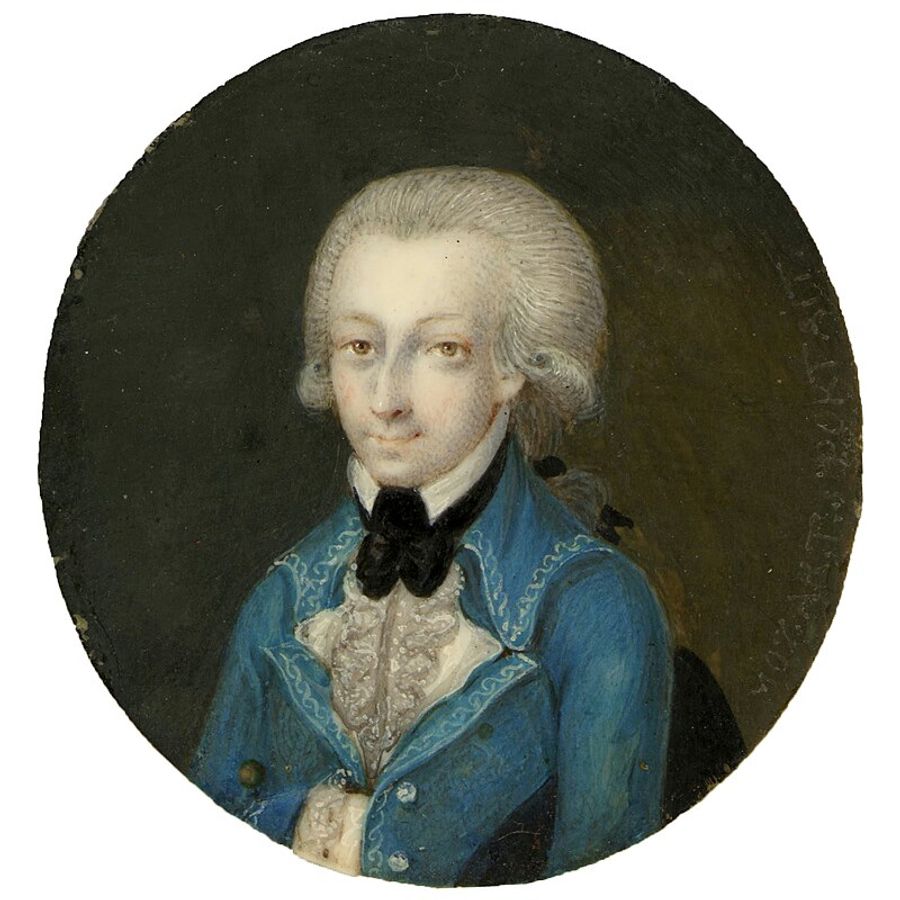
- Köchel Number
- K9 189 | K6 167b
- Genre
- Orchestral Music
- Form
- Serenades, Cassations & Divertimenti
- Key
- D Major
- Date
- July and August 1773
- Place
- Vienna
- Age
- 17
Mozart’s March in D major, K. 189 (K⁶: 167b) is a compact ceremonial opener from the summer of 1773, composed in Vienna when the composer was 17. Often linked in sources and performance tradition to the so-called “Antretter” Serenade in D, K. 185, it shows how Mozart could compress brilliance, orchestral color, and public “outdoor” rhetoric into a miniature form.[1][2]
Background and Context
In Mozart’s Salzburg years, “serenade culture” was not an aesthetic sideline but a social necessity: outdoor and semi-outdoor music for university ceremonies, civic celebrations, aristocratic name-days, and formal arrivals. Marches served a practical function in that world—announcing the start of festivities, accompanying procession (Aufzug), or punctuating the moment when guests were received.
K. 189 belongs to this utilitarian but highly refined genre. The work’s D major tonality already signals its intended public profile: in the later eighteenth century, D major was a favored “festive” key for bright natural trumpets and horns, giving even brief pieces a ceremonial sheen. In 1773 Mozart was fresh from his third Italian journey (late 1772–spring 1773) and was briefly in Vienna in the summer; the Viennese stop produced several works that mingle Italianate fluency with a growing confidence in orchestral writing.[1]
Composition and Premiere
The Köchel Catalogue places March in D, K. 189 in July–August 1773 and locates it in Vienna, when Mozart was 17.[1] While the precise first performance is not securely documented, the march is frequently treated as belonging with the D-major Serenade, K. 185 (K⁶: 167a), and modern critical commentary from the Digital Mozart Edition discusses the march explicitly in relation to that serenade’s sound world and key scheme.[2]
That association is more than cataloguing convenience. A serenade’s opening march functioned like an architectural façade: it establishes the tonal “home,” projects splendor with brass, and prepares listeners—often in motion rather than seated—for the larger, more various musical sequence to follow. Heard in this light, K. 189 deserves attention not as a “small” work, but as a concentrated example of Mozart’s ability to write for a specific occasion with maximum communicative clarity.
Instrumentation
March in D, K. 189 is scored for a festive outdoor ensemble that centers on bright winds and brass over strings:
- Winds: 2 flutes
- Brass: 2 horns, 2 trumpets
- Strings: violins I & II, viola, cello, double bass
(IMSLP’s work entry also lists timpani in its instrumentation table, though the same page summarizes the scoring more generally as winds/brass plus strings; in practice, editions and parts should be checked for the specific timpani writing used in a given performance.)[3]
Two features are worth noting. First, the presence of flutes (rather than the more “standard” oboes in many Salzburg serenades) lends a softer, more silvery edge to the upper texture—useful outdoors, where the flute’s overtone profile can cut through ambient sound differently than an oboe’s reedy bite. Second, the trumpets in D are not merely decorative: in a march of this type, they function as musical heraldry, turning a few bars of harmonic rhythm into something that feels like public ceremony.
Form and Musical Character
Although K. 189 is short, it operates with a shrewd sense of public rhetoric. One can think of it as a miniature “processional sonority study”: how quickly can the composer establish D major as a bright, stable field; how effectively can he alternate massed sonority with lighter responses; and how cleanly can he articulate cadences that will read even as people move, talk, or enter a courtyard.
Typical Classical march gestures shape the piece’s surface:
- Strong periodic phrasing (balanced, quickly grasped units) that projects order.
- Cadential clarity—Mozart underlines arrivals with brass punctuation and predictable harmonic goals.
- Dialogues of color—strings provide continuity, while the wind-and-brass choir supplies “public” accents.
What makes it distinctive within Mozart’s teenage output is not harmonic daring but finish: the sense that every bar is engineered to communicate. Even in such occasional music, Mozart avoids mere block scoring; he tends to distribute material so that the ear catches both a ceremonial outline (brass-led) and a finer-grained inner life (string figuration and supportive countermotion).
Placed alongside the more expansive D-major serenades of the period, K. 189 also illustrates an important Mozartian habit: he often treats “functional” movements—marches, minuets, brief Adagio introductions—not as expendable fillers but as opportunities to perfect genre conventions. In a culture where a serenade might last an hour or more, the opening march could be the movement most listeners heard with full attention. Mozart writes as if he knows this.
Reception and Legacy
K. 189 has never been a repertory staple in the way that Mozart’s late symphonies or mature concertos are, yet it has persisted in editions and recordings precisely because it solves a perennial need: a concise, idiomatic ceremonial piece by a canonical composer. Modern performers and editors frequently frame it in tandem with the “Antretter” Serenade, K. 185, which keeps the march in circulation as part of a coherent “D-major festive” package.[2][4]
For listeners, its value lies in what it reveals about Mozart at 17: not only melodic ease, but a professional instinct for occasion, instrumentation, and audibility. In miniature, March in D, K. 189 captures an eighteenth-century reality sometimes obscured by later concert-hall tradition—Mozart the public craftsman, writing music meant to be heard in real spaces, by real crowds, at real events, and still making it unmistakably his own.[1]
Sources
[1] Köchel catalogue table entry placing March in D (K. 189 / K⁶: 167b) in Vienna, July–August 1773, age 17 (as listed within the catalogue overview).
[2] Digital Mozart Edition (Mozarteum) — New Mozart Edition critical commentary PDF for Cassations, Serenades and Divertimentos, discussing the March K. 189 (167b) in relation to the “Antretter” Serenade K. 185 (167a).
[3] IMSLP work page for March in D major, K. 189/167b — instrumentation details and edition references.
[4] Presto Music sheet-music listing coupling the D-major Serenade K. 185 with March K. 189 (publication/availability evidence).