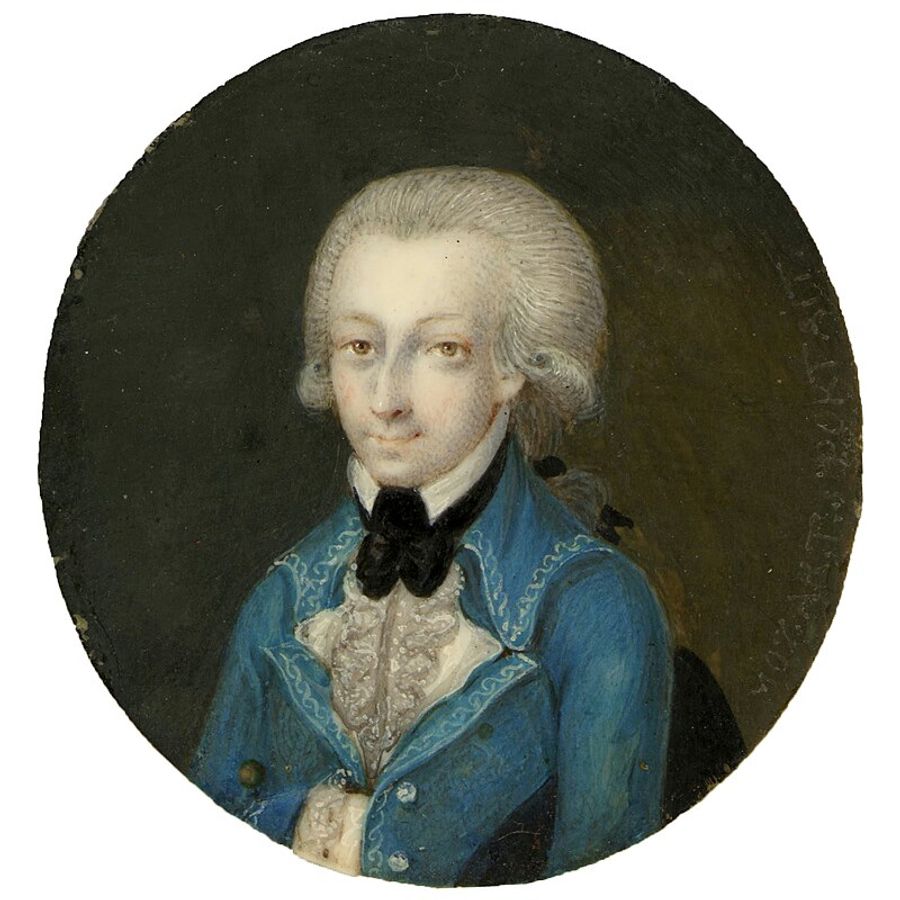
- Köchel Number
- K9 185 | K6 167a
- Genre
- Orchestral Music
- Form
- Serenades, Cassations & Divertimenti
- Key
- D Major
- Date
- July and August 1773
- Place
- Vienna
- Age
- 17
Mozart’s Serenade No. 3 in D major (K. 185; also catalogued as K. 167a) belongs to the group of festive outdoor works—serenades, cassations, and Finalmusiken—he wrote as a 17-year-old in 1773. Composed during the Mozarts’ Vienna sojourn in July–August 1773, the “Antretter” Serenade pairs ceremonial brilliance with a surprisingly concertante streak, including passages that spotlight a solo violin within the larger orchestral texture [1] [2].
Background and Context
In Mozart’s Salzburg years, the serenade was not a “light” genre in the modern, dismissive sense; it was a practical and prestigious vehicle for public celebration. Large-scale orchestral serenades could function as outdoor “greeting music” (Tafelmusik or Finalmusik) for university ceremonies, aristocratic name-days, graduations, and municipal festivities. They allowed a composer to display command of orchestral color, long-range pacing, and audience-friendly rhetoric—qualities that Mozart was refining with astonishing speed in the early 1770s.
K. 185 sits within a particularly intense creative phase. The Köchel catalogue places the work in Vienna in July and August 1773, during the same visit that produced several of the so-called “Vienna” string quartets (K. 168–173) [1]. In other words, the “Antretter” Serenade stands at a crossroads: written for ceremonial use and public effect, yet emerging from the same months in which Mozart was absorbing Viennese style and testing more ambitious formal thinking.
The nickname “Antretter” points to a dedicatee or commissioning circle rather than a musical motto. Later tradition connects the piece with the Antretter family—often naming Judas Thaddäus (or Thaddäus) Antretter, a Salzburg acquaintance—though the exact occasion remains uncertain in modern accounts [3]. The uncertainty is itself revealing: such works were written for immediate local function, and only secondarily for posterity.
Composition and Premiere
The work is generally dated to July–August 1773 [1]. It is frequently discussed alongside (and sometimes recorded with) a related ceremonial march in D major, reflecting a common performance pattern: a march to assemble or process, followed by multi-movement serenade music [4].
Beyond this, documentation is thin. Modern descriptions often frame K. 185 as a Finalmusik—outdoor “closing” music for a festive academic event—and propose the Antretter connection as a plausible motivation rather than a proven fact [3]. No securely documented premiere date is universally cited in reference summaries, and performers should treat any specific “first performance” scenario as conjectural unless supported by primary evidence.
Still, the broader circumstances are clear. In 1773 Mozart was writing for real players and real civic needs, not for the concert hall as an abstract institution. The serenade genre rewarded clear tonal plans, bold cadential punctuation, and a sequence of contrasting movements that could hold attention in open air and social bustle. K. 185 meets those expectations, but it also hints—especially in its concertante writing—at Mozart’s emerging fascination with the soloist-versus-ensemble drama that would soon animate the mature concertos.
Instrumentation
The surviving sources and modern performing materials classify K. 185 as a serenade for orchestra [2]. Like many Salzburg/Vienna ceremonial serenades in D major, it is conceived for a bright, outdoor-friendly sonority—D major being a natural key for trumpets and horns in eighteenth-century practice.
While editions differ in how they summarize the scoring in brief catalog listings, the work is typically presented as an orchestral serenade with winds and brass reinforcing the strings, and with notable concertante writing for solo violin in inner movements [5]. That soloistic element is one of the serenade’s distinguishing features: the music periodically steps away from purely “collective” celebration and grants an individual voice a quasi-concerto prominence.
Form and Musical Character
Serenades of this type are best understood as suites of contrasted movements rather than as a single large symphonic argument. K. 185 is commonly described as a seven-movement work, a scale that suits a ceremonial occasion: enough variety to sustain an extended event, yet flexible enough for selective performance [3].
Several features make the “Antretter” Serenade worth attention even for listeners who know Mozart primarily through the late symphonies and piano concertos.
First, it shows Mozart’s gift for public rhetoric—the ability to write music that projects across space. Open-air ceremonial style favors sturdy periodic phrasing, emphatic downbeats, and a kind of harmonic “signposting” that communicates even when the audience’s attention is divided. In D major, Mozart can draw on the brilliant end of the eighteenth-century orchestral palette: fanfare-like gestures, bright tutti writing, and clear-cut cadences.
Second, and more distinctively, K. 185 blends that rhetoric with concertante dramaturgy. Modern commentary on the autograph tradition notes that the second and third movements include a concertante solo violin part, suggesting a deliberate shift from communal celebration to virtuoso display [5]. In a serenade context, this can feel like a spotlight turning toward an honored individual—an apt musical metaphor for a graduation or formal congratulation—before the full ensemble resumes its public voice.
Third, K. 185 helps map Mozart’s stylistic development in 1773. Written alongside the Vienna quartets and near the time of his Salzburg symphonies of 1773, it demonstrates how quickly he could adjust language to genre: the serenade’s “occasional” function invites extroversion and variety, yet the craftsmanship is not casual. Even when the music aims to please rather than to probe, Mozart’s handling of texture—how winds brighten a cadence, how strings articulate a transition, how a solo line is framed by accompaniment—shows a composer already thinking orchestrally.
Reception and Legacy
The “Antretter” Serenade has never achieved the canonical status of later D-major serenades such as the Haffner Serenade (K. 250) or the Posthorn Serenade (K. 320). Part of the reason is historical: works tied to specific local ceremonies often circulated less widely in Mozart’s lifetime and were not absorbed into the nineteenth-century concert repertory as readily as symphonies and concertos.
Yet K. 185 endures in scholarship and performance as an illuminating document of Mozart’s teenage mastery. It is securely placed in the Vienna period of summer 1773 by the Köchel tradition [1], and modern editions and archives preserve it as a significant member of his early orchestral serenade output [2]. For today’s listeners, its appeal lies in the balance it strikes: festive outdoor music that can still surprise, especially when the serenade’s “public” stance opens to reveal the more intimate, agile voice of a solo violin.
In short, the “Antretter” Serenade deserves attention not because it overturns the genre, but because it exemplifies Mozart’s ability—already at 17—to transform functional occasion-music into something shaped, vivid, and characterful. It is the sound of a young composer learning how to make an orchestra speak to a city.
Sources
[1] Köchel catalogue entry listing Serenade No. 3 in D, “Antretter” (K. 185 / 167a), dated July–August 1773, Vienna.
[2] IMSLP work page for Mozart: Serenade in D major, K. 185/167a (“Antretter”) — score sources and bibliographic overview.
[3] Schubertiade Music & Arts: descriptive note on “Antretter” Serenade K. 185, including the commonly cited (but uncertain) occasion and seven-movement characterization.
[4] Presto Music listing for “Serenade D major (Finalmusik) and March KV 185 / KV 189,” documenting the common pairing of serenade and march in performance materials.
[5] Profiles in History auction catalogue (Historical 91) describing an autograph-related source and noting concertante solo violin writing in movements of K. 185.