- Köchel Number
- K9 188 | K6 240b
- Genre
- Divertimenti & Serenades
- Form
- Divertimenti & Serenades for Winds
- Key
- C Major
- Date
- mid 1773
- Place
- Salzburg
- Age
- 17
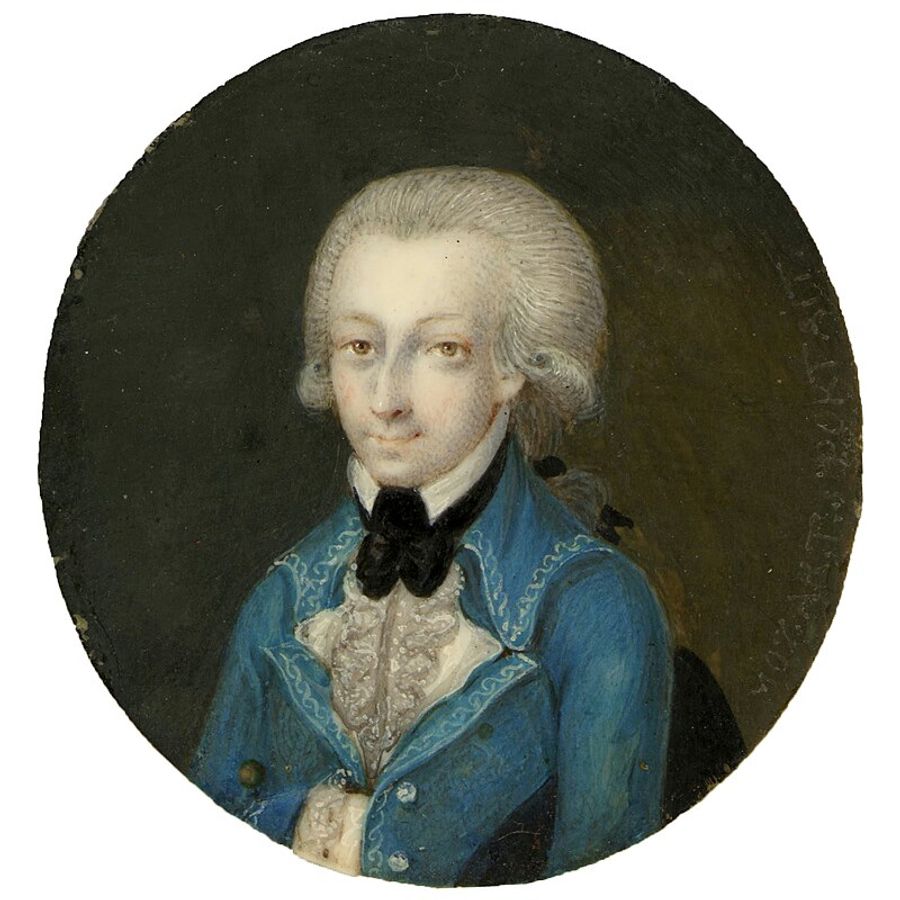
Mozart’s Divertimento No. 6 in C major (K. 188; K6 240b) is a Salzburg work from 1773, written when the composer was 17. Scored for an almost “ceremonial” wind-and-brass band—two flutes, five trumpets, and timpani—it stands apart from the more familiar Salzburg divertimenti and serenades, and rewards attention for its bold sonority and concise, outdoor-minded craftsmanship.
Background and Context
In 1773 Wolfgang Amadeus Mozart (1756–1791) was back in Salzburg after his third Italian journey, entering a period in which he produced a striking amount of music for courtly and civic use: symphonies, serenades, church works, and assorted “occasional” pieces designed for public or semi-public spaces. In that environment, the divertimento was less a “light” genre than a flexible social tool—music for festivities, university celebrations, aristocratic entertainments, and open-air ceremony.
K. 188 belongs to Mozart’s early exploration of wind writing, a thread that runs from the Italian-leaning works of the early 1770s toward the great Viennese Harmonie serenades of the 1780s. Yet it is anything but typical “wind serenade” repertory. Its scoring—two flutes, five trumpets, and timpani—suggests not an intimate garden ensemble but a bright, high-profile sound suited to outdoor projection and to the status-signaling resonance of trumpets and drums.[1]
What makes the piece especially interesting within Mozart’s output is precisely this blend of the utilitarian and the inventive. The music is clearly shaped for practical performance forces and for clarity at a distance, but it also reveals a young composer testing how far color alone—registral contrast, antiphonal exchanges, and the “public” rhetoric of C major—can drive musical character.
Composition and Premiere
The work is catalogued as Divertimento No. 6 in C major, K. 188 (K6 240b), and is generally placed in Salzburg in 1773.[1][2] Unlike Mozart’s best-documented Salzburg serenades, no secure first-performance record is routinely cited in standard reference summaries; the piece survives as a complete score and has long been treated as established within the authentic Mozart repertory.[1]
Even without a named occasion, the stylistic profile points toward functional ceremonial music. Trumpets and timpani were traditionally associated with court display, festive announcements, and outdoor signals; adding a pair of flutes both sweetens and slightly “civilizes” the brilliance of the brass, giving Mozart two agile melodic voices capable of ornamentation, echo effects, and light cantabile writing above the martial foundation.
Instrumentation
Mozart scores K. 188 for an ensemble that is unusual even by divertimento standards:[1]
- Winds: 2 flutes
- Brass: 5 natural trumpets (3 in C, 2 in D)
- Percussion: timpani (tuned to C–G and D–A, matching the trumpet crooks)
Two points deserve emphasis. First, the “five trumpets” are not a modern symphonic section but a natural-trumpet consort, where harmonic-series writing and registral deployment matter as much as melodic contour. Second, the timpani’s paired tunings underscore that the scoring is conceived as a cohesive ceremonial unit: trumpets and drums function together as a color-signature, not as occasional reinforcement.
Form and Musical Character
IMSLP’s work entry summarizes the piece as a six-movement divertimento with the following sequence:[1]
- I. Andante
- II. Allegro
- III. Menuetto
- IV. Andante
- V. Menuetto
- VI. (final movement listed without tempo indication in the same summary)
In outline, this is a recognizably Salzburg-style “serenade plan”: multiple movements alternating moderate-tempo pieces with dance movements, designed for flexible use and for keeping an audience’s attention over a longer span than a single concert movement. But the scoring pushes the genre toward a more specialized rhetoric.
Sonority as structure
Because the ensemble lacks the middle-range harmonic padding of oboes, horns, and bassoons, Mozart relies on register and timbre to articulate form. The flutes can carry lyrical lines or decorate cadences; the trumpets supply brilliance, harmonic pillars, and rhythmic profile; timpani sharpen cadential arrivals and heighten the sense of public occasion. As a result, musical “events” are often defined less by modulation and development than by shifts in texture—solo flute versus full ceremonial tutti, for example, or the sudden prominence of percussion in a cadence.
Dance movements with a courtly edge
The two minuets are more than routine fillers: in an outdoor divertimento, the minuet is a social signifier, reminding listeners of courtly order even amid festive noise. Here, the very presence of trumpets and timpani lends the minuet a faintly processional character—an elegant dance reframed in the colors of public ceremony.
Why the piece deserves attention
K. 188 is easy to underestimate if one approaches it expecting the harmonic richness of Mozart’s later wind serenades. Its interest lies elsewhere: it is a vivid case study in how a teenage Mozart writes idiomatically for specialized forces, exploiting what the instruments can do (projection, brilliance, rhythmic clarity) while compensating for what they cannot (sustained inner-voice counterpoint). In miniature, it shows the composer’s instinct for tailoring musical rhetoric to social function—one of the defining skills behind his mature “public” masterpieces.
Reception and Legacy
K. 188 has never occupied the mainstream position of Mozart’s Viennese wind serenades, yet it has remained present in the catalogue and performance tradition partly because it offers something rare: a Mozart divertimento that sounds closer to a ceremonial wind band than to a courtly chamber ensemble. Its modern availability is aided by the survival of complete materials and by the circulation of editions and scores (including modern urtext sources and widely accessible public-domain scans).[1]
For today’s listener, the work’s appeal is immediate and physical: bright C-major trumpets, timpani punctuation, and the airy sheen of paired flutes. For performers and historically minded audiences, it also prompts broader questions about Salzburg’s festive soundscape in the early 1770s—what ensembles were available, what occasions demanded such a palette, and how Mozart learned to write “to the space” long before Vienna sharpened his theatrical instincts. In that sense, Divertimento No. 6 is not merely a curiosity: it is a small but telling window into Mozart’s developing mastery of instrumental color as a carrier of style, function, and meaning.