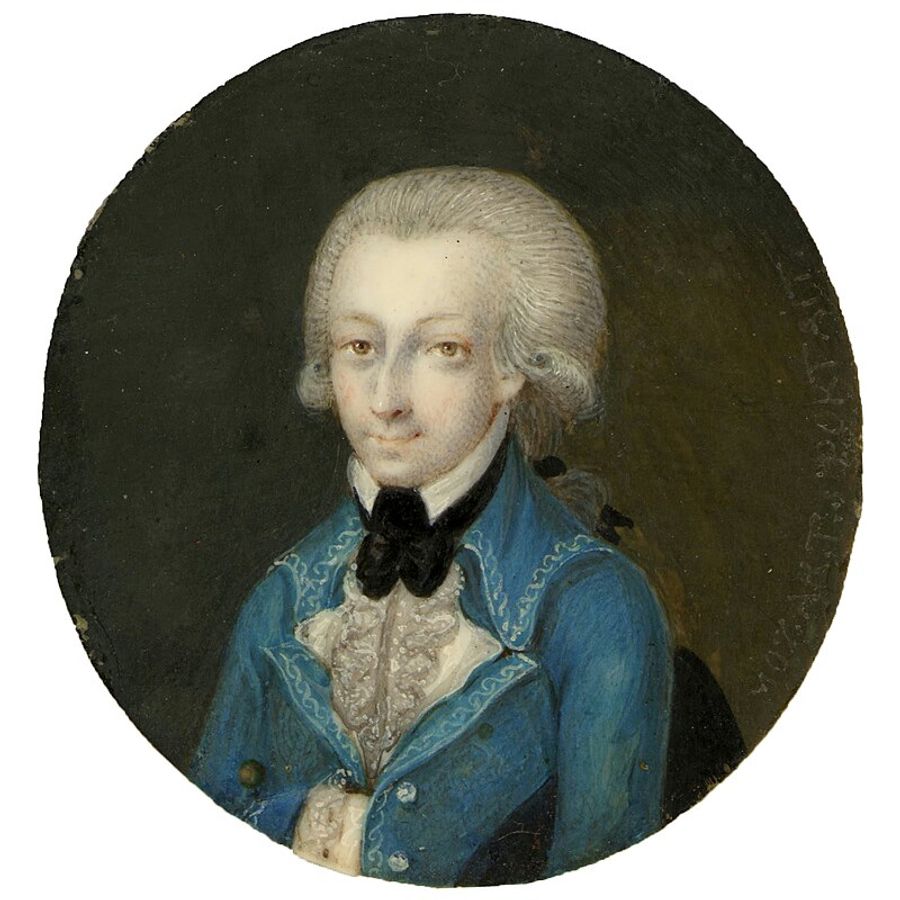
- Köchel Number
- K9 181 | K6 162b
- Genre
- Orchestral Music
- Form
- Symphonies
- Key
- D Major
- Date
- 19 May 1773
- Place
- Salzburg
- Age
- 17
Mozart’s Symphony No. 23 in D major, K. 181 is a compact, bright-toned Salzburg work completed on 19 May 1773, when the composer was 17. Often heard as a kind of “concert overture” in three linked movements, it shows how quickly Mozart could turn courtly ceremonial brilliance—especially with trumpets and horns—into sharply profiled symphonic argument.
Background and Context
In Salzburg in 1773, Wolfgang Amadeus Mozart (1756–1791) was no longer the prodigy “on tour,” but a 17-year-old court musician working within the musical ecosystem of Archbishop Hieronymus Colloredo’s establishment. The symphony in this period was still fluid in function: it could serve as a stand-alone concert item, as music for courtly occasions, or as an overture-like opener to larger entertainments. Mozart’s Salzburg symphonies of 1772–1773 in particular often keep close to the sinfonia tradition—fast–slow–fast, vivid contrasts, and a preference for immediacy over expansive development.
K. 181 deserves attention precisely because it captures Mozart at a hinge-point. The language is already more individual than the pleasant “background” symphonies of his early teens, yet it still embraces the public, theatrical rhetoric of the Italianate overture. The result is a work that can sound, in the best performances, like a stage curtain snapping open: concise, confident, and brilliantly scored.
Composition and Premiere
The autograph manuscript of Symphony No. 23 in D major is dated Salzburg, 19 May 1773, providing unusually firm documentation for an early Mozart symphony [1]. The Köchel catalogue lists the work as K. 181 (also encountered as K. 181/162b in older cataloguing), and modern reference sources retain the May 1773 completion date [2].
As with many Salzburg symphonies, the details of an initial public premiere are not securely documented. The more plausible frame is practical: such works were written for performance within Salzburg’s court and civic music-making, and their survival in multiple early manuscript copies points to circulation and use beyond a single occasion [2]. That dissemination matters for how we hear the piece today: it was not an isolated experiment, but a functional, performable symphony that traveled.
Instrumentation
Mozart scores K. 181 for a festive D-major orchestra, with trumpets adding an extra sheen beyond the “standard” Salzburg symphony ensemble.
- Winds: 2 oboes
- Brass: 2 horns (in D), 2 trumpets (in D)
- Strings: violins I & II, viola, bass (cello/double bass)
This is the scoring given in widely used modern references [2]. Period practice also suggests that a bassoon and/or harpsichord could reinforce the bass line where available, even when not explicitly notated—especially in a Salzburg court context.
The work’s source tradition is also a reminder that “instrumentation” in early symphonies can be a moving target. Surviving parts and copies show that forces could be adjusted in transmission (for instance, some copies omit trumpets), reflecting the realities of local players and occasion [2]. Rather than undermining the piece, this flexibility highlights how Mozart’s scoring aimed at strong rhetorical gestures that could survive adaptation.
Form and Musical Character
K. 181 follows the three-movement pattern associated with the Italian overture (sinfonia): quick opening, lyrical central movement, quick finale. A distinctive feature is that the movements are linked without breaks (attacca), reinforcing the overture-like sweep and giving the whole a single dramatic arc [2].
I. Allegro (D major)
The first movement launches with ceremonial confidence—D major functioning as a “bright metal” key for natural trumpets and horns. Mozart’s writing is brisk and public-facing, but not merely noisy: the best moments are those where the brass punctuate rather than blanket, and where the strings’ rhythmic profiles keep the music spring-loaded. One hears the young composer already skilled at pacing: short motives are arranged for momentum, and phrase endings feel like decisive stage cues.
II. Andantino grazioso (G major)
The central movement relaxes into a warmer, more intimate world. Even in a compact Andantino, Mozart looks for vocal inflection: balanced phrases, light ornamentation, and a sense that melody is something “spoken” rather than merely displayed. In performance, the movement works best when players resist over-weighting it; its charm is in poise and proportion.
III. Presto assai (D major)
The finale is a quick, dance-leaning burst that crowns the symphony with wit and velocity. Commentators have often noted its kinship with popular or dance styles—music meant to move—while still maintaining orchestral brilliance at the cadence points [3]. The attacca connection from the slow movement into this closing sprint can be genuinely thrilling: Mozart tightens the emotional screw, then releases it in bright, kinetic D major.
Reception and Legacy
K. 181 is not among the handful of Mozart symphonies that dominate modern concert life, partly because it belongs to a repertory “middle ground”: more sophisticated than the earliest youth works, but not yet the boldly dramatic Salzburg symphonies later in 1773 (such as the G-minor Symphony No. 25, K. 183). Yet that is exactly why it merits advocacy.
First, it is an excellent case study in what the symphony could be in 1773: not necessarily a monumental four-movement statement, but a concentrated, theatrical sequence designed to grip attention quickly. Second, its scoring—especially when trumpets are included—shows Mozart exploring a ceremonial sound-world that anticipates later Salzburg brilliance. Finally, the symphony’s surviving autograph date and its manuscript dissemination make it unusually “well-lit” for an early work: performers and listeners can approach it not as a doubtful fragment of juvenilia, but as a securely transmitted, purposeful composition from a composer already thinking dramatically in instrumental terms [1] [2].
In short, Symphony No. 23 in D major, K. 181 is Mozart in the act of sharpening his craft—compressing overture-like theatre into symphonic form, and proving that a “small” symphony can still make an entrance.
Sources
[1] The Morgan Library & Museum: catalogue entry for the manuscript of Mozart’s Symphony No. 23 in D major, K. 181, dated Salzburg, 19 May 1773.
[2] Wikipedia: Symphony No. 23 (Mozart) — overview, completion date, movement list, scoring, and notes on variant manuscript copies.
[3] All About Mozart: Symphony #23 K. 181 — brief commentary and contextual description (including overture-like continuity and finale characterization).