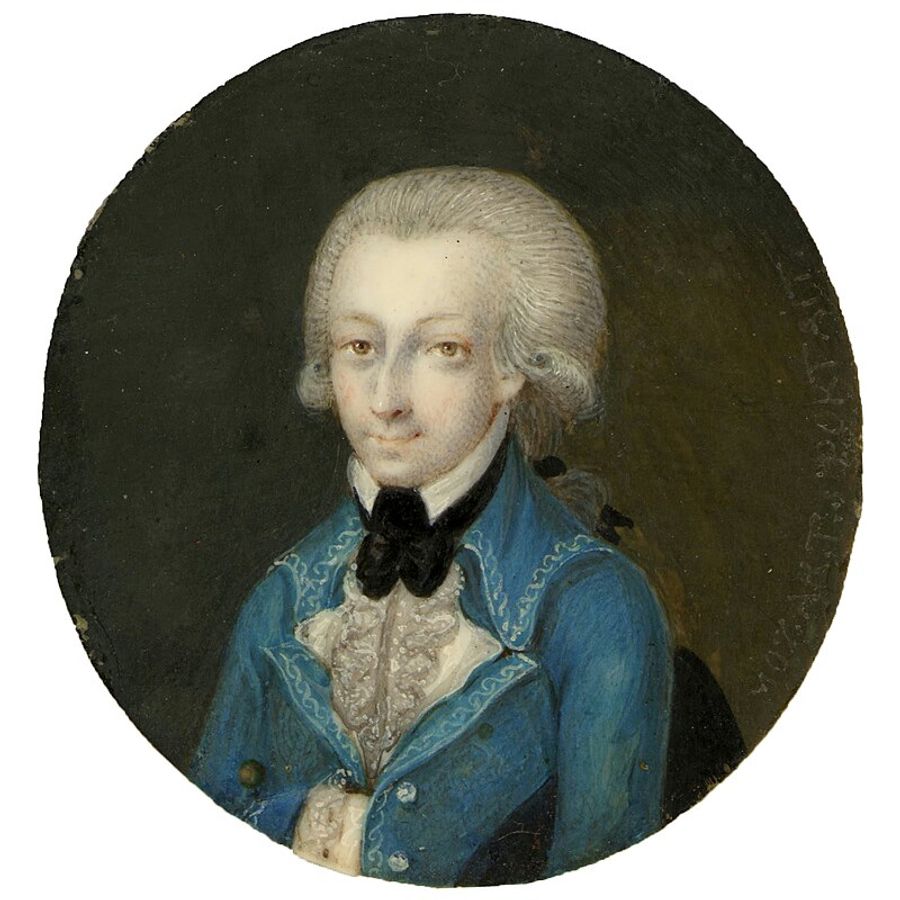
- Köchel Number
- K9 182 | K6 173dA
- Genre
- Orchestral Music
- Form
- Symphonies
- Key
- B Flat Major
- Date
- 3 October 1773
- Place
- Salzburg
- Age
- 17
Mozart’s Symphony No. 24 in B♭ major (K. 182) is a compact Salzburg symphony completed on 3 October 1773, when the composer was just 17. Though modest in scale, it offers a vivid snapshot of Mozart’s early command of orchestral color—especially in its pastoral slow movement, where the scoring itself becomes part of the expressive message.[1]
Background and Context
In 1773 Wolfgang Amadeus Mozart (1756–1791) was back in Salzburg after his Italian journeys, once again writing to meet the needs—and the constraints—of the archiepiscopal court. The Salzburg orchestra was smaller and less specialized than the ensembles Mozart would later encounter in Vienna, and the symphonies of this period typically favor a “courtly practicality”: clear textures, efficient forms, and flexible scoring that could accommodate the players available.
Yet to call Symphony No. 24 in B♭ major “functional” misses its real charm. In fewer than ten minutes, Mozart balances public brilliance with a surprisingly characterful middle movement. The work belongs to a cluster of Salzburg symphonies from 1773 that map Mozart’s stylistic range at 17—from the outwardly ceremonial to the more searching and dramatic (as he would soon show in the G minor Symphony No. 25, K. 183).[1]
Composition and Premiere
Mozart completed the symphony in Salzburg on 3 October 1773.[1] Like many of his early symphonies, it was likely intended for court or civic occasions where an overture-like opening and a concise three-movement plan were desirable. Specific documentation of a first performance does not survive; this is typical for Salzburg symphonies written for routine use rather than public concert premieres in the later, modern sense.
The symphony is sometimes associated with the Italianate “overture-symphony” tradition: fast–slow–fast, with a sense of theatrical propulsion rather than the later four-movement “concert symphony” model.[2]
Instrumentation
Mozart scores K. 182 for the standard Salzburg resources of the early 1770s, with one notable coloristic twist in the slow movement.
- Winds: 2 oboes (replaced by 2 flutes in the second movement)
- Brass: 2 horns (B♭; in the slow movement, horns retune to E♭)
- Strings: violins I & II, viola, cello, double bass
This substitution of flutes for oboes in the Andantino is not merely a practical “swap,” but a deliberate change of atmosphere: the timbre softens, the edge of the attack blurs, and the music takes on a pastoral gentleness that feels closer to serenade or operatic intermezzo than to ceremonial symphonic writing.[1]
Form and Musical Character
Mozart’s three movements are concise, but each is sharply profiled—an important reason the symphony rewards attention beyond its modest dimensions.
I. Allegro spiritoso (B♭ major)
The opening movement is a bright, energetic Allegro spiritoso whose rhetorical stance resembles an operatic curtain-raiser: quick to establish the key, quick to set the ensemble in motion. Its themes are built from clean, singable motives rather than dense counterpoint, and Mozart’s hallmark is the sense of “stagecraft” in purely instrumental terms—punctuation, symmetry, and well-timed wind interjections.[1]
II. Andantino grazioso (E♭ major)
The slow movement is the symphony’s most distinctive panel. Here Mozart changes the color by bringing in flutes (in place of oboes) and moving to the warmer subdominant key of E♭ major.[1] The result is an intimate, lightly pastoral sound world—an example of how 1770s “small-orchestra” writing can still be richly characterized.
One can hear Mozart experimenting with an almost serenade-like manner: winds converse more gently with the strings, and the overall tone is one of cultivated grace rather than grand statement. In this middle movement especially, K. 182 suggests why Salzburg-era symphonies should not be treated merely as juvenilia: Mozart is already thinking in terms of orchestral dramaturgy, where scoring choices function like changes of lighting.
III. Allegro (B♭ major)
The finale restores the public voice: brisk, uncomplicated, and designed to conclude with clean emphasis rather than extended argument. This kind of fast ending—direct in gesture and short in duration—was an effective closing strategy in court and theatre contexts, and Mozart executes it with a craftsman’s assurance: taut phrases, unambiguous cadences, and wind writing that adds sparkle without overcomplicating the texture.[1]
Reception and Legacy
K. 182 has never been among the most frequently programmed Mozart symphonies, partly because it sits between two more “narrative-ready” categories: the charming earliest works (often presented as prodigy pieces) and the later symphonies that dominate the concert hall. Its legacy is thus less about public fame than about what it reveals.
For listeners exploring Mozart’s symphonic development, Symphony No. 24 deserves attention for three reasons. First, it exemplifies the Italianate three-movement plan at a high level of finish.[2] Second, its Andantino shows Mozart using orchestration as expressive strategy, not mere decoration (the flutes and E♭-horn color are the point, not an afterthought).[1] Third, it captures a Salzburg Mozart who is already more than a gifted apprentice: he is an organizer of musical character, able to suggest courtly brilliance, pastoral repose, and theatrical closure within the tightest of frames.
Sources
[1] Wikipedia: Symphony No. 24 in B-flat major (K. 182/173dA) — completion date (3 Oct 1773), Salzburg, movements, and scoring detail (flutes replace oboes in slow movement; horns retune).
[2] IMSLP: Symphony No. 24 in B-flat major, K. 182/173dA — work entry confirming three-movement structure and basic catalog data.