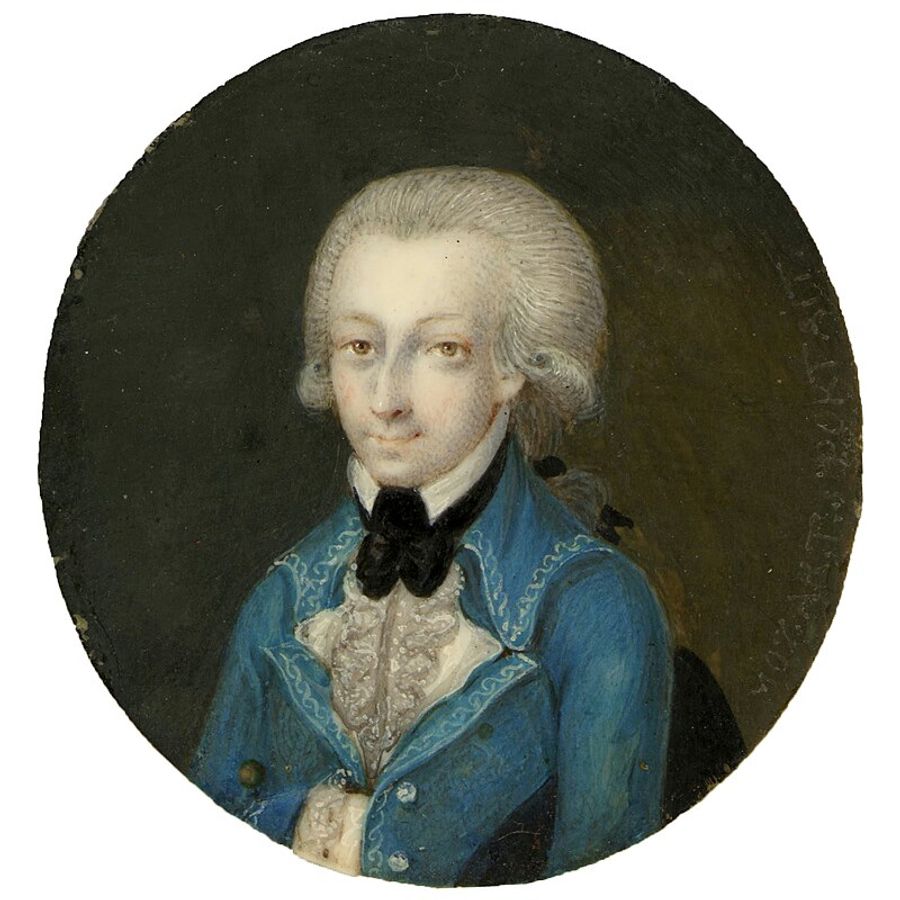
- Köchel Number
- K9 179 | K6 189a
- Genre
- Piano Music
- Form
- Piano Variations
- Key
- C Major
- Date
- 6 December 1774
- Place
- Salzburg
- Age
- 18
Mozart’s 12 Variations in C on a Minuet by Fischer (K. 179/189a), composed in Salzburg in 1774 when he was 18, is an early but highly accomplished essay in the variation genre. Using a fashionable minuet theme associated with the oboist-composer Johann Christian Fischer, Mozart turns courtly elegance into a compact laboratory of keyboard character, touch, and wit.
Background and Context
In Salzburg in 1774, Wolfgang Amadeus Mozart (1756–1791) was an 18-year-old court musician with formidable practical skills: he could improvise, accompany, teach, and supply polished works quickly for a variety of social settings. Keyboard variations were ideal for this world. They offered performers a familiar tune dressed in ever-changing textures—part entertainment, part demonstration of compositional craft, and part study material for developing technique.
The theme Mozart chose points beyond Salzburg. Johann Christian Fischer (1733–1800), a celebrated oboist and composer active in London and elsewhere, wrote an oboe concerto whose rondo-minuet theme circulated widely; Mozart later identifies the set simply as variations “on a minuet by Fischer” [1]. This kind of borrowing was not a mark of creative poverty; rather, it was a way of joining an international musical conversation, starting from something listeners already knew and then showing what a local master could do with it.
Composition
The work is catalogued as K. 179 (also K. 189a in older numbering) and is generally dated to Salzburg in 1774 [1]. The Neue Mozart-Ausgabe (New Mozart Edition) confirms Fischer as the source of the theme and treats the set as a work for keyboard (Klavier)—a flexible term in Mozart’s time that could encompass harpsichord and the increasingly important early fortepiano [2].
The set also hints at Mozart’s long memory for musical acquaintances. He had encountered Fischer earlier in life (during the European travels of the 1760s), and the choice of theme suggests Mozart’s alertness to the reputations of virtuosi whose music travelled well beyond their immediate circles [3].
Form and Musical Character
Like many 18th-century variation sets, K. 179 begins by presenting the theme plainly, then proceeds through twelve variations that preserve the underlying harmonic plan while continuously reinventing surface rhythm, figuration, and register [2]. The theme itself is a well-mannered minuet in C major (3/4), the sort of periodic, balanced melody that invites decorative re-composition.
What makes K. 179 deserve attention is how quickly Mozart moves from “pleasant ornament” to sharply profiled keyboard dramaturgy:
- Texture as character. Rather than merely adding more notes, Mozart uses textural contrasts—broken-chord patterns, passagework, and hand-crossing-like registral play—to suggest different affects while keeping the minuet’s poise in view.
- Keyboard rhetoric in miniature. Even without large-scale “development” in the sonata sense, the set can feel narratively paced: a listener senses intensification, relaxation, and occasional moments of surprise as Mozart tests how far the theme can be pushed without losing its identity.
- A glimpse of the mature Mozart. The best variations show his instinct for singing line within virtuosity: figurations decorate rather than smother the melody, anticipating the way his later piano writing often makes brilliance serve phrasing and cadence.
Instrumentally, the piece sits on an interesting historical seam. On harpsichord, many variations read as elegant, bright filigree; on fortepiano, dynamic shading can bring out the conversational exchange between hands and the harmonic “turns” that give the set its charm.
Reception and Legacy
Although K. 179 is not as ubiquitous as the later Ah, vous dirai-je, Maman variations (K. 265), it has remained part of the pianist’s and scholar’s Mozart landscape because it shows an 18-year-old composer already in full command of variation technique and keyboard idiom. Modern editions and recordings often group it with Mozart’s other early Salzburg keyboard works, where it stands out as a concise example of how a “social” genre can still carry genuine compositional distinction [2].
For today’s listener, its appeal lies in scale and clarity: in a few minutes, Mozart offers a panorama of styles that feels both decorative and sharply intelligent. K. 179 is, in effect, a small portrait of the young Mozart as craftsman—absorbing a fashionable theme, then quietly demonstrating that elegance can be a vehicle for invention.
Sheet Music
Download and print sheet music for 12 Variations in C on a Minuet by Fischer, K. 179 (C major) from Virtual Sheet Music®.
Sources
[1] Internationale Stiftung Mozarteum (KV): work entry for KV 179, including title, scoring/genre, place and date.
[2] Digital Mozart Edition / Neue Mozart-Ausgabe: editorial preface (English PDF) discussing Mozart’s keyboard variations, including KV 179 and the Fischer theme source.
[3] BIS Records booklet (Ronald Brautigam): background notes referencing the ‘Fischer’ Variations KV 179/189a, Salzburg 1774, and Mozart’s earlier encounter with Fischer.