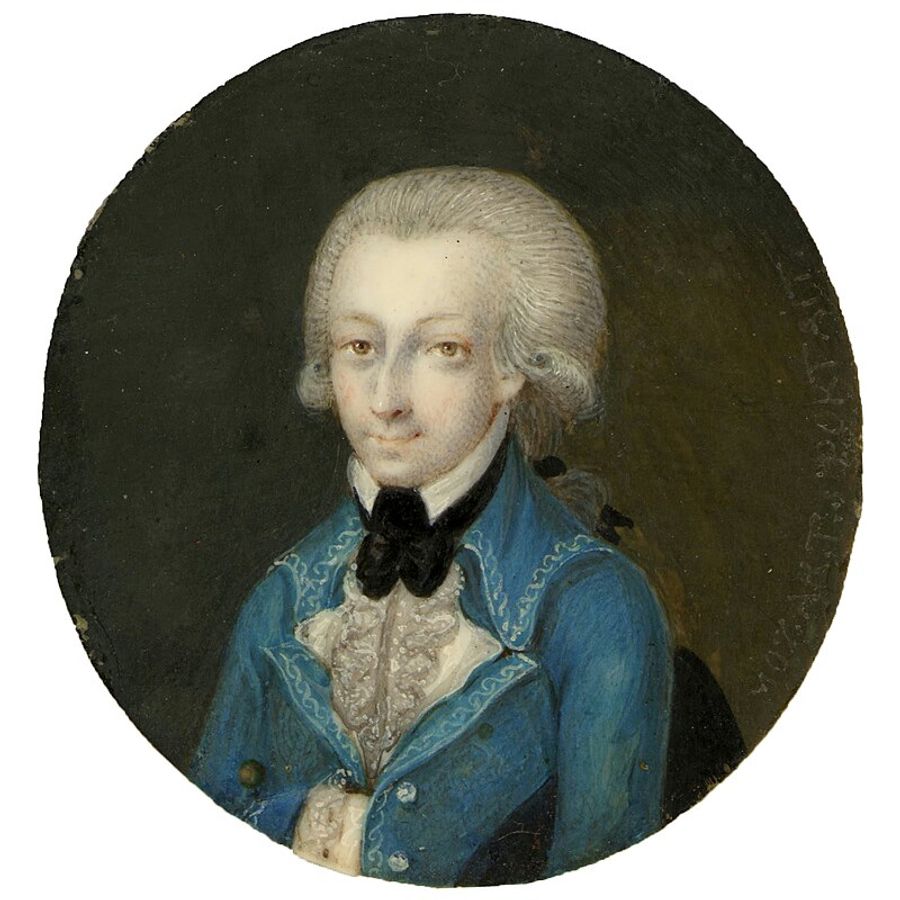
- Köchel Number
- K9 169 | K6 169
- Genre
- Chamber Music
- Form
- String Quartets & Wind Quartets
- Key
- A Major
- Date
- August 1773
- Place
- Vienna
- Age
- 17
Mozart’s String Quartet in A major, K. 169 (1773) belongs to the so‑called “Viennese” set (K. 168–173), written in Vienna when the composer was just 17. Compact, bright, and unusually sure-footed in its four-movement plan, it shows Mozart testing the conversational ideals he had encountered in Joseph Haydn’s recent quartets.
Background and Context
When Wolfgang Amadeus Mozart (1756–1791) arrived in Vienna in 1773, he entered a city where the string quartet was rapidly becoming the most intellectually prized medium for strings alone. The genre had only recently moved beyond divertimento entertainment toward a style of writing in which all four parts could participate as equals—an aesthetic closely associated with Joseph Haydn’s pioneering cycles of the later 1760s and early 1770s.[1]
K. 169 is the second of six quartets Mozart composed in Vienna in late 1773 (K. 168–173), a group now commonly called the “Viennese Quartets.”[2] These works mark an important turning point: unlike most of Mozart’s earlier quartets (often in three movements), the Viennese set adopts a four-movement design more in line with Haydn’s emerging norm.[1]
Although K. 169 is not among the later “Haydn” quartets that secure Mozart’s mature quartet reputation, it deserves attention for the clarity with which it stakes out a new ambition. Here, one hears a teenage composer moving from pleasant string writing toward genuine chamber discourse—learning how to balance melody, accompaniment, and imitation so that musical interest can circulate among the instruments rather than remain monopolized by the first violin.
Composition and Dedication
Mozart composed the String Quartet in A major, K. 169 in Vienna in 1773, when he was 17.[2] Like its companion quartets K. 168–173, it appears not to have been published during his lifetime; the set was issued posthumously (as Mozart’s Op. 94) by the Offenbach publisher Johann André in 1801.[2]
No dedicatee is securely associated with K. 169 in the standard reference literature, and the work seems best understood as part of Mozart’s self-directed study of quartet technique in a Viennese environment newly charged by Haydn’s example.[1]
Instrumentation
- Strings: 2 violins, viola, violoncello[1]
Form and Musical Character
K. 169 follows the now-classical four-movement plan—fast, slow, minuet, finale—yet it does so on a modest scale. Rather than aiming for the extended argument of Mozart’s later quartets, it favors concision, clear phrase structure, and a bright A‑major profile that supports a generally sunny affect.
Movements
I. Molto allegro
The opening movement introduces a confident, forward-driving character typical of Mozart’s early Viennese chamber style. What is especially telling is the distribution of material: even when the first violin leads, accompanimental patterns are less purely “background” than in many earlier quartets, and the inner voices are often given rhythmic profiles that let them speak clearly within the texture. This is the kind of practical craft Mozart would later deepen into true equality of parts—an ideal explicitly associated with his debt to Haydn.[1]
II. Andante
The slow movement is the quartet’s most intimate panel. Its interest lies less in dramatic contrast than in poise and balance: Mozart tends to think in vocal phrases here, shaping lines that can be “answered” by another instrument, and allowing the harmony to do expressive work without heavy rhetoric. Even in such a compact movement, one can hear the young composer learning how to create continuity through small-scale motivic links—skills that would become essential in his mature chamber music.
III. Menuetto – Trio
The minuet grounds the quartet in social dance style, but with a chamber-music twist: accents and imitation subtly disturb the four-square feel, so that the music seems to listen and respond rather than simply mark time. The Trio offers contrast (often by thinning the texture or shifting the register), before the return of the minuet restores the public, courtly stance.
IV. Rondeaux (Allegro)
The finale—frequently described as a Rondeaux—aims for quick, genial closure.[4] This is not yet the kind of finale that turns contrapuntal play into a dramatic culmination (as Mozart would later do with far greater complexity), but it shows a young composer already alert to the finale’s special task: to send listeners away with sharpened energy and a sense of elegant finish.
Reception and Legacy
The Viennese Quartets, including K. 169, were published only after Mozart’s death, which helps explain why they have never held quite the same place in concert life as the later quartets dedicated to Haydn.[2] Yet their historical value is considerable. They document a moment when Mozart—still a teenager—encountered a new Viennese ideal of quartet writing and responded by adopting the four-movement plan that would define his later contributions to the genre.[1]
For modern listeners, K. 169 rewards attention as “threshold Mozart”: music poised between youthful ease and emerging seriousness. Its brightness of key, compact proportions, and increasingly alert part-writing make it an appealing entry point into Mozart’s quartet journey—one that leads, over the next decade, to the masterworks of the 1780s but begins here with curiosity, craft, and an unmistakable Viennese ambition.
Sources
[1] International Mozarteum Foundation (Köchel-Verzeichnis): work entry for KV 169 with historical context and instrumentation
[2] Wikipedia: overview of the Viennese Quartets (K. 168–173), date/place, and posthumous publication by Johann André (1801)
[3] IMSLP: String Quartet No. 9 in A major, K. 169 — movement listing and score/edition reference data
[4] Amazon Music track listing indicating the finale title as “Rondeaux (Allegro)” for K. 169