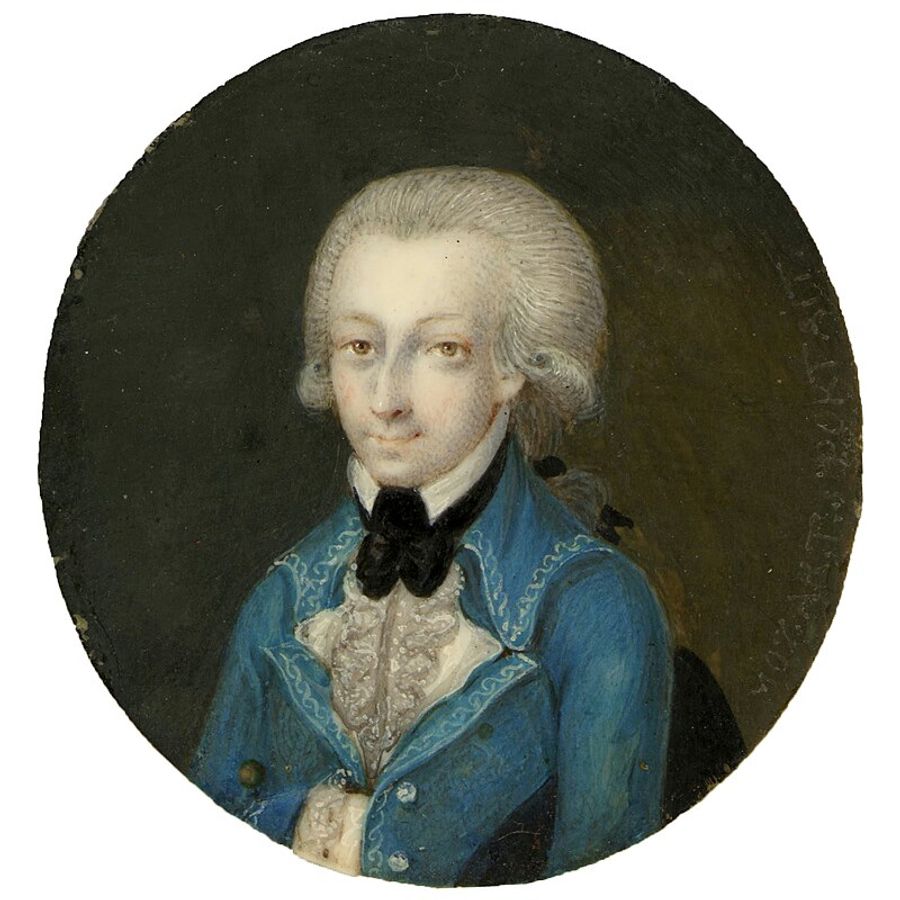
- Köchel Number
- K9 166 | K6 159d
- Genre
- Divertimenti & Serenades
- Form
- Divertimenti & Serenades for Winds
- Key
- E Flat Major
- Date
- 24 March 1773
- Place
- Salzburg
- Age
- 17
Mozart’s Divertimento in E♭ major, K. 166 (dated Salzburg, 24 March 1773) is a youthful but strikingly assured essay for a colorful wind ensemble of ten players. Written when the composer was 17, it stands at the beginning of his mature thinking for winds—already exploring sonority, dialogue, and a lightly theatrical sense of occasion.
Background and Context
In the Salzburg of the early 1770s, instrumental “occasional music” was not a side alley but a central part of a working composer’s craft. Serenades and divertimenti supplied sound for social gatherings, outdoor festivities, and courtly entertainment—music expected to please immediately, yet still capable of wit and invention. Mozart, newly 17 in 1773, had just returned from his third Italian journey (1772–73), and Salzburg once again became the place where he consolidated what he had absorbed abroad into a personal style.
K. 166 belongs to a very specific corner of that world: the divertimento for winds. Rather than the later, widely celebrated wind serenades (“Gran Partita” K. 361, K. 375, K. 388), this work occupies an earlier stage—brisk, compact, and designed for pleasure more than profundity. Yet it deserves attention precisely because it shows Mozart learning, in public, how to write idiomatically for an ensemble that is neither orchestra nor chamber quartet: a self-sufficient “wind band” capable of both brilliance and warmth.
Composition and Premiere
The work is dated 24 March 1773 and associated with Salzburg, as reflected in standard cataloging and modern reference sources.[1][2] It is paired, in both scholarship and musical design, with the companion divertimento K. 186/159b, the two often discussed together as Mozart’s earliest substantial essays for this particular ten-part wind texture.[3]
As with much Salzburg divertimento repertory, the first performance circumstances are not securely documented. The scoring, however—especially the prominent clarinets and English horns—has encouraged long-standing discussion about where (and for whom) such an ensemble might have been available. Modern commentary frequently connects these two divertimenti with possible commission or employment-related hopes involving Archduke Leopold (Grand Duke of Tuscany), though the documentary trail is not definitive.[2]
Instrumentation
Mozart scores K. 166 for a wind dectet (10 players), an unusually rich palette for 1773:[2]
- Woodwinds: 2 oboes, 2 English horns, 2 clarinets, 2 bassoons
- Brass: 2 horns
Two features are especially notable.
First, the inclusion of English horns (alto oboes) is rare enough in Mozart to be immediately suggestive: their darker, veiled timbre expands the ensemble’s middle register and encourages a more blended, choir-like sonority than an oboe-led octet would naturally produce. Second, the clarinets—still relatively novel in many places—point toward the instrumental future of the 1780s, when Mozart would write with unsurpassed affection for the instrument.
Form and Musical Character
IMSLP and the standard work listings describe four movements:[2]
- I. *Allegro
- II. *Menuetto – Trio – Coda
- III. *Andante grazioso
- IV. *Adagio – Allegro
I. Allegro
The opening movement immediately clarifies Mozart’s divertimento priorities: clear phrases, quick contrasts, and a bright E♭-major radiance well suited to open-air sonority. The ensemble writing is fundamentally conversational—pairs of like instruments answer one another—yet the ten-part scoring allows Mozart to vary texture rapidly: from full, harmonized “choirs” of winds to leaner passages where a single pair (often the clarinets or oboes) takes the foreground.
II. Menuetto – Trio – Coda
The minuet is not merely a dance “insert” but a test of balance. Mozart distributes weight across the ensemble so that the music can sound festive without turning heavy: horns and bassoons provide harmonic gravity while the upper winds articulate the stepwise elegance of the dance. The Trio offers a change of color—one of the divertimento’s quiet delights is how readily the English horns can darken the atmosphere with only a slight re-scoring.
III. Andante grazioso
The marking grazioso (“graceful”) captures the movement’s purpose: lyrical ease rather than public display. Here Mozart’s wind writing becomes more vocal, shaping long lines that invite sustained breath and careful blend. In such slow movements, the value of the dectet’s instrumentation is obvious: the English horns and bassoons can “warm” the harmony from within, letting the clarinets sing without the brittle edge that oboes alone can produce.
IV. Adagio – Allegro
The finale’s slow introduction (Adagio) sets a slightly more ceremonious tone before releasing into an Allegro that restores the divertimento’s outdoor brightness. In effect, Mozart frames the closing movement like a miniature stage scene: a brief opening “curtain” followed by energetic action. The impression is not symphonic argument but social animation—music that keeps listeners attentive through changing instrumental spotlights.
Reception and Legacy
K. 166 is not among Mozart’s most frequently programmed works, and its relative obscurity has practical reasons: it requires a specialized set of players (including English horns), and it sits outside the better-known “Harmoniemusik” canon of the 1780s. Yet for listeners interested in Mozart’s development, it is invaluable.
The divertimento shows Mozart already thinking in terms of instrumental color as form—not only what themes do, but which timbres carry them, and how a change of scoring can function like a change of mood. Heard alongside the companion K. 186/159b, it also reveals a teenage composer refining an approach to wind ensemble writing that would later flower into the great serenades and the operatic wind textures of Idomeneo and Le nozze di Figaro.
In sum, Divertimento No. 3 in E♭, K. 166 deserves attention as a youthful Salzburg work with Italian-seasoned poise: entertainment music, certainly, but entertainment conceived with a composer’s ear for character, sonority, and the pleasures of well-balanced conversation among winds.
Sources
[1] Mozart Project — worklist entry giving date and place (K. 166/159d, 24 March 1773, Salzburg).
[2] IMSLP — Divertimento in E-flat major, K. 166/159d: instrumentation, movement list, and cataloging details (including March 24, 1773).
[3] Wikipedia — contextual overview of the paired divertimenti for ten winds (K. 186/159b and K. 166/159d).