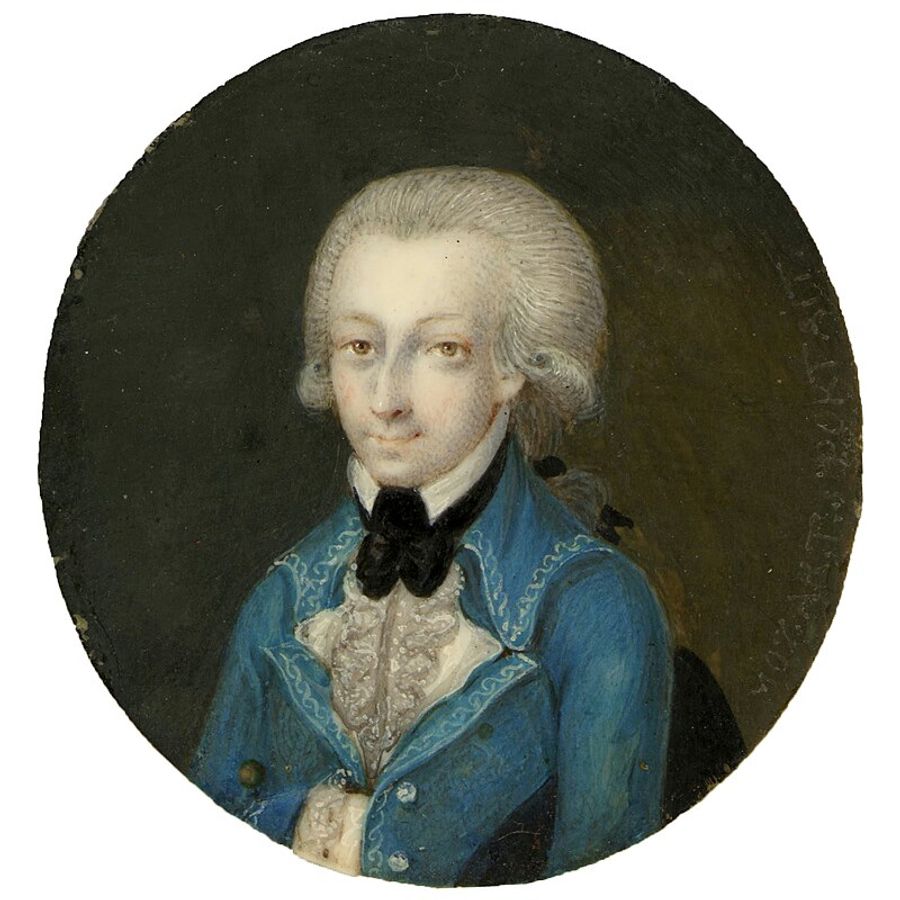
- Köchel Number
- K9 165 | K6 158a
- Genre
- Sacred Music
- Form
- Smaller Church Works
- Key
- F Major
- Date
- January 1773
- Place
- Milan
- Age
- 17
Exsultate, jubilate (K. 165) is Mozart’s radiant solo “motet” for soprano and orchestra, composed in Milan in January 1773—just days before its first performance on 17 January—and written to showcase the extraordinary castrato Venanzio Rauzzini. Though liturgical in genre, its operatic virtuosity and famous final Alleluia have made it one of Mozart’s most enduring sacred works in the concert hall.123
Background and Context
Mozart’s Exsultate, jubilate belongs to the remarkable afterglow of his third and final Italian journey (October 1772–March 1773), when the teenage composer—still formally in the employ of Salzburg—was nevertheless learning his craft in Italy’s most demanding arena: the operatic stage.2 In Milan the Mozarts were attached to the fortunes of Lucio Silla (K. 135), whose run kept them in the city well beyond the premiere; while waiting for the season to turn, Wolfgang filled the “in-between” days with chamber music and sacred occasional pieces, and among these the solo motet quickly became the one work to outlive the immediate theatre politics that had produced it.23
The work’s origin is inseparable from its intended soloist: Venanzio Rauzzini, the primo uomo (male lead) in Lucio Silla. Modern listeners often encounter Exsultate, jubilate as a bright, “universal” display piece; in Milan it was far more specific—a portrait of a particular voice, and a souvenir of a particular production. In that sense it sits at an intriguing crossroads: a Latin text and church setting, but the vocal writing of a star trained for the opera house.
Composition and Liturgical Function
Mozart composed Exsultate, jubilate in Milan in January 1773, when he was 17.12 A valuable documentary detail comes from the Mozart family correspondence: the Digital Mozart Edition preserves Leopold Mozart’s Milan letter of 16 January 1773 (with Wolfgang’s postscript), which indicates that the motet was performed the next day—17 January 1773—in Milan.4 Multiple reference accounts identify the venue as the Theatine church complex connected with Sant’Antonio Abate, and name Rauzzini as the soloist at the first performance.35
What, precisely, did such a piece do in a liturgical context? Program-note traditions (often drawing on common eighteenth-century practice) suggest that a substantial solo motet like this could function as an extended musical insertion within Mass—either as a kind of devotional interlude or in a slot that could substitute for an offertory item.6 That practical flexibility helps explain the genre’s hybrid character: it could be “sacred” without being tightly bound to a fixed Ordinary text, and it could be shaped to the strengths of a guest virtuoso.
One interpretive question that remains stubbornly revealing is the motet’s self-description. Mozart labelled it a “motet,” but its design is closer to a compact Italian scena: a jubilant opening movement, a more intimate middle, and then a self-contained Alleluia that behaves like a brilliant concert finale. A listener can profitably hear it not as “opera smuggled into church,” but as a work that uses operatic technique—breathless runs, long-breathed cantilena, rhetorical contrasts—to intensify a devotional affect (joy as a spiritual state, not merely theatrical exuberance).
Instrumentation and Scoring
Exsultate, jubilate is scored for solo soprano (originally for castrato) with a modest classical orchestra and continuo. The standard scoring is:
- Solo voice: soprano (originally castrato)
- Winds: 2 oboes
- Brass: 2 horns
- Strings: violins I & II, viola, cello, double bass
- Continuo: organ (with basso line)
This is the instrumentation reflected in modern scholarly and performing materials, and in listings derived from the Neue Mozart-Ausgabe/IMSLP documentation.78
The color palette is significant. Oboes and horns, in F major, lend the piece a pastoral-golden sheen that avoids the penitential “church” coloration of trombones or the more ceremonial blaze of trumpets and timpani. Mozart instead creates brilliance through articulation and texture: strings in energetic unison patterns under the vocal line, oboes brightening tuttis, and horns giving a rounded halo to cadences. The result is festive without sounding “official”—a useful nuance for a work that likely had to fit within a liturgy rather than dominate it.
Musical Structure
Although often treated as a single concert number, Exsultate, jubilate unfolds as a sequence of contrasting sections that behave like three movements. A concise outline is:
- I. Exsultate, jubilate — Allegro (F major)
- II. Fulget amica dies — Andante (traditionally in the subdominant region; expressive lyrical center)
- III. Alleluia — Molto allegro (F major)
This three-part design is summarized in standard reference descriptions.3
I. Exsultate, jubilate — Allegro
The opening is not merely “happy”—it is strategically athletic. Mozart builds a kind of ritornello-like propulsion (recurring orchestral ideas) that frames the soloist’s coloratura. What is striking is how consistently the vocal fireworks remain grammatically tied to the text’s imperatives: exsultate (rejoice), jubilate (shout for joy). The passagework does not feel like decoration added after the fact; it enacts joy as kinetic energy.
Rauzzini’s presence hovers behind the writing. The line sits in a bright tessitura and requires quick, clean turns, but it is equally dependent on sustained legato—Mozart is clearly asking for a virtuoso who can “speak” in long phrases, not merely dazzle. In performance, the movement’s success often hinges on whether the singer can keep consonants precise without hardening the tone: the vocal line must sparkle, yet remain liturgical in diction.
II. Fulget amica dies — Andante
The central movement is the work’s spiritual pivot. Its rhetoric is less about jubilation than about radiance (fulget), intimacy, and a softened affect that invites an almost prayer-like stillness. Mozart’s genius here is proportion: he does not slow the piece down to “be serious,” but rather compresses tenderness into a clear, singing structure.
This is also where the motet most clearly reveals its “church” identity. In the Andante, the singer’s ornamentation (whether written or added tastefully) must be measured against a sacred setting: one can luxuriate in the melodic line, but the mood is contemplative, not coquettish. Historically informed performers often treat this movement as the place to let the continuo and inner strings breathe—subtle timing that suggests devotion rather than stagecraft.
III. Alleluia — Molto allegro
The final Alleluia has become the motet’s public face, frequently excerpted as a stand-alone showpiece—and with reason. It is a single word, but Mozart turns it into a miniature drama of breath, accent, and rhythmic play. Rapid scalar runs and buoyant repeated figures create the sensation of joy overflowing the boundaries of speech.
Yet the movement is not a mere vocal “sprint.” Its brilliance depends on the dialogue with the orchestra: the strings’ rhythmic motor and the bright punctuation of winds and horns create a concertante interplay in which the soprano becomes, in effect, the principal instrument. In this sense, the Alleluia can be heard as an Italianate concerto finale translated into vocal terms—one reason it speaks so well in modern concert halls even when detached from any liturgy.
Reception and Legacy
From the outset, Exsultate, jubilate carried a double identity: a sacred work connected to a specific Milanese church performance, and a vehicle crafted for a celebrity singer.35 Over time, the second identity has tended to eclipse the first. The motet’s survival is partly explained by practicalities: it fits comfortably into recital and concert programming, it requires no choir, and it offers a contained narrative arc from exuberance to lyrical warmth to dazzling affirmation.
There is also a deeper reason. In Mozart’s later Salzburg sacred music, one often senses a negotiation between local liturgical expectations and his broader musical ambition. Exsultate, jubilate shows the negotiation in an unusually transparent form: instead of restraining the operatic impulse, it baptizes it—placing virtuosity in the service of a devotional affect. That balance has made the work a touchstone for performers and scholars alike: a piece that can be sung as pure rejoicing, or interpreted more subtly as a document of Mozart’s Italian education and his ability to translate theatrical technique into sacred persuasion.
For modern listeners, one fruitful way to approach the motet is to hold both contexts in mind at once: the Theatine church in Milan on 17 January 1773, with Rauzzini as the dedicatee and soloist, and the later concert tradition that has turned the Alleluia into a symbol of vocal delight.346 The motet’s enduring charm lies in the fact that neither perspective cancels the other—each sharpens what the music already contains: joy, craft, and a young composer’s sure instinct for the human voice.
Sheet Music
Download and print sheet music for Exsultate, jubilate (K. 165): Mozart’s Milanese “Motet” in F major from Virtual Sheet Music®.
Sources
[1] KV catalogue entry for K. 165 (*Exsultate, jubilate*) — Internationale Stiftung Mozarteum (work data and classification).
[2] Context for Mozart’s third Italian journey and his Milan activities in early 1773 (including composition of K. 165).
[3] Overview of the work, date, dedicatee (Venanzio Rauzzini), and premiere at the Theatine church on 17 January 1773.
[4] Primary-source document: Leopold Mozart letter from Milan dated 16 January 1773 with Mozart’s postscript (Digital Mozart Edition).
[5] Italian reference summary noting the premiere on 17 January 1773 at the Theatine complex (Sant’Antonio Abate) with Rauzzini, citing Mozart’s postscript.
[6] Program-note discussion of likely liturgical placement and the work’s character as a ‘soprano concerto’ for Rauzzini; premiere date and context.
[7] IMSLP work page (Neue Mozart-Ausgabe materials and listed parts) for *Exsultate, jubilate*, K. 165.
[8] Instrumentation listing in a modern orchestra program document (solo soprano, 2 oboes, 2 horns, strings, organ continuo).