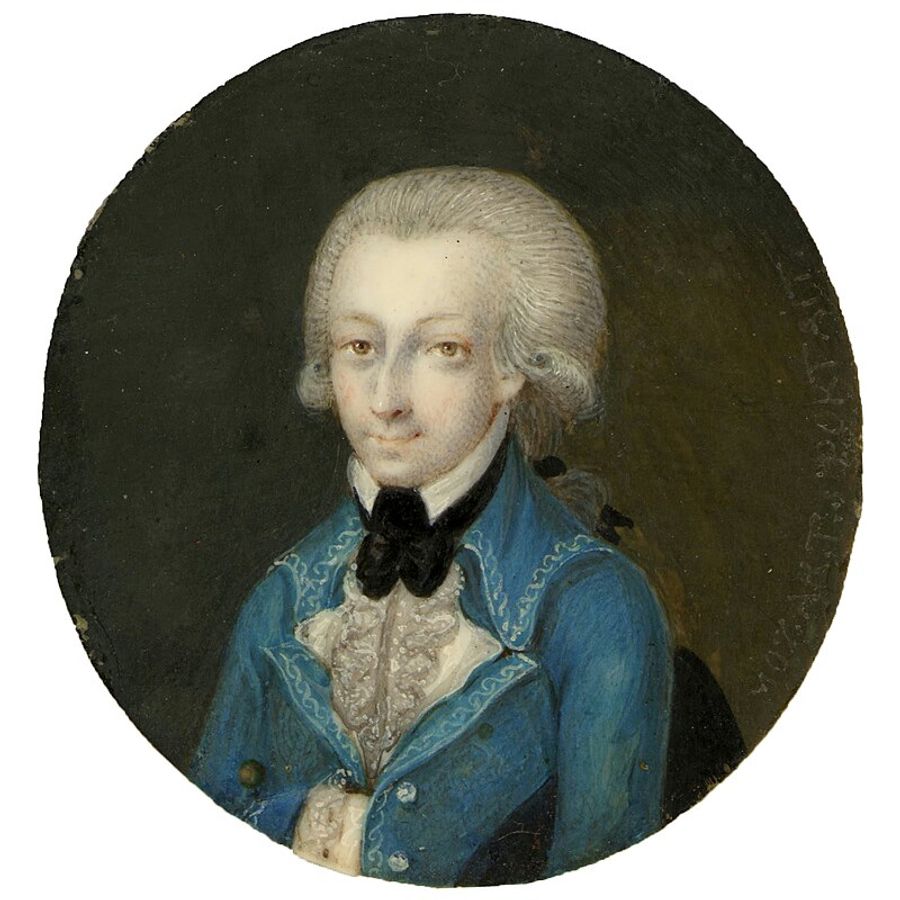
- Köchel Number
- K9 164 | K6 130a
- Genre
- Orchestral Music
- Form
- Dances & Marches
- Key
- D Major
- Date
- June 1772
- Place
- Salzburg
- Age
- 16
Mozart’s 6 Minuets in D major, K. 164 (K⁶ 130a) form a compact Salzburg dance set from June 1772, written when the composer was sixteen. Modest in scale yet vivid in orchestral color, these minuets illuminate how Mozart learned to write for real-world courtly and civic occasions—where elegance, clarity, and immediacy mattered as much as invention.
Background and Context
In 1772 Wolfgang Amadeus Mozart (1756–1791) was back in Salzburg, employed within the musical establishment of the prince-archbishop and writing a steady stream of functional works—church music, symphonies, serenades, and, importantly, dances. The minuet was not merely a stylized ballroom relic: in Salzburg it belonged to the lived soundscape of social ceremony, public festivity, and courtly entertainment, often performed in sets rather than as isolated concert pieces.
The 6 Minuets, K. 164 sit squarely in this practical world. They are best heard not as “miniature symphonies,” but as music designed to make an immediate impression: strong rhythmic profiles for dancers, clear phrase structure for listeners in motion, and bright scoring that carries outdoors or in resonant halls. For modern audiences, their appeal lies in precisely this blend of utility and craft—Mozart’s early ability to turn convention into character.
Composition and Premiere
Mozart dated this set in Salzburg in June 1772; the autograph title (in Italian) explicitly identifies the city and month, an unusually concrete anchor for a small occasional work.[2] The six minuets are securely catalogued as K. 164 (K⁹) and were also known under the older numbering K⁶ 130a.[1]
A specific premiere date or venue is not documented in the way it can be for some Salzburg serenades. That is typical for dance collections: they were written to be used rather than “unveiled.” The surviving source history, however, suggests practical circulation. Portions of the autograph have long been dispersed among major collections (including the Library of Congress for Minuets Nos. 1–2), underscoring that even such modest dance music could be valued as a Mozart manuscript.[2]
Instrumentation
Sources give the work as an orchestral dance set with the following scoring (as commonly transmitted):[1]
- Winds: 1 flute, 2 oboes
- Brass: 2 trumpets (or 2 horns, depending on the source/occasion)
- Strings: 2 violins, bass
Two details are worth noticing. First, the winds are not merely “doubling” the strings: in Salzburg dance music, oboes and trumpet/horn writing helped project the beat and brighten the texture, especially in larger rooms or open-air settings. Second, the presence of an option—“2 trumpets (or 2 horns)”—reminds us that local forces and circumstance could shape how such dances were realized. Even when the musical substance is concise, the scoring points to flexible, event-driven performance practice.
Form and Musical Character
Each minuet is paired with a Trio, following the standard late-baroque/early-classical dance plan (Minuet–Trio–Minuet da capo). The result is twelve short panels: six public-facing minuets that tend to emphasize clear cadences and strong rhythmic punctuation, and six trios that often thin or soften the texture, offering contrast before the return.
Heard as a set, K. 164 reveals Mozart’s early gift for character differentiation within strict limits. Rather than trying to “develop” themes symphonically, he varies:
- Rhythm and accent: small shifts in upbeats, hemiola-like stresses, or briskly repeated figures can make one minuet feel ceremonial and another more playful.
- Orchestral shine: D major naturally favors bright sonorities; with oboes and brass available, Mozart can suggest outdoor festivity with only a few decisive gestures.
- Phrase balance: the typical four- and eight-bar phrasing is present, but Mozart’s ear for cadence timing (how quickly a phrase “arrives,” and how it is echoed or answered) already feels purposeful.
For listeners accustomed to Mozart’s later Viennese minuets—where the dance becomes a vehicle for wit, chromatic surprise, and sometimes outright drama—K. 164 can sound straightforward. Yet that straightforwardness is the point: it shows Mozart mastering the social grammar of dance and learning how to create variety without overcomplicating the function.
Reception and Legacy
The 6 Minuets, K. 164 are not among Mozart’s repertory staples, largely because dance sets of this kind were designed for specific contexts and do not fit the nineteenth-century “masterwork” concert narrative. Still, they have a quiet modern life in recordings of Mozart’s Salzburg orchestral output and in editions such as the Neue Mozart-Ausgabe (which includes K. 164 among the early orchestral dances).[1]
Their value today is twofold. Historically, they document Mozart at sixteen writing for Salzburg’s practical musical economy: music meant to be played, repeated, and enjoyed immediately. Musically, they show how much personality Mozart could suggest in a tightly bounded form—how a minuet can be both social utility and a small act of composition. For performers, they offer crisp, grateful writing and opportunities to explore Classical-era articulation and balance; for listeners, they provide a window onto Mozart’s everyday classicism, where elegance is not a “minor” virtue but the central craft.
Sources
[1] IMSLP — work page for *6 Minuets, K. 164/130a*, including composition year, movement list, and commonly cited instrumentation; also points to NMA score scans.
[2] Sotheby’s catalogue note (2019) describing the autograph leaf for Minuets 5–6, and summarizing the complete autograph’s distribution (Library of Congress: Minuets 1–2; Vienna collections: Minuets 3–4) and Mozart’s dated Salzburg June 1772 title inscription.