- Köchel Number
- K9 112 | K6 112
- Genre
- Orchestral Music
- Form
- Symphonies
- Key
- F Major
- Date
- 2 November 1771
- Place
- Milan
- Age
- 15
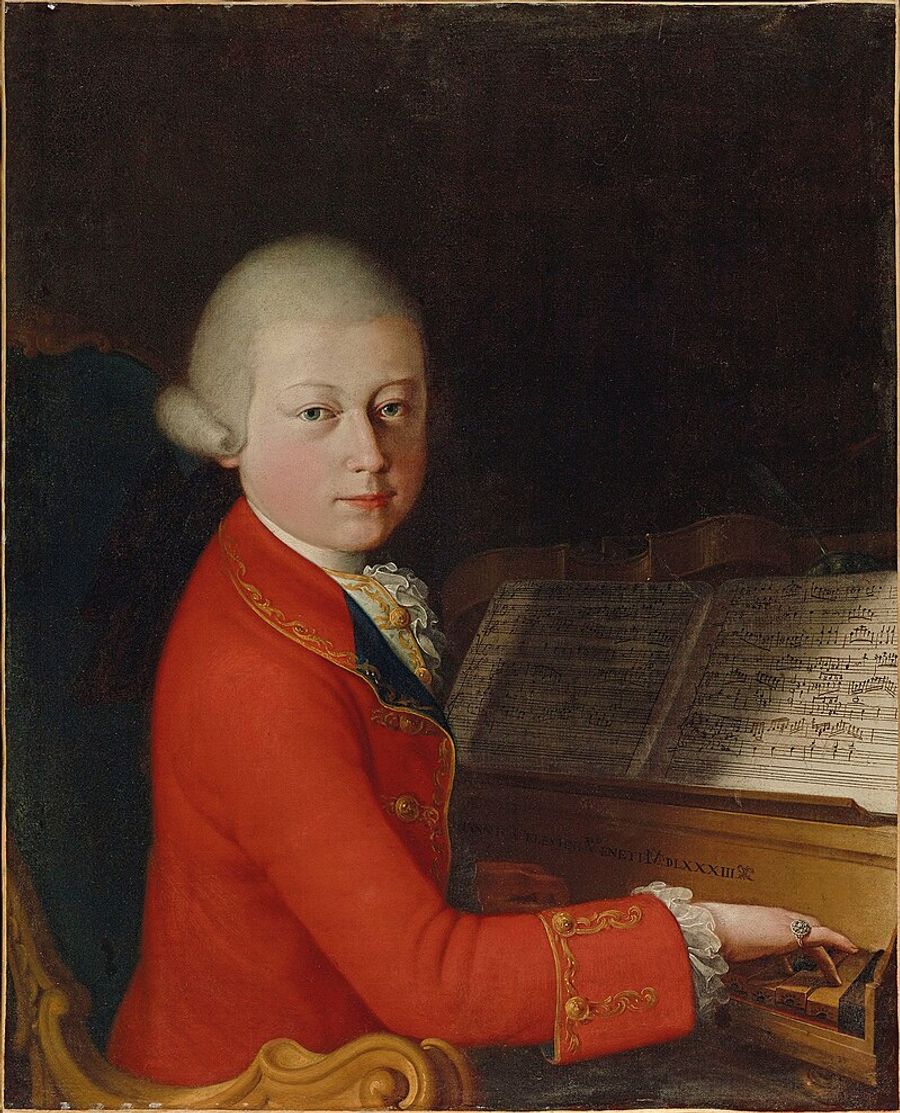
Mozart’s Symphony No. 13 in F major, K. 112 was composed in Milan on 2 November 1771, during his second Italian journey, when he was just fifteen. Often overshadowed by the later Salzburg and Vienna symphonies, it offers a vivid snapshot of the teenage composer absorbing Italian theatrical style while already testing the boundaries of the “conventional” early-Classical symphony.
Background and Context
In the autumn of 1771, Wolfgang Amadeus Mozart (1756–1791) returned to Italy for a second extended trip with his father, Leopold Mozart. Milan—then a major operatic center—was not merely a stop on an itinerary; it was a workshop in style. Italian taste prized clarity, quick dramatic contrasts, and memorable melodic profile, and these preferences left audible traces in Mozart’s orchestral writing of the period.[1])
Symphony No. 13 in F major, K. 112 belongs to a tight cluster of “Italian-period” symphonies from 1770–1771—works that are outwardly modest in scale but crucial in Mozart’s development. Nicholas Kenyon has described K. 112 as the last of Mozart’s symphonies in a “conventional mode,” suggesting that from this point the young composer was beginning to move toward a more individual symphonic language.[1]) That transitional quality—poised between courtly entertainment and genuine symphonic argument—is a principal reason the work deserves attention.
Composition and Premiere
The symphony was written in Milan during Mozart’s second Italian journey, and it is commonly dated 2 November 1771.[1])[2]) That date places K. 112 in the midst of a trip shaped by performance, networking, and the practical demands of pleasing patrons—conditions that rewarded music which could make an immediate effect.
A likely early performance is tied to a concert given by Leopold and Wolfgang Mozart at the residence of Albert Michael von Mayr on 22 or 23 November 1771.[1]) If this setting seems intimate rather than public-and-monumental, it helps explain the symphony’s proportions: K. 112 aims for brilliance and polish, not the weighty rhetoric of Mozart’s later mature symphonies.
One intriguing detail reinforces the sense of a work assembled with practical flexibility. The Menuetto may have been composed earlier and later incorporated into the symphony; the autograph manuscript reportedly shows the minuet copied in Leopold’s hand.[1]) In other words, even at fifteen Mozart was working with material that could be repurposed—an everyday reality for composers writing to deadlines.
Instrumentation
K. 112 uses the typical “early Mozart” symphonic palette, with winds reinforcing and coloring the string writing rather than operating as fully independent choirs. The scoring is given as:[1])
- Winds: 2 oboes, bassoon (often understood as reinforcing the bass line), 2 horns
- Continuo: harpsichord/organ continuo (customary in many 18th-century performances)
- Strings: violins I & II, viola, cello, double bass
Notably, the second movement is scored for strings alone.[1]) In a four-movement symphony of this era, that “withdrawal” of winds is more than an economy measure: it creates a genuine change of light and texture, like a stage scene suddenly played in close-up.
Form and Musical Character
K. 112 follows the four-movement plan that Mozart was increasingly adopting in 1771: fast–slow–minuet–fast.[1]) What makes the symphony distinctive is not novelty of design, but the teenage composer’s ability to animate familiar forms with theatrical timing and textural contrast.
I. Allegro (F major, 3/4)
The opening Allegro is set in an unexpectedly buoyant 3/4, a meter that can lend a dance-like spring even when the music is doing “first-movement” work.[1]) Rather than treating triple time as merely decorative, Mozart uses it to keep the music in constant motion—an approach that aligns with the Italian taste for rhythmic clarity and forward drive.
II. Andante (B♭ major, 2/4) — strings only
The Andante shifts to B♭ major and pares the orchestra back to strings.[1]) The result is an intimate, chamber-like sonority: phrasing and inner voices become more audible, and the listener’s focus moves from “orchestral color” to line and harmony. In a young composer, such a decision can be especially revealing—an early sign of Mozart’s instinct for pacing a multi-movement work through contrasting sound worlds.
III. Menuetto – Trio (C major, 3/4)
The Menuetto (with Trio) is in C major, offering a bright, open sonority a fifth above the home key.[1]) If the movement indeed originated separately, its presence here is still artistically apt: it reintroduces the full ensemble and resets the symphony’s public, social “tone” after the inward-looking slow movement.
IV. Molto allegro (F major, 3/8)
The finale is a Molto allegro in 3/8—quick, compact, and rhythmically alert.[1]) In the Italian orchestral tradition, finales often function like curtain-closers: brief, smiling, and designed to send an audience out with energy. Mozart’s early finales can be deceptively simple; their craft lies in clean articulation, well-judged repetition, and the feeling that the whole orchestra has been set in motion with minimal fuss.
Reception and Legacy
Because K. 112 predates the symphonies that anchor Mozart’s modern reputation (especially the late trilogy of 1788), it is easy to hear it merely as “apprentice work.” Yet its value is precisely historical and stylistic: it documents a fifteen-year-old composer writing with professional assurance in a cosmopolitan environment, balancing Italianate immediacy with the emerging four-movement symphonic norm.[1])
For listeners today, K. 112 rewards attention in at least three ways. First, it sharpens one’s sense of Mozart’s stylistic education: how operatic cities like Milan fed his orchestral instincts. Second, the symphony’s clear textural planning—especially the string-only Andante—shows an early mastery of contrast as a structural tool, not just a surface effect.[1]) Third, it reminds us that Mozart’s later symphonic profundity did not appear from nowhere; it grew out of many such compact works in which form, pacing, and orchestral sonority were refined under real-world performance conditions.
In sum, Symphony No. 13 in F major, K. 112 may not aspire to the monumental, but it is far from a mere juvenile trifle. Heard on its own terms—as a Milanese work of 1771—it speaks with poise, charm, and a budding sense that the “conventional” symphony could become something more.[1])
Sources
[1] Wikipedia: overview, context (Milan/second Italy journey), movements, instrumentation, and probable first performance information for Symphony No. 13, K. 112.
[2] IMSLP work page: general information and composition date listing (1771/11/02) plus access to scores for Symphony No. 13 in F major, K. 112.