- Köchel Number
- K9 1,01 | K6 1e
- Genre
- Piano Music
- Form
- Piano Pieces
- Key
- G Major
- Date
- 1764
- Place
- London
- Age
- 8
This article looks at Mozart’s Minuet in G major, K. 1,01 (formerly K. 1e), paired with a Trio in C major, K. 1,02. It traces the long-standing claim that it was his first composition and why later study of Nannerl’s notebook points instead to a likely London origin in 1764, then outlines the piece’s form and motifs.
A Prodigy Hits the Road: London, 1764
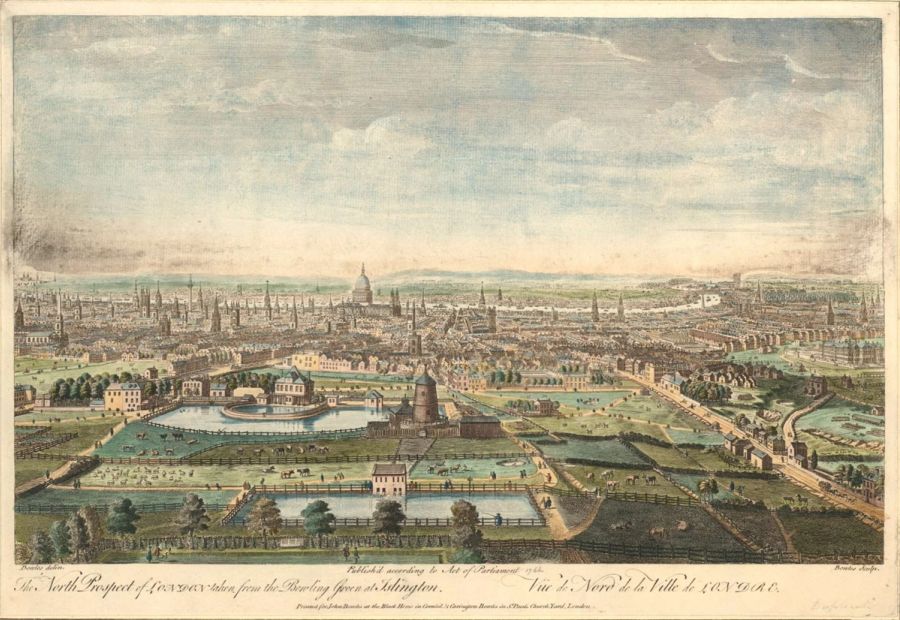
In April 1764, the Mozart family arrived in London as part of their grand European tour. Eight-year-old Wolfgang Amadeus Mozart had already dazzled audiences across Europe, and London – the largest musical capital of the day – was the next stage for his prodigious talent. The Mozarts settled into lodgings in Soho, and young Wolfgang quickly soaked up the city’s vibrant musical scene. Within weeks he performed for King George III, met influential composers like Johann Christian Bach (the “London Bach”), and even composed his first symphony while in London. This cosmopolitan exposure profoundly shaped the budding composer’s style.
Back home in Salzburg, Wolfgang had started composing as a toddler under his father Leopold’s tutelage. His earliest little pieces were entered into his sister Nannerl’s music notebook in 1761 when he was five. But here in bustling London three years later, Wolfgang’s creative voice took a leap forward. One piece from this London period – a Minuet in G major – stands out as a milestone. It’s known today as Köchel 1,01 (formerly K. 1e under older cataloging) and represents Mozart’s first mature minuet, composed not in Salzburg at age five, but likely in London around 1764.
The Mystery of Mozart’s “First” Piece
For generations, this charming G-major minuet with its accompanying trio in C major was touted as Mozart’s very first composition, supposedly written in 1761 when he was five years old. Classical music lore often placed the scene in the Mozart home in Salzburg – a tiny Wolfgang crafting a courtly dance by candlelight under Leopold’s proud eye. Even today, some popular sources still repeat that story, dating the minuet to 1761–62 and marveling that it was created by a five-year-old child. In the Köchel catalogue’s old editions, the piece was labeled “K. 1e” and grouped with Wolfgang’s 1761 Salzburg pieces K. 1a–d, reinforcing the early date.
Modern scholarship, however, uncovered an intriguing twist. The minuet in G wasn’t written alongside those first four pieces at all – it came later. Experts examining the paper and chronology of Nannerl’s Notenbuch (the notebook containing Mozart’s early works) determined that this G-major minuet and its trio (formerly K. 1e and K. 1f) were added to the notebook in 1764, during the family’s tour. In other words, Mozart composed this piece as a more experienced eight-year-old, not as a toddler. The latest Köchel catalog revision acknowledges this by renumbering it K. 1,01 (to reflect its later place in Mozart’s timeline).
This dating confusion explains why the minuet sounds a bit more polished than Mozart’s other “first” compositions. It also shows Leopold Mozart’s record-keeping in action: he continued using Nannerl’s notebook to jot down Wolfgang’s works even years after leaving Salzburg. The G-major minuet ended up in the same little book as Mozart’s 1761 exercises, which misled earlier historians. Today we know better – but the notion of a five-year-old Mozart writing a perfect minuet was so enchanting that it persisted in legend long after evidence said otherwise.
A Minuet Born in London
So what’s the real story behind Mozart’s Minuet in G major, K. 1,01? Composed in 1764 (the precise date and place aren’t documented, but London is likely), the piece captures the young composer at a transitional moment. Wolfgang was no longer the baby playing nursery ditties; he was performing for aristocracy, studying the latest music, and even improvising for scientists curious about his gift. Under the mentorship of J. C. Bach and exposure to London’s galant style, Mozart’s writing had blossomed. Leopold kept up Wolfgang’s daily lessons amid their touring, but now the boy’s imagination had new fuel – the elegant, balanced sound of contemporary London and Paris.
Leopold Mozart continued to act as his son’s scribe when needed, but by this time Wolfgang could write music down himself. In fact, surviving pages of Nannerl’s notebook indicate this minuet was copied out in Wolfgang’s own hand – a remarkable feat for an eight-year-old. No doubt Leopold was nearby to guide, yet the music itself shows a confident grasp of form that goes beyond a father’s dictation. Gone are the hesitant baroque flourishes and quirky pauses evident in Mozart’s earlier scraps. Instead, the Minuet in G reveals a child composer assimilating the refined simplicity of the galant style he heard abroad.
Notably, this minuet was paired with a short Trio in C major (catalogued as K. 1,02, formerly K. 1f). In Classical era fashion, the trio provides a brief contrast in a different key (C major, the subdominant of G) before the minuet returns. Leopold likely had Wolfgang learn that a proper minuet set features such a contrasting middle section. By writing both a minuet and trio, the young Mozart was effectively crafting a complete dance piece as one might hear at court. It’s a miniature accomplishment, but a significant step in his composition lessons.
Inside the G-Major Minuet: Surprising Poise
Musically, the Minuet in G major is bright, balanced, and surprisingly poised for something dreamt up by a child. It is written in a lively ¾ allegro tempo – more sprightly than a stately court minuet – giving it a cheerful bounce. The structure is simple but sound: the minuet proper is in two repeated sections, each 8 bars, followed by the 8-bar trio (also repeated) and then a return of the minuet. Mozart clearly understood the template of a minuet-and-trio and executed it cleanly.
One of the most charming features is its motivic unity. Every two-bar phrase in the minuet begins the exact same way: with a downward leap of a fifth, followed by a reply of four chord tones. This little motif acts like a musical signature, continuously announced and answered. Wolfgang essentially restricts himself to this motif and “builds within the restraint” of it, repeating and varying it just enough to keep the minuet flowing. The effect is one of balance and clarity – there are no odd detours, just a neat sequence of phrases that fit together naturally. Each section ends with a proper cadence in G major, showing that Mozart, at eight, knew how to begin and end a musical thought in the correct key.
In contrast to an earlier F-major minuet (K. 1d) that Leopold noted down in 1762, this G-major minuet feels less Baroque and more contemporary. The older piece (K. 1d) had more old-fashioned ornaments and stop-start phrases, betraying Leopold’s influence and a young child’s tentative ideas. K. 1,01, by comparison, sticks to a straightforward melody-and-accompaniment texture with a light touch – very much in the galant style of the mid-18th century. There are even a few Alberti bass-like broken chords in the left hand, hinting at trends Mozart picked up from newer music he’d heard. In short, the minuet is technically simple (two-part harmony, modest range) but stylistically up-to-date for 1764. It sounds like a polite drawing-room dance tune of the era, not a lesson piece – and that is part of its magic.
The accompanying Trio in C major is even more basic but serves its purpose well. Shifting to C major provides a sunny contrast to the G-major minuet. The trio’s melody also uses repeated two-bar units, keeping the whole composition thematically cohesive. After its quick 8 bars, the music returns to G major for a final run-through of the minuet. All told, minuet–trio–minuet barely lasts a minute in performance. Yet within that minute, we witness young Mozart channeling the elegance of a form many times his age.
A Glimpse of Things to Come
It’s worth remembering that when Mozart wrote this piece, he was already a seasoned performer despite his age – and it shows. Contemporaries who heard Wolfgang in 1764 London were astonished by how “polished” and unchildlike his playing and improvisations were. This little Minuet in G embodies that same precocious polish. There’s nothing earth-shattering in it (it uses the conventional language of its time), but the mere fact a child could internalize that language and produce a coherent, sweet-sounding dance is extraordinary. In its modest way, the piece foreshadows Mozart’s genius, the knack for clarity and charm that would later blossom in his great works.
Today, the Minuet in G major K. 1,01 has a special place in the Mozart canon. Music students often encounter it as an introductory classic – a perfect beginner’s Mozart piece, precisely because it was created by a beginner (albeit an unusually gifted one). When you hear a youngster plunk out the opening chords of this minuet on a piano, you’re essentially re-enacting history: Mozart himself was a little boy testing the boundaries of melody and form.
//
Sources:
Sheet Music
Download and print sheet music for Minuet in G Major (K. 1,01) from Virtual Sheet Music®.
Sources
The London Bach finally gets his London revival | Classical music | The Guardian
Nannerl Notenbuch - Wikipedia
Listen to the first piece that Mozart ever wrote… when he was FIVE years old - Classic FM