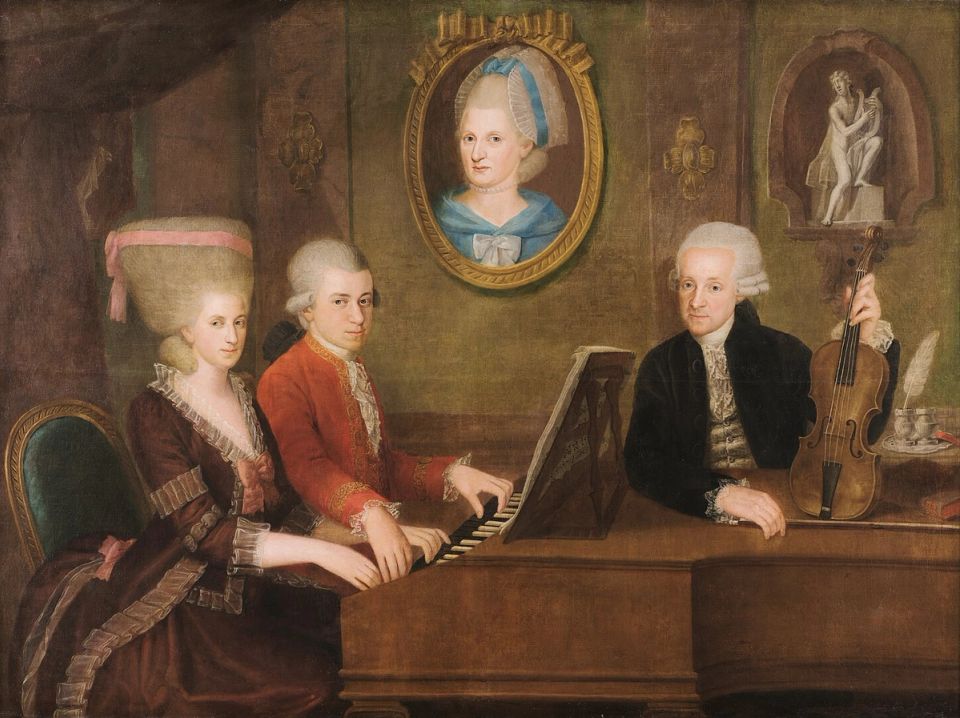
Leopold Mozart was a devoted teacher to both children and recognized Wolfgang’s extraordinary talent from an early age. He took Wolfgang on extensive tours across Europe to cultivate his musical gifts, acting as both father and manager. Their relationship, however, evolved over time from close collaboration to growing tension as Wolfgang sought independence.
Early Life and Musical Training
Leopold Mozart played an integral role in Wolfgang’s early development, both personally and professionally. From toddlerhood, Wolfgang displayed exceptional musical aptitude, which Leopold diligently nurtured[1][2]. Leopold provided intensive instruction in keyboard, violin, and composition, and by all accounts gave his son an “admirable education”, raising him to be as gracious and good-natured as he was musically gifted[3]. Father and son toured Europe throughout Wolfgang’s childhood – starting with trips to Munich and Vienna in 1762 when Wolfgang was only six – showcasing the young prodigy at courts and concert halls. These tours brought fame and sometimes considerable fees for Wolfgang’s performances, although high travel costs often offset the profits[3][4]. Leopold willingly sacrificed much of his own career and time to promote his son’s talent: he largely gave up composing after 1762 and was repeatedly passed over for advancement in Salzburg due to his long absences abroad with Wolfgang[5][6].
Through these early years, the father–son relationship was marked by mutual affection and cooperation. Contemporary letters show Wolfgang reporting his experiences in detail to “Papa” and seeking his advice during their travels[7][8]. Leopold, in turn, expressed pride in Wolfgang’s achievements and took care to instill discipline, writing of “the unremitting zeal” with which his son pursued music[9][10]. At home in Salzburg, Leopold continued to oversee Wolfgang’s education and compositions. The two worked hand-in-hand on projects – for example, Leopold copied out Wolfgang’s early works himself to prevent theft of the music[11]. This period established a foundation of deep paternal involvement in Wolfgang’s life and career, setting the stage for both remarkable successes and future tensions.
Growing Independence and Early Conflicts
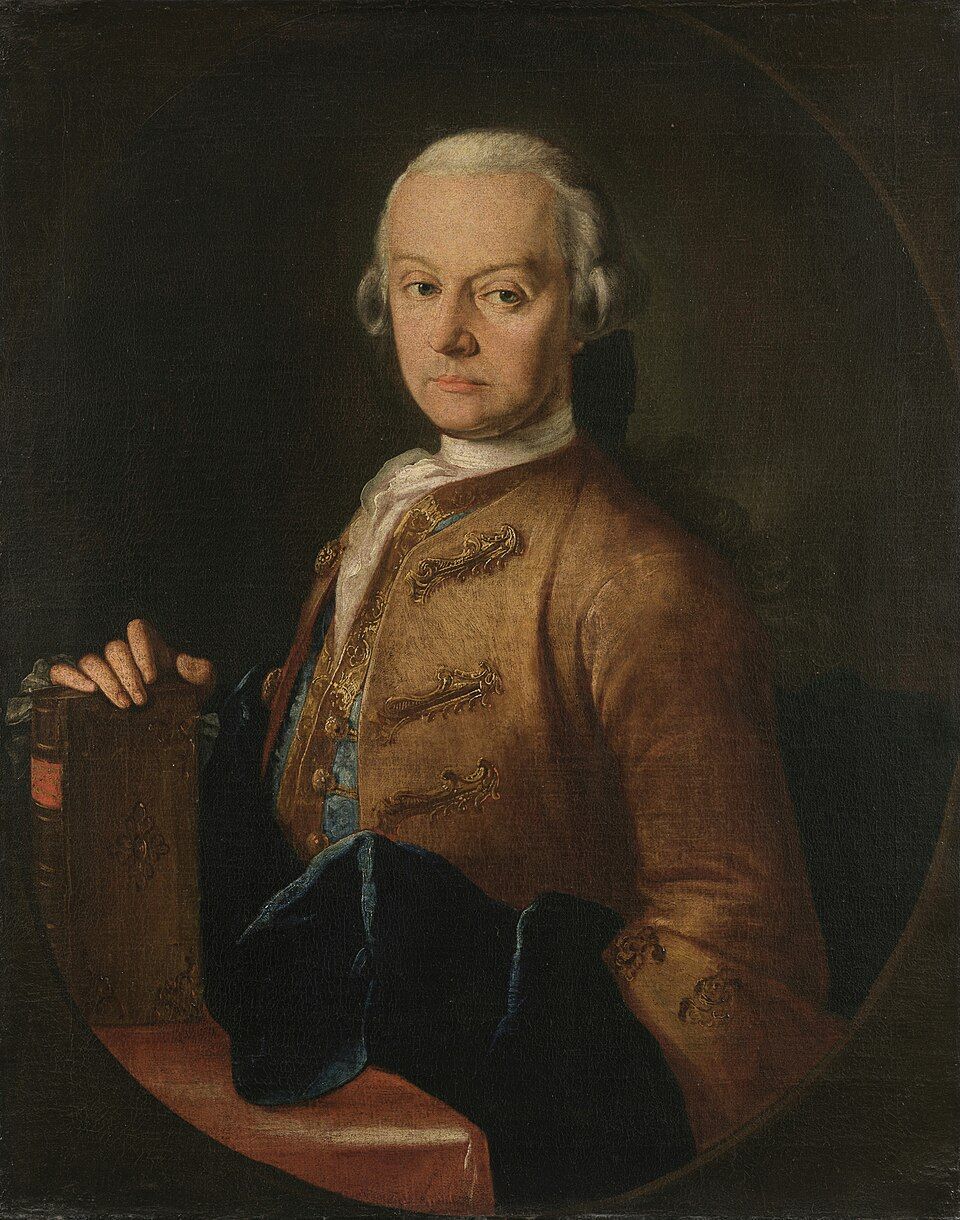
As Wolfgang entered his late teens and early twenties, strains began to appear in his relationship with Leopold. A key turning point came in 1777–1778, when Wolfgang left Salzburg (with his mother, Anna Maria) on a job-hunting tour to cities like Mannheim and Paris, against the backdrop of his frustration with limited opportunities at home. Leopold, who remained in Salzburg due to obligations at the Archbishop’s court, kept up a vigorous correspondence with Wolfgang during this trip, offering practical and moral guidance. The letters from this period reveal a mix of care and conflict: Leopold urged his son to be prudent and industrious, while Wolfgang chafed at his father’s admonitions and the lack of a satisfying position[12][13]. Tragedy struck when Wolfgang’s mother died in Paris in July 1778. Grief and guilt weighed on Wolfgang, and Leopold’s response was notably severe – he sent what one scholar calls “a crushing reply to a young man grieving for his mother,” effectively blaming Wolfgang for the circumstances leading to her death[14]. This episode exacerbated underlying tensions. Even two years later, Leopold was still reproaching Wolfgang over his mother’s early death[14], indicating how personal tragedy became intertwined with the father–son strain.
Another decisive conflict arose over Wolfgang’s career trajectory. In 1779, under pressure from Leopold, Wolfgang reluctantly returned to Salzburg and took a post as court organist for Archbishop Colloredo. However, he found life under the Archbishop stifling. Matters came to a head in 1781 when Wolfgang accompanied Colloredo to Vienna. There, feeling humiliated by the Archbishop’s treatment, Wolfgang decided to resign his Salzburg position and remain in Vienna as an independent composer. Leopold vehemently opposed this move[15]. Their correspondence around this time became heated, with Leopold admonishing Wolfgang to remember his duty and return home, and Wolfgang asserting his right to forge his own path. A “fairly harsh family quarrel resulted” from Wolfgang’s refusal to obey his father’s wishes[15]. Biographer Robert Spaethling later characterized this period as part of a two-act “drama of liberation” – Wolfgang’s break from Salzburg and his subsequent marriage – portraying it as the son’s bid to free himself from his father’s control[16]. Indeed, Wolfgang’s growing desire for autonomy in both his professional and personal life was a major source of friction.
Marriage and Professional Autonomy
Wolfgang’s determination to live on his own terms extended to his choice of a wife, which became another flashpoint with Leopold. In Vienna, Wolfgang fell in love with Constanze Weber and decided to marry her in 1782. Leopold’s reaction was strongly negative at first – he distrusted the Weber family’s intentions and was concerned that marriage would distract Wolfgang from his career or worsen his finances. He wrote disapproving letters and withheld consent for many months[17]. Wolfgang, deeply wishing for his father’s blessing, pleaded his case repeatedly. Under considerable pressure and after delaying as long as possible, Leopold finally gave a grudging permission for the marriage, though “late, reluctantly, and under duress”[15]. Even after the wedding, the atmosphere was uneasy. When Wolfgang and Constanze visited Salzburg in late 1783 to reconcile with Leopold, it was a meeting with mixed results – some accounts suggest Leopold was courteous but cool to Constanze[17]. (Notably, Wolfgang’s first child born in 1783 was named Raimund Leopold, reflecting that Wolfgang still sought to honor his father[18]. Sadly, this infant died during the Salzburg visit[19].)
Despite these personal conflicts, Leopold continued to involve himself in Wolfgang’s musical life from afar. Father and son maintained a regular correspondence in the 1780s in which Leopold offered advice on money management and career decisions, while Wolfgang updated him on his concerts and compositions. Wolfgang often sought his father’s approval for new works and even sent copies of his music back to Salzburg. For instance, he mailed keyboard concertos and string quartets for Leopold and Nannerl to play with their friends[20]. This gesture suggests that, beyond their arguments, Wolfgang respected his father’s musical opinions and wanted to share his artistic triumphs with his family. In return, Leopold followed his son’s public successes with pride. In February 1785, Leopold visited Wolfgang and Constanze in Vienna – the only time he ever saw his son’s adult life in the capital. During this visit, Leopold was visibly moved by Wolfgang’s celebrity. He attended Wolfgang’s concerts and was present when the renowned composer Joseph Haydn told him in Wolfgang’s presence: “Before God and as an honest man I tell you that your son is the greatest composer known to me”[21]. Leopold promptly reported Haydn’s praise in a delighted letter to Nannerl, sharing the glory of that moment[22][23]. This was a rare moment of open mutual respect – the father witnessing the fulfillment of the genius he had cultivated.
Later Years and Final Farewell
The last years of Leopold and Wolfgang’s relationship were a mixture of lingering friction and enduring familial bonds. Leopold remained in Salzburg with Nannerl after 1784, and, without Wolfgang at home, he grew especially close to Nannerl and even took on the care of her newborn son in 1785. Tellingly, Leopold did not immediately inform Wolfgang that he was raising this grandchild[24], perhaps fearing Wolfgang’s disapproval or simply reflecting the distance that had grown between them. When Wolfgang eventually learned of it from a third party in 1786, he wrote to his father suggesting that Leopold might likewise take in Wolfgang’s own two young children during an upcoming concert tour[25]. Leopold’s response was sharp and unequivocal. In a stern letter (now lost, but summarized to Nannerl), Leopold rebuked Wolfgang’s request, sarcastically imagining worst-case scenarios: if Wolfgang and Constanze “could travel in peace – could die – could stay in England – then I could run after them with the children”, before curtly dismissing the idea[26]. This harsh reply shows that even at this late stage, Leopold felt anger and disappointment at what he perceived as Wolfgang’s irresponsibility, while Wolfgang still risked incurring his father’s wrath by asking for help.
Soon after this exchange, Leopold’s health began to fail. In April 1787, as Leopold lay gravely ill in Salzburg, Wolfgang wrote him what would be the final letter between them. In it, Wolfgang adopted a tender and philosophical tone, seeking to comfort his father about the prospect of death. He offered musings on the immortality of the soul and the hope of a transcendent reunion, trying to console both Leopold and himself in the face of mortality[27]. This heartfelt letter suggests that, despite all the conflicts, Wolfgang’s love and concern for his father remained intact. Leopold died on 28 May 1787. Due to the distance and short notice, Wolfgang was unable to reach Salzburg for the funeral[28]. Upon hearing the news, he was distraught. He wrote to a friend that he had received “the sad news of my most beloved father’s death” and added, “You can imagine the state I am in”, a simple phrase that conveys the depth of his sorrow[29]. In the end, whatever estrangement had come between them, the loss of his father was a heavy blow to Wolfgang.
Legacy and Scholarly Perspectives
The personal and professional relationship between Wolfgang and Leopold Mozart left a profound imprint on Mozart’s life and music. Leopold’s early guidance and relentless promotion set Wolfgang on the path to becoming a musical legend, while their later clashes pushed Wolfgang to assert his independence in Vienna – the period in which he created many of his greatest works[30]. Their dynamic was complex, characterized by genuine love and respect as well as intense tension. Letters from both father and son reveal moments of warm affection (such as sharing family news and musical ideas) and episodes of conflict or disappointment. For example, Leopold’s correspondence often combined fatherly pride with strict admonitions, and Wolfgang frequently sought his father’s approval even as he rebelled against his control[12][14]. This duality meant that Leopold was simultaneously mentor, benefactor, critic, and antagonist in Wolfgang’s life.
Biographers and scholars who have examined the relationship holistically have reached differing conclusions about its nature. Some portray Leopold as overbearing and controlling. Notably, Maynard Solomon describes Leopold as a tyrannical and possessive figure who could not relinquish authority over his adult son[31]. Scholars in this camp point to incidents like Leopold allegedly blaming Wolfgang for his mother’s death and impeding Wolfgang’s autonomy as evidence of a destructive side to his parenting[14]. Other commentators have a more sympathetic view of Leopold. Musicologist Ruth Halliwell, after a thorough study of the family letters, argues that Leopold’s interventions were largely “sensible effort[s] to guide the life of a grossly irresponsible Wolfgang”[31]. In her interpretation, Leopold’s constant advice about finances, employment, and marriage stemmed from genuine concern for Wolfgang’s well-being in a difficult 18th-century musical economy. Likewise, the author of Leopold’s biography in the Grove Dictionary notes there is “no compelling evidence” that Leopold was a vindictive tyrant; instead, the letters “reveal a father who cared deeply for his son” but was “frequently frustrated in his greatest ambition: to secure for Wolfgang a worldly position appropriate to his genius”[12].
In light of these perspectives, modern scholars often acknowledge that the truth lies somewhere in between. The father–son bond was neither purely benevolent nor purely antagonistic, but a nuanced mixture of support and strife. Wolfgang’s eventual “drama of liberation” – his break from Salzburg and marriage, described by Robert Spaethling as a liberation from Leopold’s influence[16] – highlights the necessity Mozart felt to define his own identity beyond his father’s shadow. At the same time, the continued exchange of letters, the sharing of music, and Wolfgang’s deep grief at Leopold’s death all attest to an abiding love and mutual respect that survived their conflicts[20][29]. In sum, Wolfgang Amadeus Mozart’s relationship with his father Leopold was a defining element of his life, one that profoundly shaped his musical career, personal development, and major life decisions through both its nurturance and its challenges. The legacy of that relationship is visible not only in the historical record of letters and biographies but also in the very trajectory of Mozart’s artistic genius, which unfolded under the complex influence of a father’s devotion and a son’s quest for independence.
Sources
Sources
The overview above is based on primary sources such as the Mozart family correspondence and interpretations by Mozart scholars. Key information and quotations are drawn from Wolfgang and Leopold’s letters (as compiled in The Letters of Mozart and His Family) and the analyses of biographers and musicologists including Maynard Solomon, Ruth Halliwell, and Robert Spaethling[31][12][14]. These sources provide insight into the affectionate, yet often contentious, dynamic between Wolfgang and his father, illustrating how it evolved over time and influenced Mozart’s life and work[15][29].
[1] [2] [3] [7] [8] [9] [10] [11]The Letters of Wolfgang Amadeus Mozart. (1769-1791.), by Wolfgang Amadeus Mozart
https://www.gutenberg.org/files/5307/5307-h/5307-h.htm
[4] [5] [6] [12] [14] [15] [16] [17] [20] [21] [22] [23] [24] [25] [26] [28] [29] [30] [31] Leopold Mozart - Wikipedia
https://en.wikipedia.org/wiki/Leopold_Mozart
[13]The late Mozart’s letters: the I-perspective, the letters & Elias’s analysis | Whites Writing Whiteness
https://www.whiteswritingwhiteness.ed.ac.uk/blog/the-late-mozarts-letters/
[18] [19] Mozart Minute: Mozart’s Firstborn | WOSU Public Media
https://www.wosu.org/podcast/classical-101-podcasts/2015-03-27/mozart-minute-mozarts-firstborn
[27]Mozart’s Last Letter to His Father: Esotericism and Mysticism in Late Eighteenth-Century Viennese Society | Acta Musicologica
https://acta.musicology.org/acta/article/view/96-2-2024-130-machtinger