The Examination of Little Mozart: How the Royal Society Put Mozart's Genius to the Test
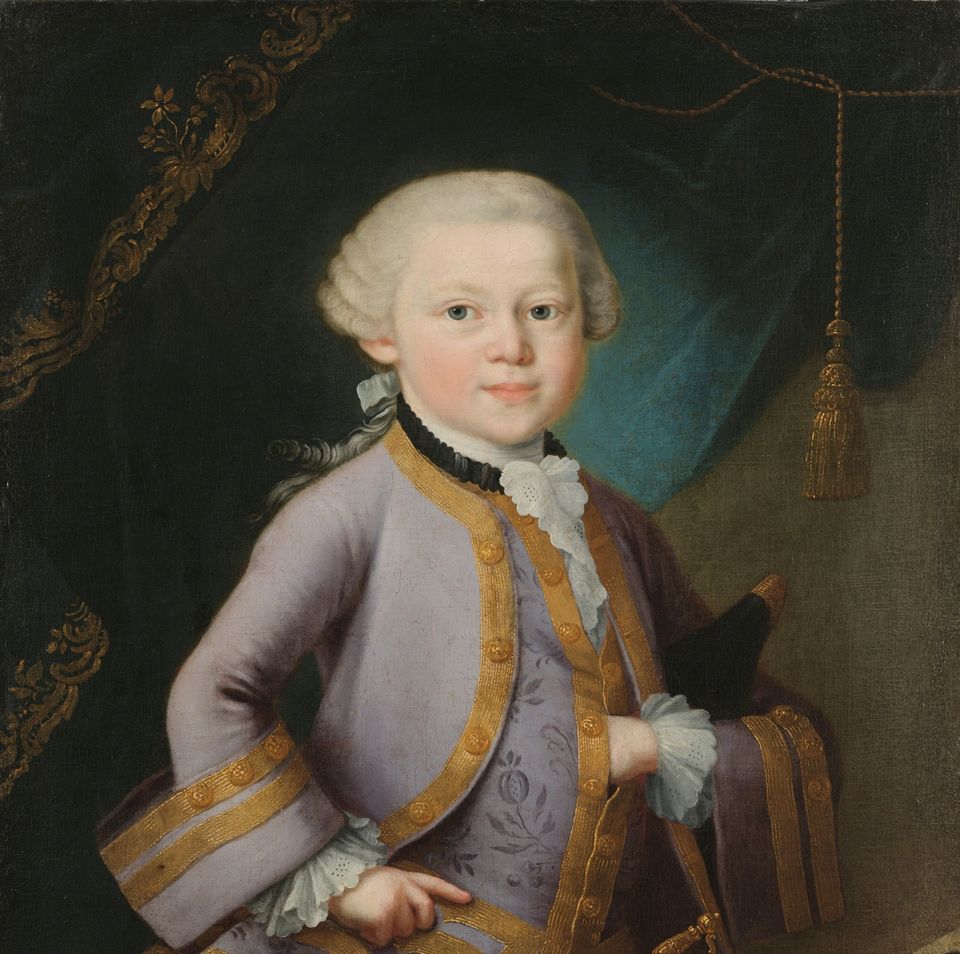
In June 1765 Daines Barrington turned his sceptical scientific eye on an extraordinary subject: a nine-year-old boy at a harpsichord in Soho, whose abilities all of London was talking about and half of London refused to believe. The report he submitted to the Royal Society treated Wolfgang Amadeus Mozart not as a marvel to be praised, but as a phenomenon to be tested — which is exactly why we still trust it.
How Mozart ended up as a scientific specimen in London
When Leopold Mozart set out from Salzburg in June 1763, England was not on the itinerary. The plan ran through the German courts, the Austrian Netherlands, Paris, and possibly northern Italy. London was added only after the family reached the French court. As Leopold wrote to his Salzburg landlord and creditor Lorenz Hagenauer on 28 May 1764: "When I left Salzburg, I was only half resolved to go to England: but as everyone, even in Paris, urged us to go to London, I made up my mind to do so." The draw was money — London was the richest, biggest city in Europe, with a wealthy merchant class that paid for public performances, unlike the court-bound concert life elsewhere. The family left Paris on 10 April 1764, endured a vomit-soaked Channel crossing, and reached London on 23 April.
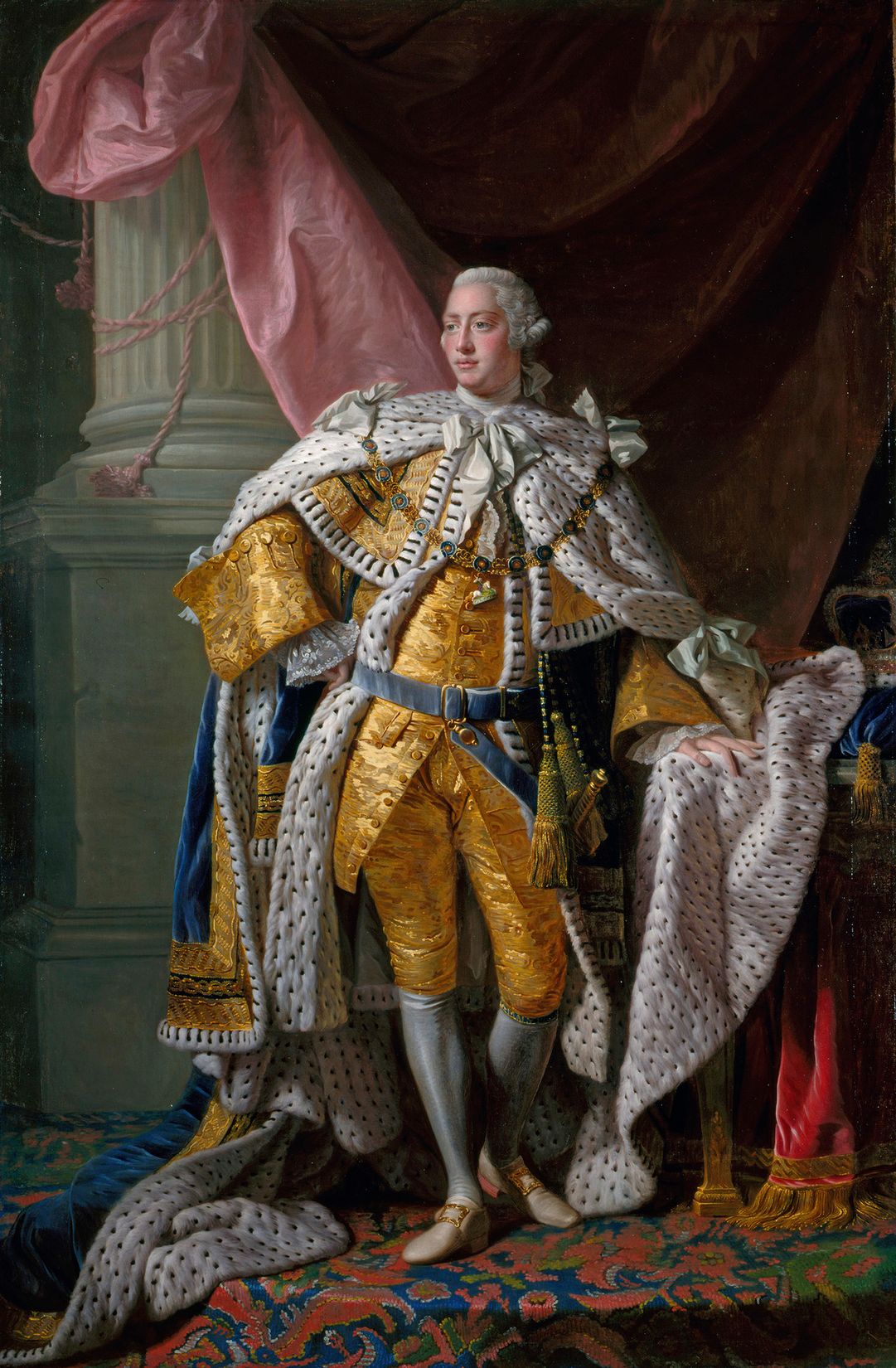
The opening was triumphant. Within days — on 27 April 1764 — Wolfgang and Nannerl performed for King George III and Queen Charlotte at Buckingham House; they returned on 19 May, when Wolfgang sight-read works by J.C. Bach, Abel, and Handel and accompanied the Queen as she sang. A third visit came on 25 October 1764. The King's favor was real; Leopold wrote that "the welcome which we have been given here exceeds all others." The boy's six sonatas for keyboard and violin (K. 10–15) were published in 1765 with a fulsome French dedication to Queen Charlotte.
Then the bottom fell out. In summer 1764 Leopold fell gravely ill with a throat infection and was thought near death. The family moved to the country air of Chelsea (Ebury Street) to let him recover; the children were forbidden to touch the keyboard. To occupy himself, the boy quietly composed his first symphony — Symphony No. 1 in E-flat, K. 16 — with Nannerl copying as he worked. She later recalled him saying, "Remind me to give the horn something worthwhile to do."
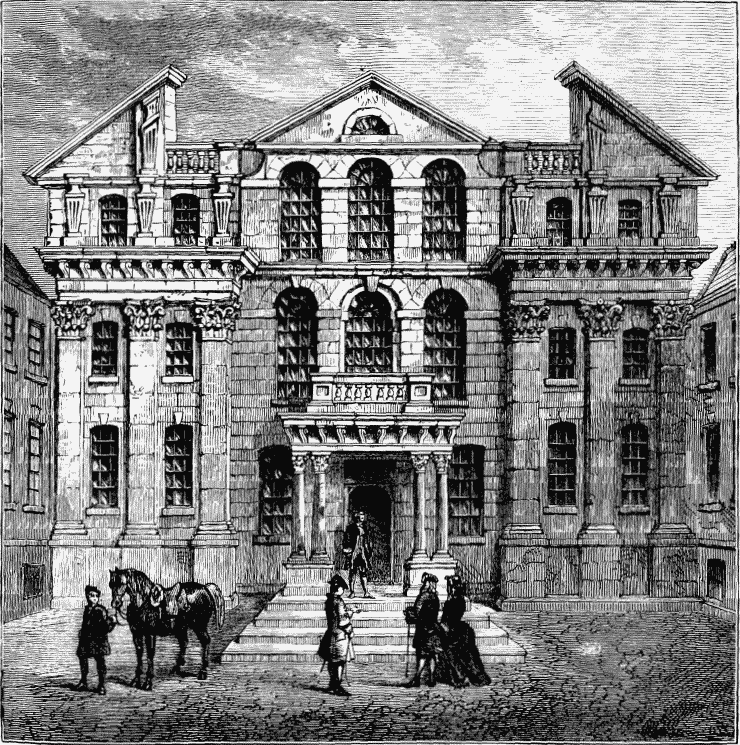
By 1765, public novelty had faded. The family, back in central London at Thrift Street, resorted to commerce. Between roughly April and June, Leopold invited the public to the lodgings to test the boy. By July, both children "appeared daily for one week in the Great Room at the Swan and Hoop Tavern" in Cornhill — a down-market venue the British Library locates "near Moorgate in the City" — at a reduced admission of two shillings sixpence, where the public could quiz the boy directly. Stanley Sadie called this "Leopold's last, desperate effort to extract guineas from the English public." It was at this low ebb — not the royal peak — that Barrington arrived.
The rumor that motivated the test
By 1765, envious whispers had hardened into a specific charge: Wolfgang was no child but a small adult with a growth deficiency — a dwarf passed off as a prodigy. The rumour was serious enough to draw a public rebuttal — an anonymous open letter in the Public Advertiser (10 May 1765), signed "Recto Rectior," almost certainly placed on Leopold's behalf. It was rediscovered and reprinted by Ilias Chrissochoidis in his 2010 study of Wolfgang's disputed age. This question — "is he really a child?" — pre-dated Barrington's involvement and was widespread among London musicians, who found it hard to credit that so young a child could surpass adults in their own art. Verifying the age also protected Leopold's livelihood, since the entire value of the act depended on the boy being as young as advertised.
Daines Barrington, naturalist
Daines Barrington (1727/28–1800) was a lawyer, judge, antiquary, and Fellow of the Royal Society and the Society of Antiquaries. He was a man of restless and eccentric curiosity: he ran cross-fostering experiments on songbirds (raising young linnets with foster parents to see whose song they learned) and published "Experiments and Observations on the Singing of Birds"; he argued the North Pole could be reached, in a tract that helped prompt an actual British polar expedition; and he recorded Dolly Pentreath, the Cornishwoman often called the last native speaker of Cornish — his report being the main source for that claim. He corresponded with the parson-naturalist Gilbert White, whose letters to Barrington form much of The Natural History of Selborne.
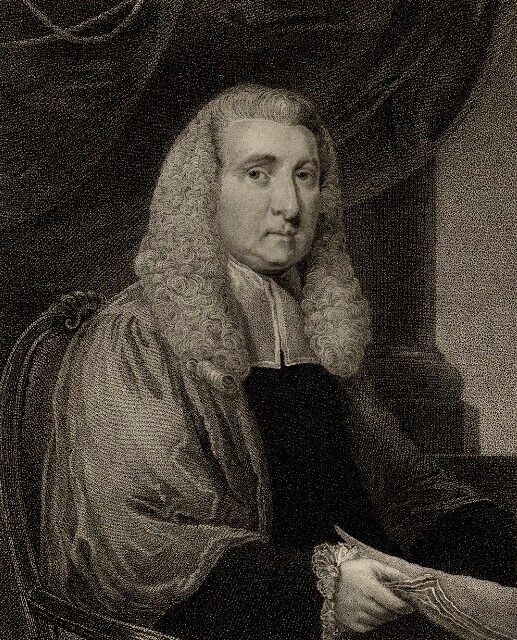
This is the crucial point about him: Barrington approached the child the way a naturalist approaches a specimen. He gave "concrete examples of behaviour and not just opinions," as the psychologist Uta Frith observed in a Royal Society essay. He was not enchanted; he was testing. That detachment is exactly why his report carries unusual evidential weight.
What Barrington actually did — and what he only heard
Barrington came prepared. He brought a manuscript Mozart had never seen: a five-part vocal-and-instrumental piece by "an English gentleman" set to words from Metastasio's Demofoonte, with the two voice parts written in the awkward contralto clef. Mozart played it at sight "in a most masterly manner," capturing the composer's intended time and style — a feat Barrington labored to explain to non-musicians, noting the boy's "little fingers could scarcely reach a fifth on the harpsichord."
Then came the famous improvisations. Knowing the boy was "much taken notice of by Manzoli, the famous singer," Barrington asked for an extemporary love song "such as his friend Manzoli might choose in an opera." Mozart, sitting at the harpsichord, "looked back with much archness" and produced a recitative and aria built around the single word Affetto. Barrington's verdict was measured, not breathless: the piece "was really above mediocrity, and shewed most extraordinary readiness of invention." He then asked for a Song of Rage suitable for the opera stage; the boy launched into a recitative on the word Perfido, and in the middle "he had worked himself up to such a pitch, that he beat his harpsichord like a person possessed, rising sometimes in his chair."
And then the cat. A favorite cat wandered in; Mozart abandoned the harpsichord and could not be coaxed back "for a considerable time." He also ran about the room with a stick between his legs "by way of horse." Barrington recorded these lapses deliberately — they were data confirming that this was a real child. He wrote that despite his suspicions about the age, the boy "had not only a most childish appearance, but likewise had all the actions of that stage of life."
Critically, Barrington distinguished what he witnessed from what he was told. The celebrated claim that Mozart could complete a fugue that J.C. Bach had broken off mid-phrase is explicitly flagged by Barrington as hearsay: "I have been informed by two or three able musicians" that when "Bach the celebrated composer had begun a fugue and left off abruptly," little Mozart took it up "and worked it after a most masterly manner." This is not an eyewitness claim. The sight-reading, the two improvised arias, the keyboard tests, and the cat — those Barrington saw himself.
The age-verification detective subplot
Here is what makes Barrington's report unique among Mozart documents: he refused to publish on his own authority. Suspecting that Leopold might have lied about the boy's age, he made inquiries among German musicians in London and got nowhere, until he obtained an extract from the Salzburg baptismal register "through his Excellence Count Haslang" — Joseph Franz Xaver von Haslang, the long-serving Bavarian (Palatine) envoy in London. The extract included a sworn statement from a Salzburg chaplain, Leopold Comprecht, which Barrington printed inside the report. (The Salzburg baptismal entry was in fact written by city chaplain Leopold Lamprecht; "Comprecht" appears in Barrington's account.)
Satisfied, Barrington wrote, in the exact words of the Philosophical Transactions: "It appears from this extract, that Mozart's father did not impose with regard to his age when he was in England, for it was in June, 1765, that I was witness to what I have above related, when the boy was only eight years and five months old."
That last clause is the report's great irony. The whole purpose of the document was to verify the boy's age — and Barrington gets it wrong. Mozart, born 27 January 1756, was nine years and five months old in June 1765, not eight. The error likely flows from Leopold's habitual practice of advertising the children as a year or two younger than they were. Many later sources repeat "eight years old" at the test, inheriting either Barrington's mis-statement or confusion about the visit's date.
This scruple explains the document's strange timeline. The test was June 1765. The paper is dated 28 November 1769. It was read before the Royal Society on 15 February 1770 and published in the Philosophical Transactions of the Royal Society of London, vol. 60 (1770), pp. 54–64, as "Account of a Very Remarkable Young Musician. In a Letter from the Honourable Daines Barrington, F.R.S. to Mathew Maty, M.D. Sec. R.S." Barrington opens with a teasing analogy: a well-attested account of a boy "who measured seven feet in height, when he was not more than eight years of age" would deserve the Society's notice — and the boy's musical stature was just that improbable.
Who the "Song of Love" was really about
The "friend Manzoli" was Giovanni Manzuoli (c. 1720–1782), a celebrated Florentine castrato soprano then at the height of his London fame. He had been engaged by the King's Theatre for the 1764–65 season, debuting in the pasticcio Ezio on 24 November 1764, and was the highest-paid star of the winter. Leopold wrote enviously to Hagenauer on 8 February 1765, in the Mozarteum's transcription, that "Manzoli is getting 1500 pounds sterling for this winter … he is taking over 20000 German guldens this winter." Manzuoli befriended the Mozart family and gave the boy singing lessons; the Digitale Mozart-Edition's editorial note to that same letter states flatly, "He gave Wolfgang singing lessons free of charge" — Mozart's only formal vocal training. The two performed together at a private concert at Lord and Lady Clive's house in Berkeley Square on 13 March 1765, an event reconstructed by Dexter Edge in Mozart: New Documents. Baron Friedrich Melchior Grimm later wrote, in the Correspondance littéraire of 15 July 1766, that Wolfgang had so profited from hearing Manzuoli that "il en a si bien profité que … il chante avec autant de goût que d'âme" — "he sings with as much taste as soul." Years later, Manzuoli came out of retirement to sing the title role in Mozart's Ascanio in Alba (Milan, 1771). So when Barrington invoked Manzoli, he was not reaching for an abstraction — he was naming the glittering opera world the nine-year-old already inhabited.
The recipient of the letter
The report is framed as a letter to Mathew Maty (Matthew Maty), the physician who was Secretary of the Royal Society and also a principal librarian of the British Museum. The British Museum connection is poignant: in their final London weeks in July 1765, the Mozarts visited the Museum — a privilege, since children were officially barred — and presented the Trustees with a copy of Wolfgang's printed sonatas, a family print, and the manuscript of his motet "God is our Refuge," K. 20, in the boy's hand. It was his only setting of English words. The little composer had trouble fitting the words to the notes in bars 7–9, so his father filled in the rest. The gift was formally acknowledged by Maty himself on 9 July 1765: "I am ordered by the Standing Committee of the Trustees of the British Museum, to signify to You, that they have received the present of the musical performances of your very ingenious Son." The manuscript survives in the British Library (shelfmark K.10.a.17.(3)) — meaning the Library can claim a Mozart collection begun by the composer himself.
The other prodigies Barrington studied
When Barrington gathered his papers into Miscellanies (1781), the Mozart account sat alongside reports on four other young musical prodigies — effectively an early comparative study of musical genius:
- William Crotch (1775–1847), the Norwich carpenter's son who played "God Save the King" before he was three. He became Heather Professor of Music at Oxford, took a doctorate, and in 1822 was appointed the first Principal of the Royal Academy of Music. His oratorio Palestine (1812) was his most enduring work; he may have composed the Westminster chimes. Yet his adult career never matched the early dazzle — and sources note his exhibition as a child left him a somewhat damaged, conservative adult.
- Charles Wesley the younger (1757–1834) and Samuel Wesley (1766–1837), sons of the hymn-writer Charles Wesley. Samuel, called "the English Mozart," became a major composer and organist, a pioneer of the English Bach revival, and the father of Samuel Sebastian Wesley — though the establishment distrusted him and he never secured a major organist's post.
- Garret Wesley, 1st Earl of Mornington (1735–1781), the Anglo-Irish aristocrat composer, Trinity College Dublin's first Professor of Music, remembered for glees such as "Here in cool grot." He was the father of Arthur Wellesley, the future Duke of Wellington — the only one of his children to inherit his musical gift.
The comparison is instructive: of the prodigies Barrington catalogued, most settled into respectable but earthbound careers. Only Mozart became Mozart.
The Handel thread
Barrington closes by comparing the boy to the young George Frideric Handel — drawing on John Mainwaring's memoir of Handel, who likewise composed in childhood and was struck by musical ideas in bed. Then the emotional turn: "I am the more glad to state this short comparison between these two early prodigies in music, as it may be hoped that little Mozart may possibly attain to the same advanced years as Handel, contrary to the common observation, that such ingenia praecocia are generally short-lived."
Handel had lived to 74. The wish was not granted. Mozart died on 5 December 1791, aged 35 — two years after Gilbert White's Selborne appeared, and nine years before Barrington himself.
What the report became
The deepest irony is that the most trusted outside testimony to Mozart's childhood gifts came from a skeptic. Barrington set out to catch a fraud. He demanded a birth certificate, recorded the boy chasing a cat, rated the improvised arias as merely "above mediocrity," and flagged his hearsay as hearsay. It is exactly this detachment — the naturalist's refusal to be charmed — that makes the document credible where a father's boasting would not be. Leopold's letters sell a miracle; Barrington's report tests one, and the test holds.
A note on disputed points: the lodgings location (Chelsea vs. Thrift Street) and the City tavern's name (Swan and Hoop vs. Swan and Harp) vary across sources; this article follows the June-1765 Thrift Street reading and notes the Swan and Hoop attribution. The chaplain's name appears as "Comprecht" in Barrington's report and as "Lamprecht" in the Salzburg register. The J.C. Bach fugue anecdote is Barrington's own clearly labelled hearsay, not eyewitness testimony.
The Original Report (1769)
The following is the complete text of Daines Barrington's letter as published in the Philosophical Transactions of the Royal Society of London, vol. 60 (1770), pp. 54–64. Read the full original at Wikisource
Received November 28, 1769.
VIII. Account of a very remarkable young Musician. In a Letter from the Honourable Daines Barrington, F.R.S. to Mathew Maty, M.D. Sec. R.S.
Read Feb. 15, 1770.
S I R,
If I was to send you a well attested account of a boy who measured seven feet in height, when he was not more than eight years of age, it might be considered as not undeserving the notice of the Royal Society.
The instance which I now desire you will communicate to that learned body, of as early an exertion of most extraordinary musical talents, seems perhaps equally to claim their attention.
Joannes Chrysostomus Wolfgangus Theophilus Mozart, was born at Saltzbourg in Bavaria, on the 17th of January, 1756.
| Note by Barrington: I here subjoin a copy of the translation from the register at Saltzbourg, as it was procured from his excellence Count Haslang, envoy extraordinary and minister plenipotentiary of the electors of Bavaria and Palatine:
"I, the under-written, certify, that in the year 1756, the 17th of January, at eight o'clock in the evening, was born Joannes Chrysostomus Wolfgangus Theophilus, son of Mr. Leopold Mozart, organist of his highness the prince of Saltzbourg, and of Maria Ann his lawful wife (whose maiden name was Pertlin), and christened the day following, at ten o'clock in the morning, at the prince's cathedral church here; his godfather being Gottliel Pergmayr, merchant in this city. In truth whereof, I have taken this certificate from the parochial register of christenings, and under the usual seal, signed the same with my own hand. Saltzbourg, Jan. 3, 1769. Leopald Comprecht, Chaplain to his Highness in this city."
I have been informed by a most able musician and composer, that he frequently saw him at Vienna, when he was little more than four years old.
By this time he not only was capable of executing lessons on his favourite instrument the harpsichord, but composed some in an early stile and taste, which were much approved of.
His extraordinary musical talents soon reached the ears of the empress dowager, who used to place him upon her knees whilst he played on the harpsichord.
This notice taken of him by so great a personage, together with a certain consciousness of his most singular abilities, had much emboldened the little musician. Being therefore the next year at one of the German courts, where the elector encouraged him, by saying, that he had nothing to fear from his august presence; little Mozart immediately sat down with great confidence to his harpsichord, informing his highness, that he had played before the empress.
At seven years of age his father carried him to Paris, where he so distinguished himself by his compositions, that an engraving was made of him.
The father and sister who are introduced in this print, are excessively like their portraits, as is also little Mozart, who is stiled "Compositeur et Maitre de Musique, agé de sept ans."
After the name of the engraver, follows the date, which is in 1764; Mozart was therefore at this time in the eighth year of his age.
Upon leaving Paris, he came over to England, where he continued more than a year. As during this time I was witness of his most extraordinary abilities as a musician, both at some publick concerts, and likewise by having been alone with him for a considerable time at his father's house; I send you this following account, amazing and incredible almost as it may appear.
I carried to him a manuscript duet, which was composed by an English gentleman to some favourite words in Metastasio's opera of Demofoonte.
The whole score was in five parts, viz. accompaniments for a first and second violin, the two vocal parts, and a base.
I shall here likewise mention, that the parts for the first and second voice were written in what the Italians stile the Contralto cleff; the reason for taking notice of which particular will appear hereafter.
My intention in carrying with me this manuscript composition, was to have an irrefragable proof of his abilities, as a player at sight, it being absolutely impossible that he could have ever seen the music before.
The score was no sooner put upon his desk, than he began to play the symphony in a most masterly manner, as well as in the time and stile which corresponded with the intention of the composer.
I mention this circumstance, because the greatest masters often fail in these particulars on the first trial.
The symphony ended, he took the upper part, leaving the under one to his father.
His voice in the tone of it was thin and infantine, but nothing could exceed the masterly manner in which he sung.
His father, who took the under part in this duet, was once or twice out, though the passages were not more difficult than those in the upper one; on which occasions the son looked back with some anger, pointing out to him his mistakes, and setting him right.
He not only however did complete justice to the duet, by singing his own part in the truest taste, and with the greatest precision: he also threw in the accompaniments of the two violins, wherever they were most necessary, and produced the best effects.
It is well known that none but the most capital musicians are capable of accompanying in this superior stile.
As many of those who may be present, when this letter may have the honour of being read before the society, may not possibly be acquainted with the difficulty of playing thus from a musical score, I will endeavour to explain it by the most similar comparison I can think of.
I must at the same time admit that the illustration will fail in one particular, as the voice in reading cannot comprehend more than what is contained in a single line. I must suppose, however, that the reader's eye, by habit and quickness, may take in other lines, though the voice cannot articulate them, as the musician accompanies the words of an air by his harpsichord.
Let it be imagined, therefore, that a child of eight years old was directed to read five lines at once, in four of which the letters of the alphabet were to have different powers.
For example, in the first line A, to have its common powers. In the second that of B. In the third of C. In the fourth of D.
Let it be conceived also, that the lines so composed of characters, with different powers, are not ranged so as to be read at all times one exactly under the other, but often in a desultory manner.
Suppose then, a capital speech in Shakespeare never seen before, and yet read by a child of eight years old, with all the pathetic energy of a Garrick.
Let it be conceived likewise, that the same child is reading, with a glance of his eye, three different comments on this speech tending to its illustration; and that one comment is written in Greek, the second in Hebrew, and the third in Etruscan characters.
Let it be also supposed, that by different signs he could point out which comment is most material upon every word; and sometimes that perhaps all three are so, at others only two of them.
When all this is conceived, it will convey some idea of what this boy was capable of, in singing such a duet at sight in a masterly manner from the score, throwing in at the same time all its proper accompaniments.
When he had finished the duet, he expressed himself highly in its approbation, asking with some eagerness whether I had brought any more such music.
Having been informed, however, that he was often visited with musical ideas, to which, even in the midst of the night, he would give utterance on his harpsichord; I told his father that I should be glad to hear some of his extemporary compositions.
The father shook his head at this, saying, that it depended entirely upon his being as it were musically inspired, but that I might ask him whether he was in humour for such a composition.
Happening to know that little Mozart was much taken notice of by Manzoli, the famous singer, who came over to England in 1764, I said to the boy, that I should be glad to hear an extemporary Love Song, such as his friend Manzoli might choose in an opera.
The boy on this (who continued to sit at his harpsichord) looked back with much archness, and immediately began five or six lines of a jargon recitative proper to introduce a love song.
He then played a symphony which might correspond with an air composed to the single word, Affetto.
It had a first and second part, which, together with the symphonies, was of the length that opera songs generally last: if this extemporary composition was not amazingly capital, yet it was really above mediocrity, and shewed most extraordinary readiness of invention.
Finding that he was in humour, and as it were inspired, I then desired him to compose a Song of Rage, such as might be proper for the opera stage.
The boy again looked back with much archness, and began five or six lines of a jargon recitative proper to precede a Song of Anger.
This lasted also about the same time with the Song of Love; and in the middle of it, he had worked himself up to such a pitch, that he beat his harpsichord like a person possessed, rising sometimes in his chair.
The word he pitched upon for this second extemporary composition was, Perfido.
After this he played a difficult lesson, which he had finished a day or two before: his execution was amazing, considering that his little fingers could scarcely reach a fifth on the harpsichord.
His astonishing readiness, however, did not arise merely from great practice; he had a thorough knowledge of the fundamental principles of composition, as, upon producing a treble, he immediately wrote a base under it, which, when tried, had a very good effect.
He was also a great master of modulation, and his transitions from one key to another were excessively natural and judicious; he practiced in this manner for a considerable time with an handkerchief over the keys of the harpsichord.
The facts which I have been mentioning I was myself an eye witness of; to which I must add, that I have been informed by two or three able musicians, when Bach the celebrated composer had begun a fugue and left off abruptly, that little Mozart hath immediately taken it up, and worked it after a most masterly manner.
Witness as I was myself of most of these extraordinary facts, I must own that I could not help suspecting his father imposed with regard to the real age of the boy, though he had not only a most childish appearance, but likewise had all the actions of that stage of life.
For example, whilst he was playing to me, a favourite cat came in, upon which he immediately left his harpsichord, nor could we bring him back for a considerable time.
He would also sometimes run about the room with a stick between his legs by way of horse.
I found likewise that most of the London musicians were of the same opinion with regard to his age, not believing it possible that a child of so tender years could surpass most of the masters in that science.
I have therefore for a considerable time made the best inquiries I was able from some of the German musicians resident in London, but could never receive any further information than that he was born near Saltzbourg, till I was so fortunate as to procure an extract from the register of that place, through his excellence count Haslang.
It appears from this extract, that Mozart's father did not impose with regard to his age when he was in England, for it was in June, 1765, that I was witness to what I have above related, when the boy was only eight years and five months old.
I have made frequent inquiries with regard to this very extraordinary genius since he left England, and was told last summer, that he was then at Saltzbourg, where he had composed several oratorios, which were much admired.
I am also informed, that the prince of Saltzbourg, not crediting that such masterly compositions were really those of a child, shut him up for a week, during which he was not permitted to see any one, and was left only with music paper, and the words of an oratorio.
During this short time he composed a very capital oratorio, which was most highly approved of upon being performed.
Having stated the above mentioned proofs of Mozart's genius, when of almost an infantine age, it may not be improper perhaps to compare them with what hath been well attested with regard to other instances of the same sort.
Amongst these, John Barratier hath been most particularly distinguished, who is said to have understood Latin when he was but four years old, Hebrew when six, and three other languages at the age of nine.
This same prodigy of philological learning also translated the travels of Rabbi Benjamin when eleven years old, accompanying his version with notes and dissertations. Before his death, which happened under the age of twenty, Barratier seems to have astonished Germany with his amazing extent of learning; and it need not be said, that its increase in such a soil, from year to year, is commonly amazing.
Mozart, however, is not now much more than thirteen years of age, and it is not therefore necessary to carry my comparison further.
The other instance of early musical genius I shall now mention is that of the late George Frederic Handel, who composed when he was little more than nine years of age, as was attested by his own account, and which was verified afterwards.
I am the more glad to state this short comparison between these two early prodigies in music, as it may be hoped that little Mozart may possibly attain to the same advanced years as Handel, contrary to the common observation, that such ingenia praecocia are generally short-lived.
The report itself (primary source)
- Daines Barrington, "Account of a Very Remarkable Young Musician. In a Letter from the Honourable Daines Barrington, F.R.S. to Mathew Maty, M.D. Sec. R.S." — Wikisource transcription. <https://en.wikisource.org/wiki/Account_of_a_very_remarkable_young_Musician>
- Philosophical Transactions of the Royal Society of London, vol. 60 (1770/1771), pp. 54–64 (DOI: 10.1098/rstl.1770.0008). <https://royalsocietypublishing.org/rstl/article/doi/10.1098/rstl.1770.0008/120129/VIII-Account-of-a-very-remarkable-young-musician>
- Royal Society, "Science in the Making" — digitized original manuscript of the paper. <https://makingscience.royalsociety.org/items/l-and-p_5_156/paper-account-of-a-remarkable-young-musician-joannes-chrysotomus-wolfgangus-theophilus-mozart-by-daines-barrington>
Scholarly and institutional commentary
- Uta Frith, "Meeting Mozart in London," The Royal Society blog (2015). <https://royalsociety.org/blog/2015/03/meeting-mozart-in-london/>
- "The Mozarts in London," British Library Music blog (2018). <https://blogs.bl.uk/music/2018/05/mozartinlondon.html>
- "Mozart in London," The Grub Street Project. <https://www.grubstreetproject.net/essays/mozartinlondon/>
- "Wolfgang Amadeus Mozart," Mozart & Material Culture, King's College London. <https://mmc.kdl.kcl.ac.uk/entities/person/mozart-wolfgang-amadeus/index.html>
- "Happy Birthday to 'Little Mozart'," Library of Congress, In the Muse blog (2017). <https://blogs.loc.gov/music/2017/01/happy-birthday-to-little-mozart/>
- "Young Mozart and the Five Tests," Liszt Academy. <https://concert.lisztacademy.hu/news/young-mozart-and-the-five-tests-120002>
- "Account of a Very Remarkable Young Musician (1769)," The Public Domain Review. <https://publicdomainreview.org/collection/account-of-a-very-remarkable-young-musician-1769/>
- "London Mozartiana: Wolfgang's disputed age & early performances of Allegri's Miserere", by Ilias Chrissochoidis. <https://www.academia.edu/249273/London_Mozartiana_Wolfgangs_disputed_age_and_early_performances_of_Allegris_Miserere>
Books and dissertations
- Stanley Sadie, Mozart: The Early Years, 1756–1781 (Oxford University Press / W.W. Norton, 2006).
- Cliff Eisen, New Mozart Documents: A Supplement to O.E. Deutsch's Documentary Biography (Macmillan / Stanford University Press, 1991); and Dexter Edge & David Black (eds.), Mozart: New Documents (online edition). <https://sites.google.com/site/mozartdocuments/>
- Emily Anderson (ed. and trans.), The Letters of Mozart and His Family (Macmillan) — the primary source for Leopold's letters to Lorenz Hagenauer on the family's London finances.
- Hannah Templeton, "The Mozarts in London: exploring the family's professional, social and intellectual networks in 1764–65" (PhD dissertation, King's College London, 2016). <https://kclpure.kcl.ac.uk/portal/en/theses/the-mozarts-in-london>
- Daines Barrington, Miscellanies on Various Subjects (London, 1781) — collects the Mozart account with those of Crotch, Charles and Samuel Wesley, and the Earl of Mornington.
Reference entries
- "Daines Barrington," Wikipedia. <https://en.wikipedia.org/wiki/Daines_Barrington>
- "Mozart family grand tour," Wikipedia. <https://en.wikipedia.org/wiki/Mozart_family_grand_tour>
- "20 Frith Street," Wikipedia (the Thrift Street / Frith Street lodgings). <https://en.wikipedia.org/wiki/20_Frith_Street>
- "Samuel Wesley (composer, born 1766)," Wikipedia. <https://en.wikipedia.org/wiki/Samuel_Wesley_(composer,_born_1766)>
- "Wolfgang Amadeus Mozart," English Heritage blue plaques. <https://www.english-heritage.org.uk/visit/blue-plaques/wolfgang-amadeus-mozart/>
- Handel Reference Database, 1770 (Ilias Chrissochoidis, Stanford). <http://web.stanford.edu/~ichriss/HRD/1770.htm>