
Ankunft im Palast
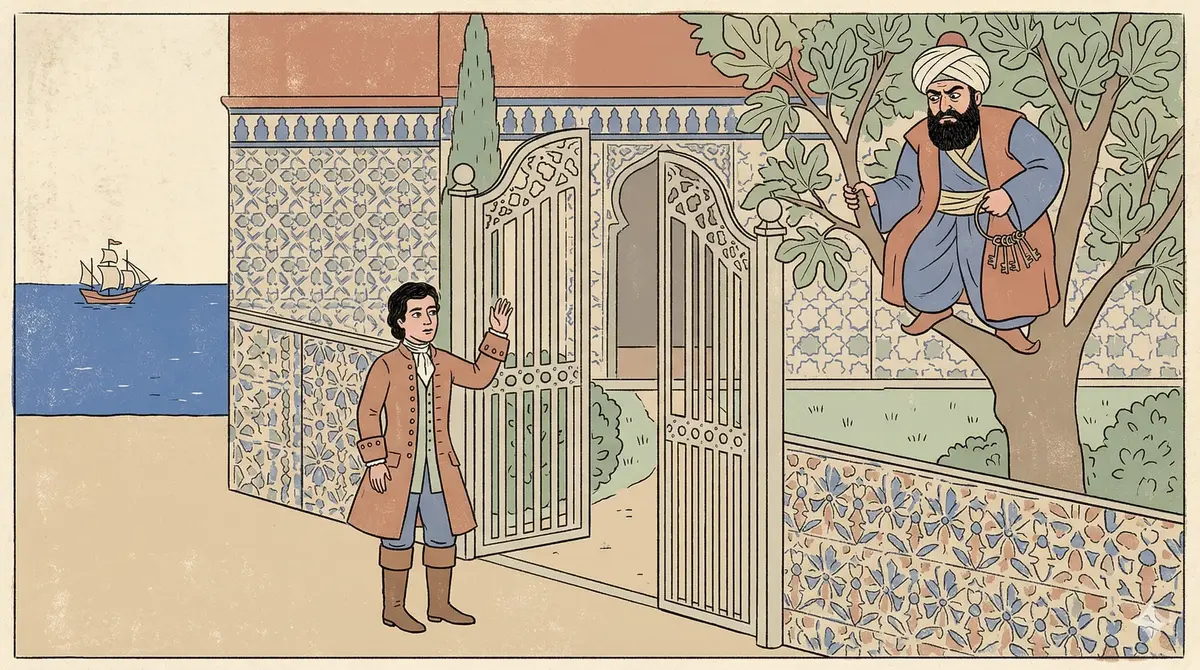
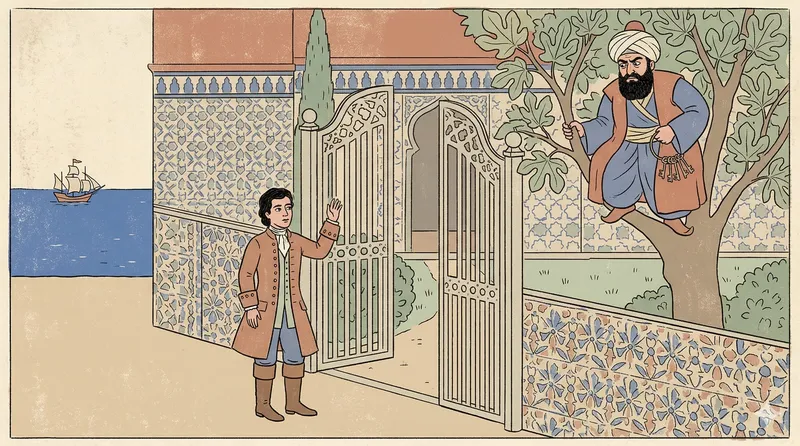
Belmonte kommt am Küstenpalast von Pasha Selim an der türkischen Küste an. Er ist aus Spanien gereist, um seine geliebte Konstanze zu retten, die zusammen mit ihrer englischen Zofe Blonde und Belmontes eigenem Diener Pedrillo von Piraten gefangen genommen wurde. Als er sich den Toren nähert, trifft er auf Osmin, den mürrischen Aufseher des Pasha, der im Garten Feigen pflückt. Osmin misstraut dem Fremden sofort und versucht, ihn zu vertreiben. Als Belmonte Pedrillos Namen erwähnt, explodiert Osmin — er verachtet den jungen Diener und verdächtigt ihn, Unheil zu planen. Belmonte gelingt es, zu erfahren, dass Konstanze sich tatsächlich im Palast befindet, und seine Hoffnung steigt.
Pedrillo und der Plan
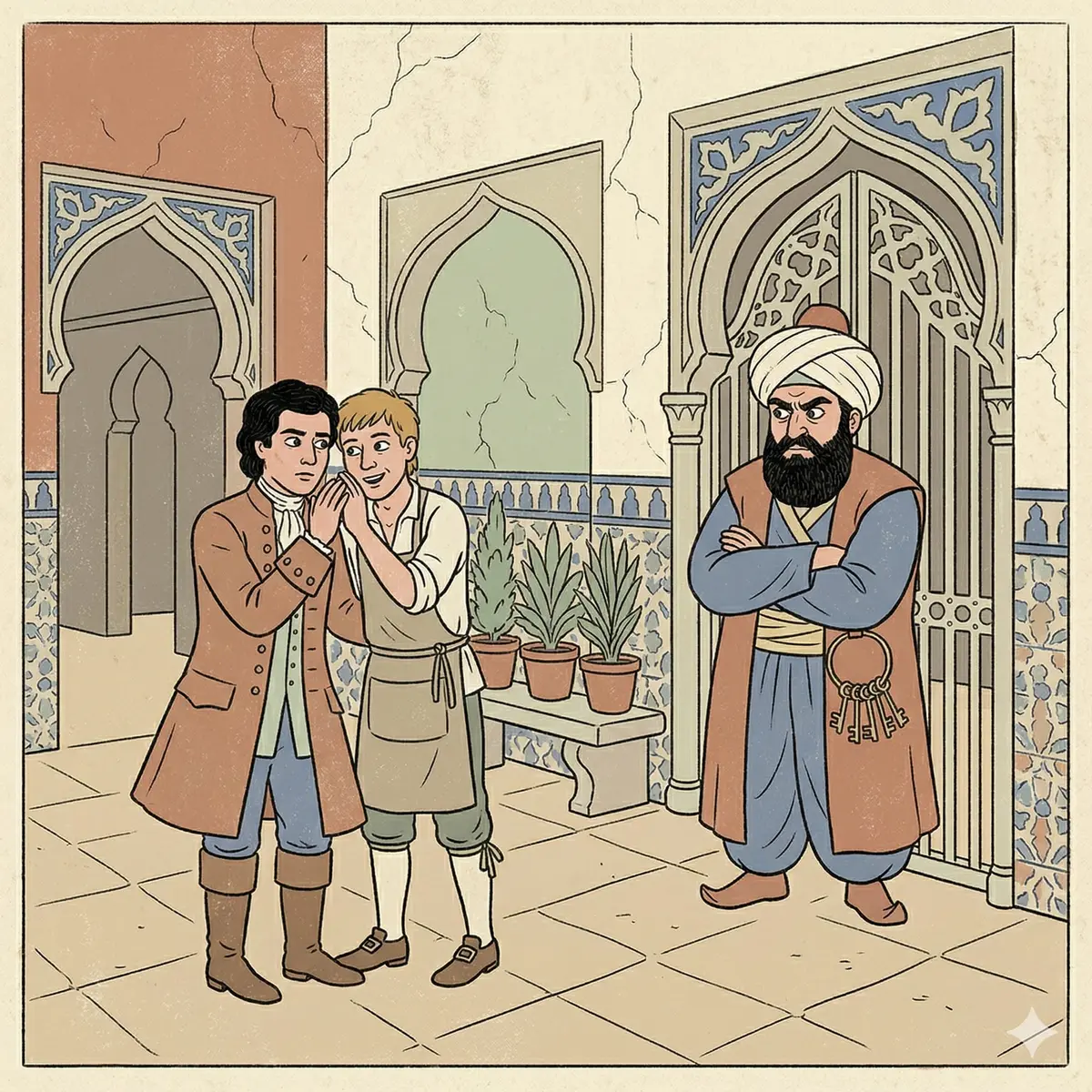
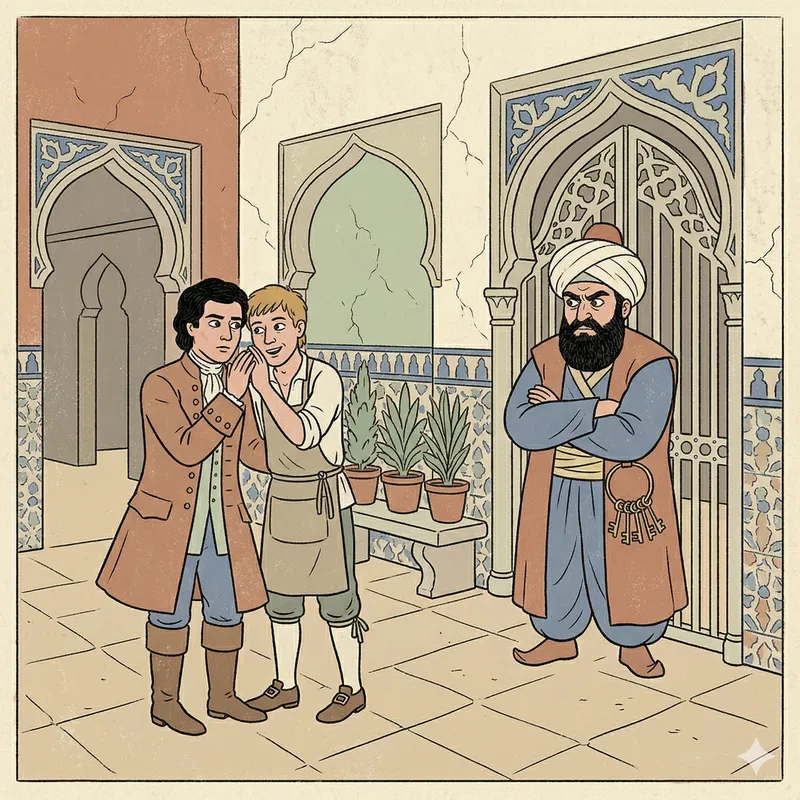
Pedrillo erscheint und ist überglücklich, seinen Meister zu sehen. Er erklärt die Situation: Pasha Selim behandelt Konstanze mit Höflichkeit und versucht, ihre Liebe zu gewinnen, während Osmin Blonde als seinen persönlichen Diener zugewiesen bekommen hat – eine Situation, die weder Blonde noch Osmin gefällt. Pedrillo hat einen Plan: Er wird Belmonte dem Pasha als talentierten italienischen Architekten vorstellen, was ihm einen Grund gibt, den Palast zu betreten. Der Pasha stimmt zu, den Neuankömmling zu treffen, aber an Osmin vorbeizukommen, erweist sich als ein ganz anderer Kampf. Gemeinsam bahnen sich Belmonte und Pedrillo ihren Weg durch den wütenden Torwächter.
Der Pascha kommt an
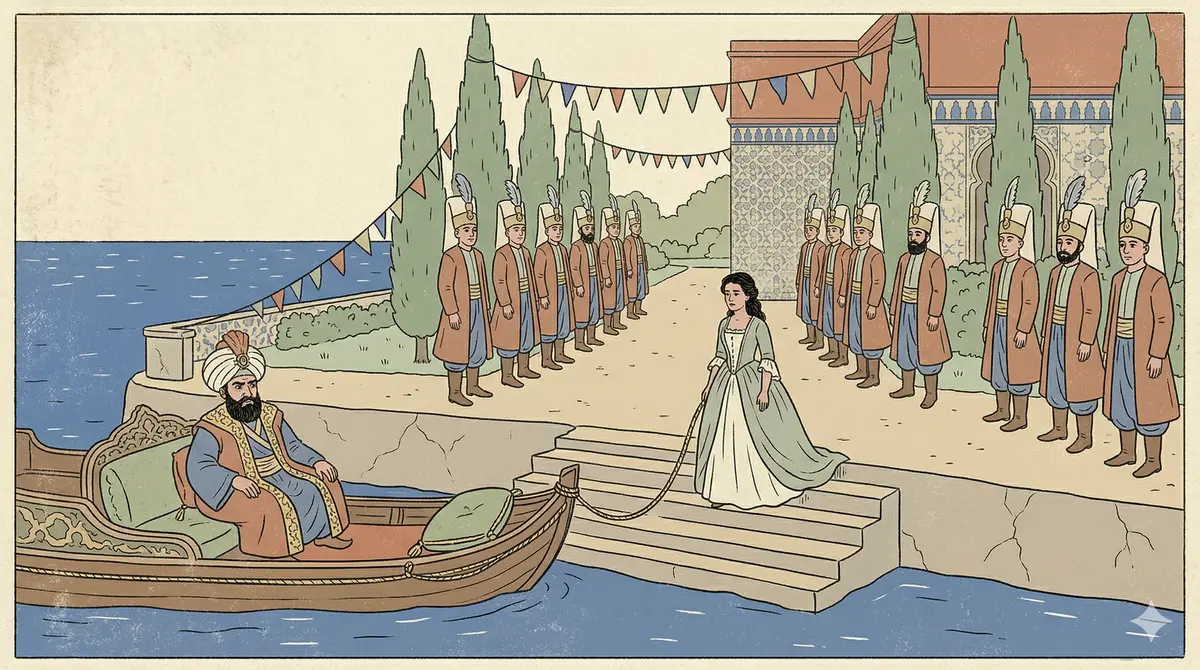
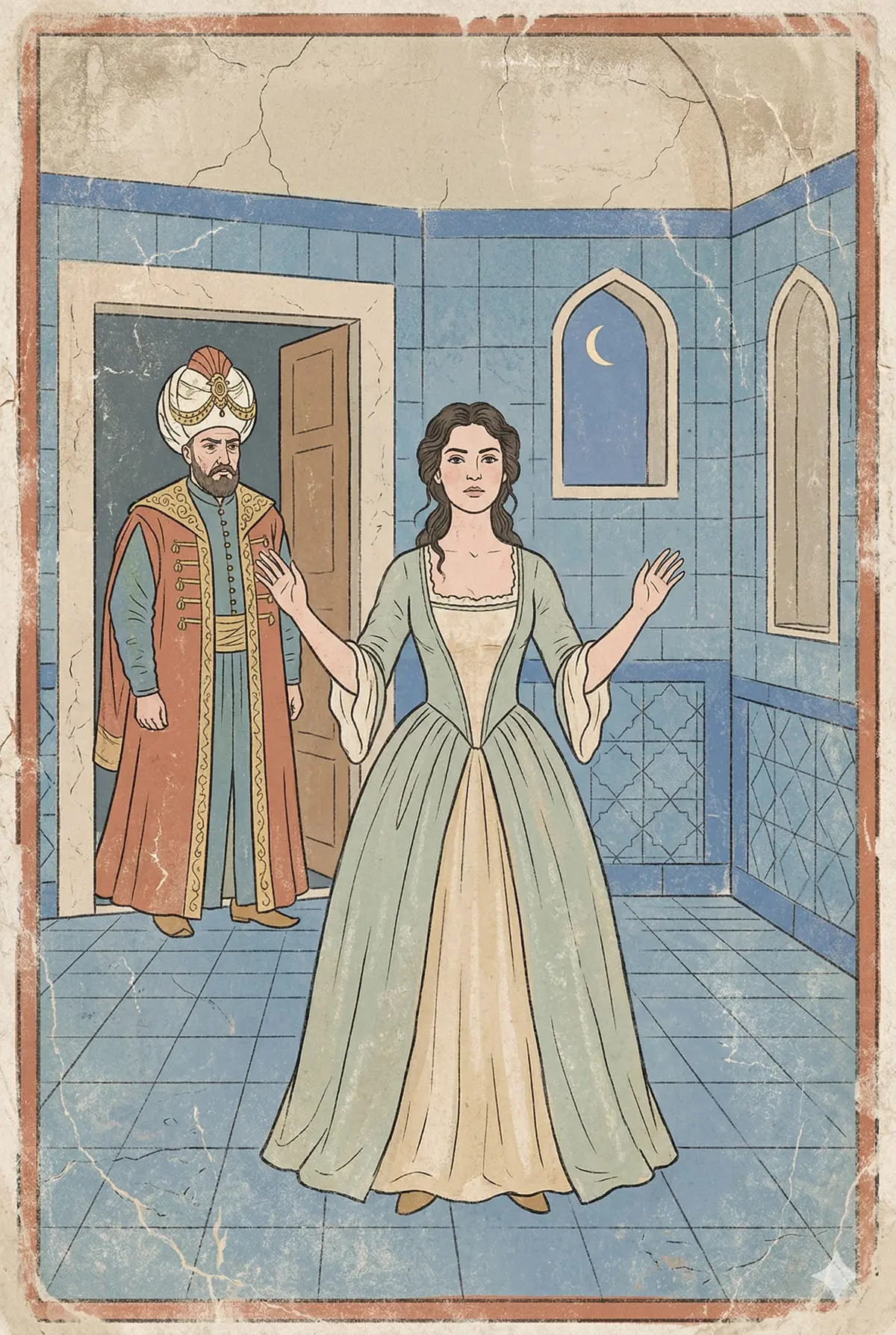
Pasha Selim kehrt von einer Vergnügungsfahrt auf dem See zurück und wird von einem festlichen Chor seiner Janitscharenwachen empfangen. Er richtet seine Aufmerksamkeit auf Konstanze und drängt sie sanft, seine Liebe zu erwidern. Konstanze, mit Würde und Trauer, sagt ihm, dass sie einst vollkommenes Glück mit einem Mann kannte, den sie liebte, und ihr Herz niemals einem anderen geben kann. Der Pasha ist bewegt, aber nicht entmutigt — er gibt ihr einen weiteren Tag, um es sich zu überlegen. Belmonte wird dem Pasha als der Architekt vorgestellt und in den Haushalt aufgenommen, was die Liebenden ein Stück näher zueinander bringt.

Blonde hält ihren Stand
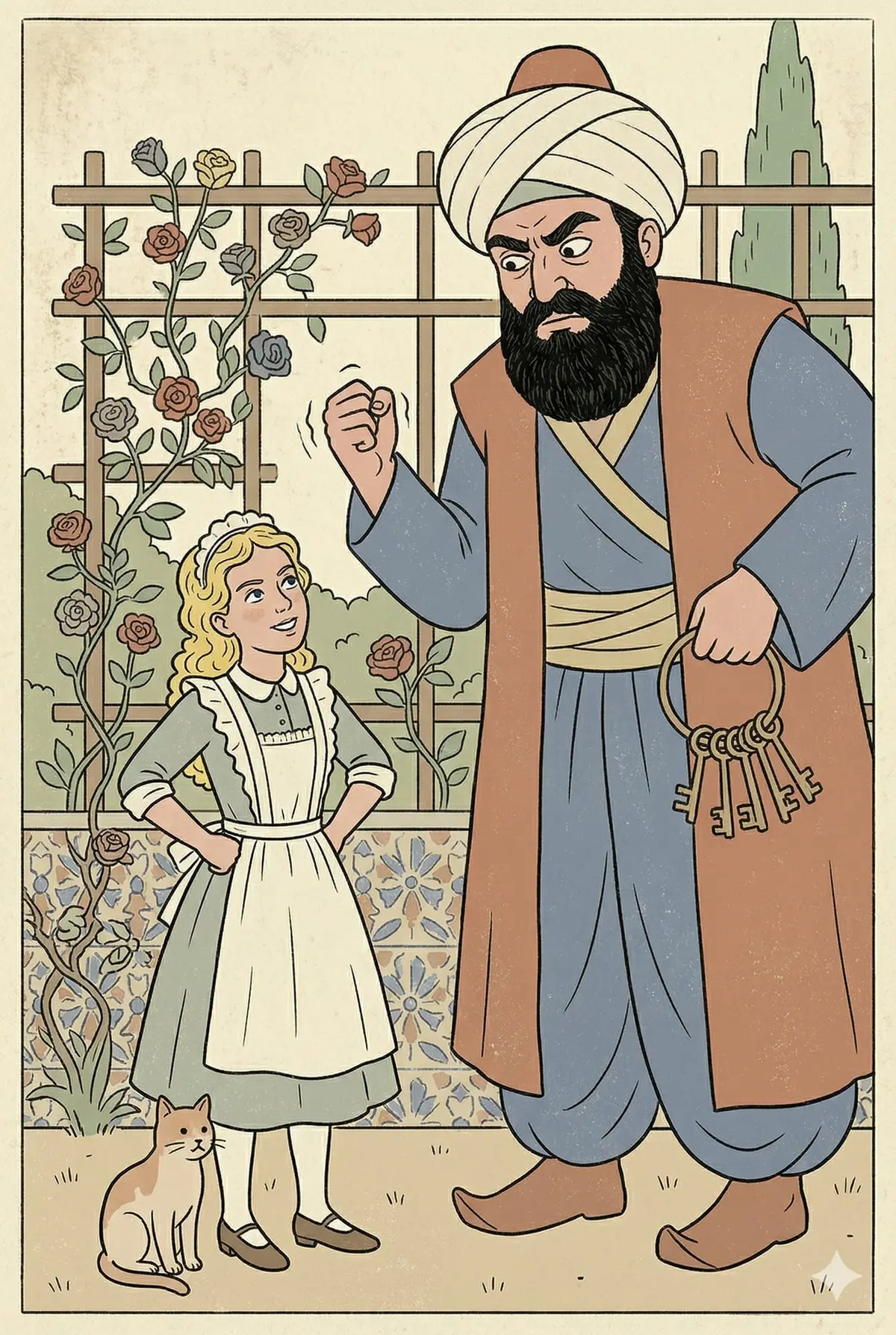
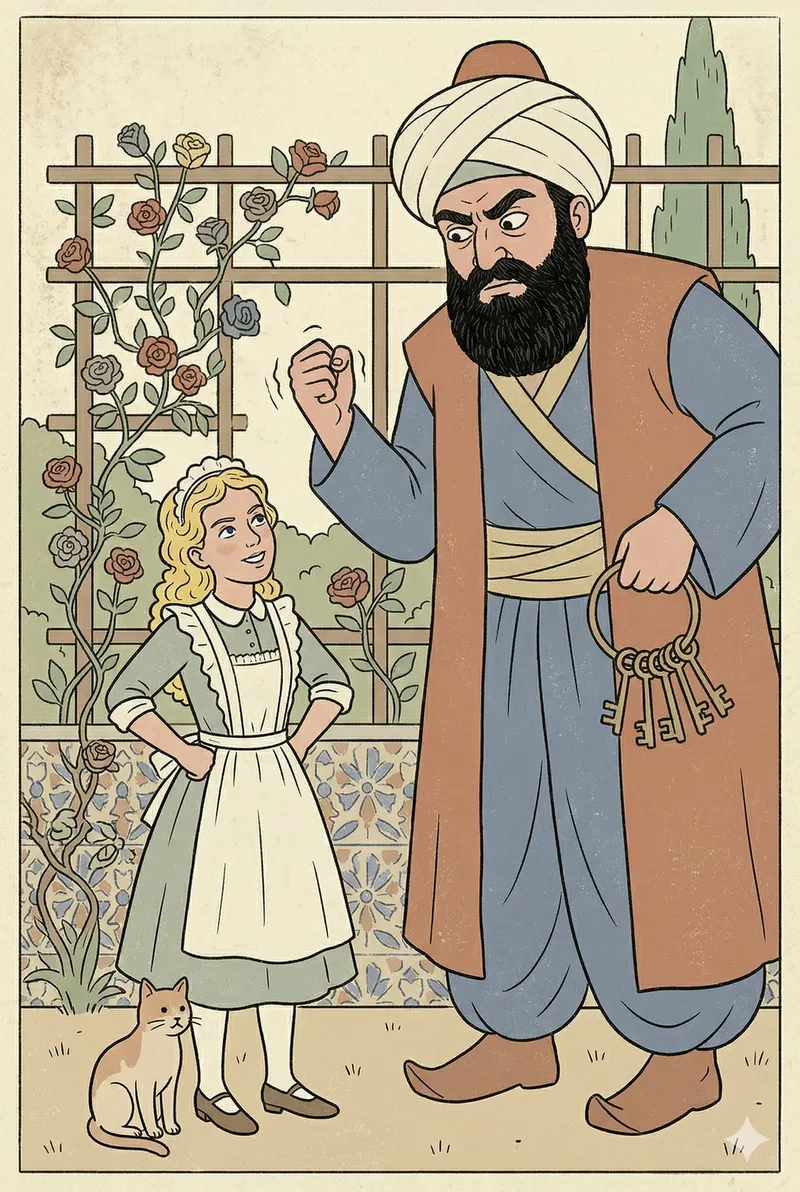
Im Palastgarten versucht Osmin, seine Autorität über Blonde durchzusetzen und befiehlt ihr, ihm zu gehorchen. Blonde weigert sich kategorisch. Sie erklärt, dass sie eine frei geborene Engländerin ist, und kein türkisches Geschwätz wird sie dazu bringen, sich zu unterwerfen. Zärtlichkeit und Schmeichelei könnten funktionieren, sagt sie ihm — Gewalt und Drohungen werden es niemals tun. Osmin, baff und wütend, zieht sich in Niederlage zurück. Die Szene ist sowohl urkomisch als auch pointiert: Blondes Beharren auf persönlicher Freiheit war eine Botschaft, die bei Mozarts Wiener Publikum stark ankam.
Konstanzes Trotz
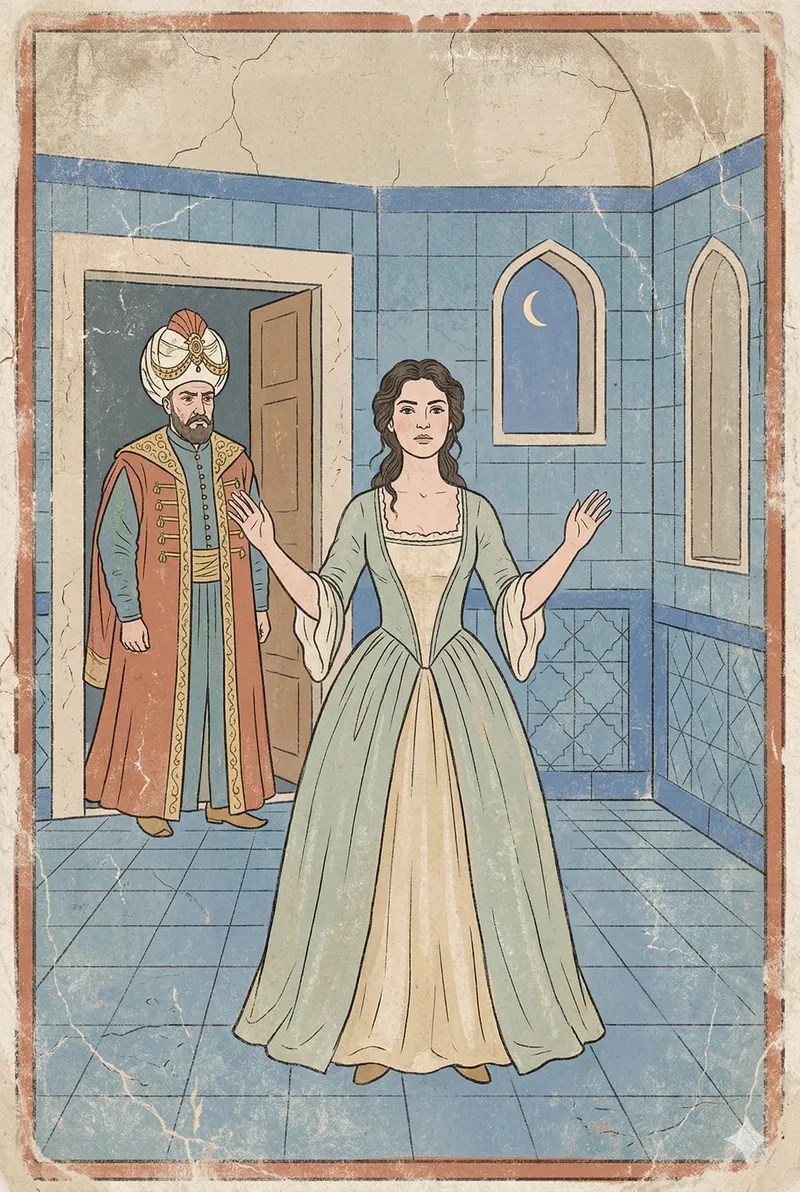
Der Pascha konfrontiert Konstanze erneut, diesmal mit einem Ultimatum: Liebe ihn freiwillig oder stelle dich den Konsequenzen, die er wählt. Konstanze ist erschüttert, aber ungebrochen. Als er mit Folter droht, antwortet sie mit der außergewöhnlichsten Arie der Oper — einer glühenden Erklärung, dass kein Leid auf Erden ihre Treue brechen kann. Die Szene ist der dramatische Höhepunkt der Oper: eine Frau ohne Macht außer ihrem eigenen moralischen Mut, die sich einem Mann entgegenstellt, der ihr Leben in seinen Händen hält.
Der Fluchtplan
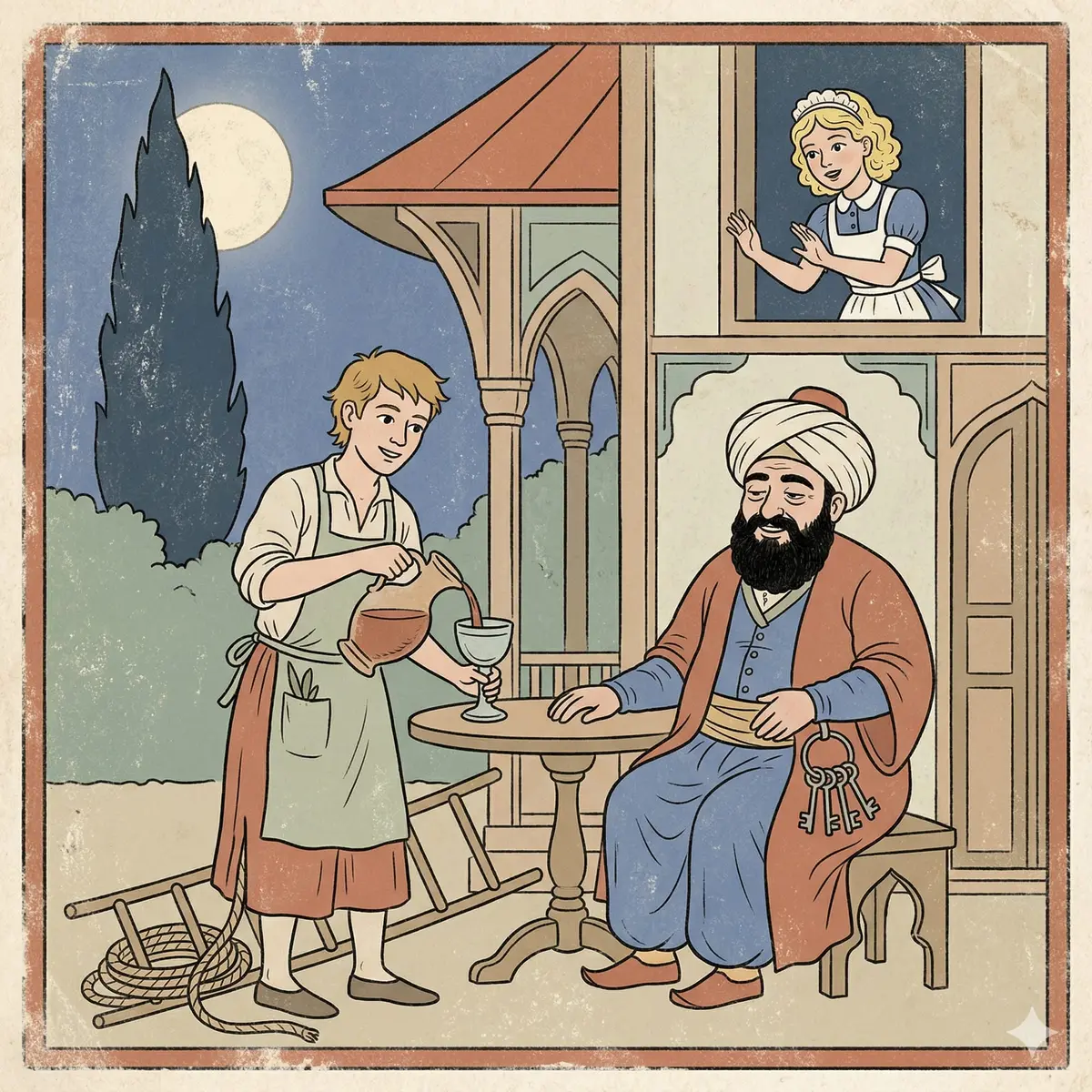
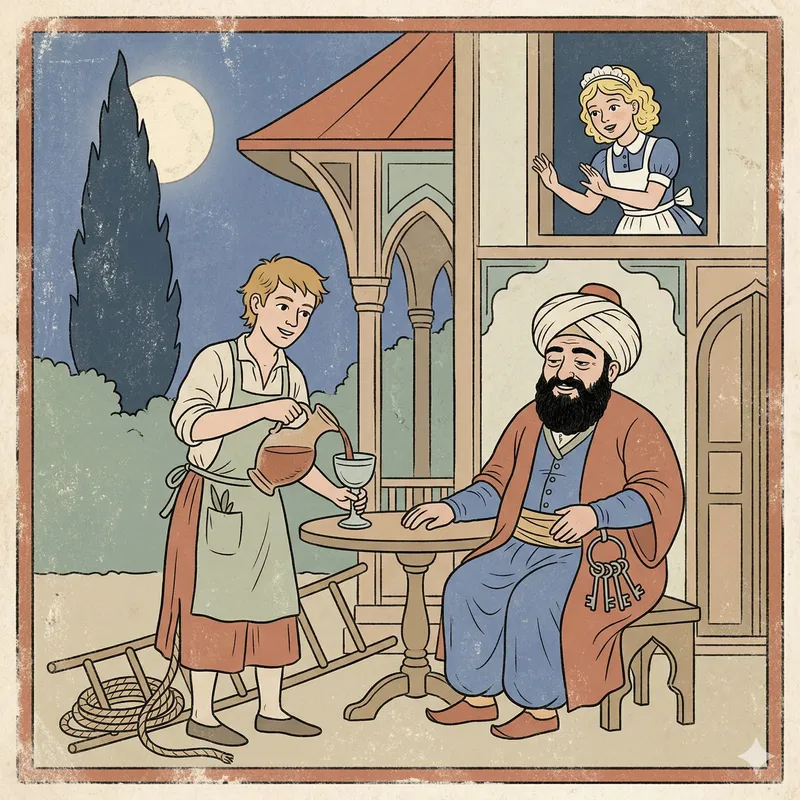
Pedrillo bringt Blonde die aufregenden Nachrichten: Belmonte ist angekommen und sie werden heute Nacht entkommen. Blonde ist begeistert. Der Plan ist einfach, aber riskant — Pedrillo wird Osmin mit Wein betrunken machen (was dem Aufseher als Muslim verboten ist, aber er kann nicht widerstehen), und während er schläft, werden die vier Gefangenen mit einer Leiter zu einem wartenden Schiff entkommen. Pedrillo versucht, seinen Mut für die bevorstehende Aufgabe zu sammeln und erinnert sich daran, dass er nur ein Leben hat und es besser zählen sollte.
Wiedervereinigung und Zweifel
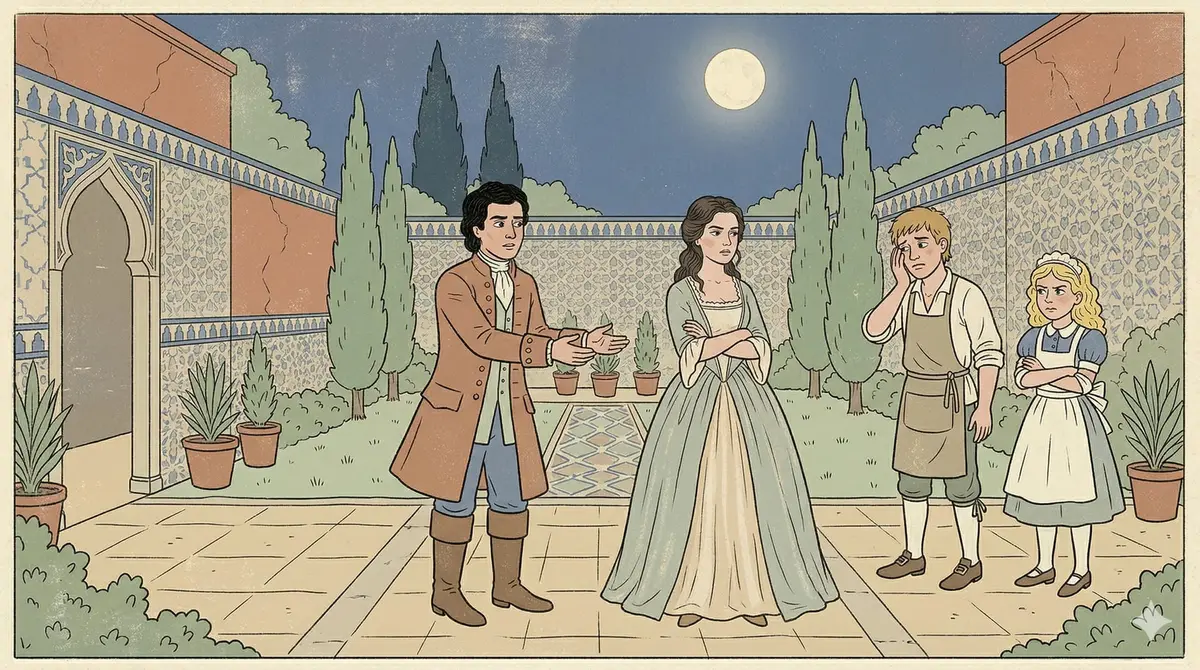
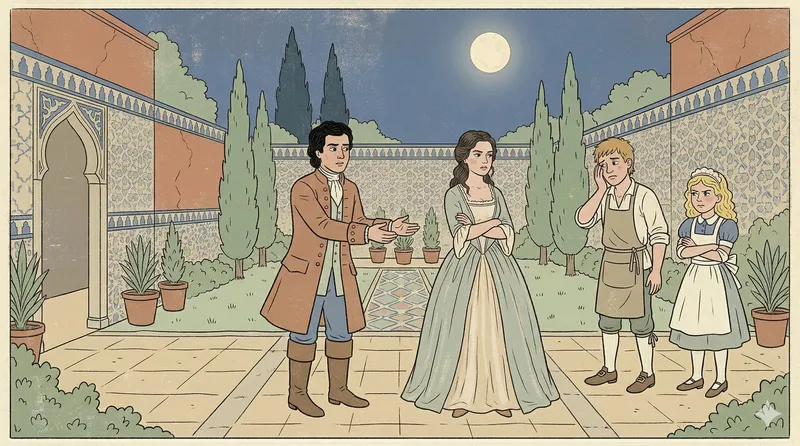
Belmonte und Konstanze sind endlich wieder vereint, und die Freude ist überwältigend. Aber das Glück wird zerschlagen, als in einem schmerzhaften Moment der Unsicherheit sowohl Belmonte als auch Pedrillo ihre Geliebten fragen, ob sie während der Gefangenschaft treu geblieben sind. Die Frauen sind am Boden zerstört und wütend — Blonde schlägt Pedrillo, und Konstanze weint über die Beleidigung ihrer Ehre. Die Männer erkennen ihren Fehler und bitten um Verzeihung. Langsam, schmerzhaft wird das Vertrauen wiederhergestellt, und die vier versöhnen sich zur Vorbereitung auf die Flucht.
Die Mitternachtsflucht
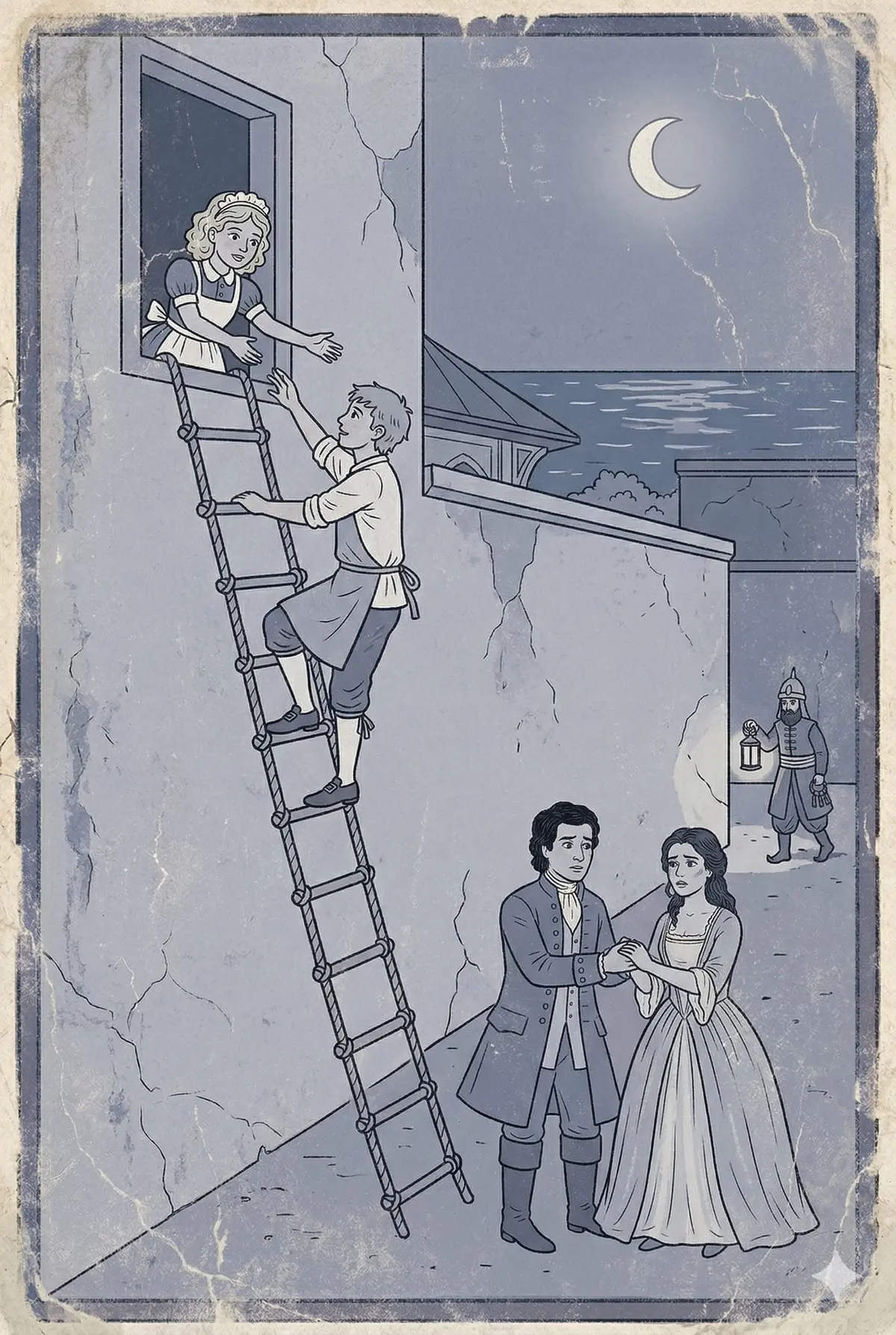
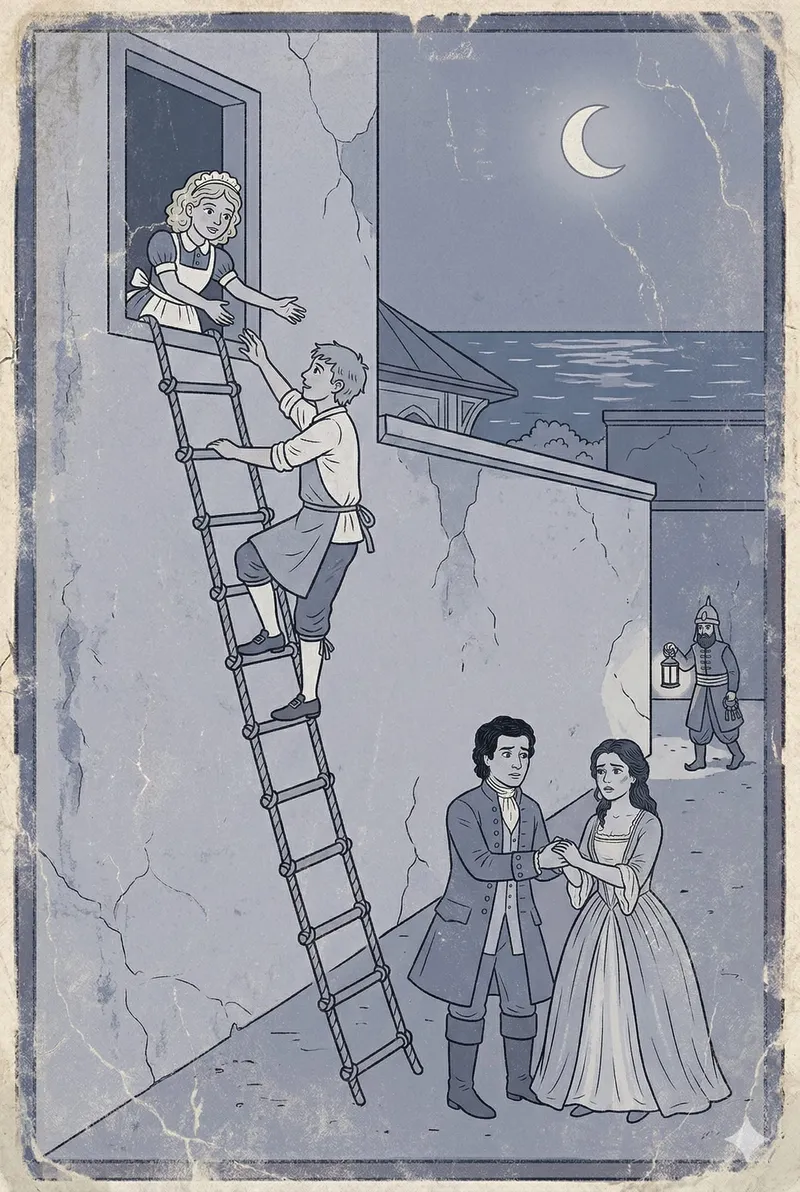
Mitternacht naht. Belmonte betet um Kraft, während Pedrillo Leitern gegen die Palastmauer aufstellt. Pedrillo singt eine Serenade als das vereinbarte Signal — wenn das Lied endet, sollen die Frauen hinunterklettern. Belmonte erreicht Konstanze zuerst, und sie steigen sicher hinab. Doch als Pedrillo Blonde aus ihrem Fenster hilft, entdeckt ein Wächter sie und schlägt Alarm. Osmin, aus seinem betrunkenen Rausch erschüttert, kommt in Wut. Die Flucht ist gescheitert.
Capture and Judgment
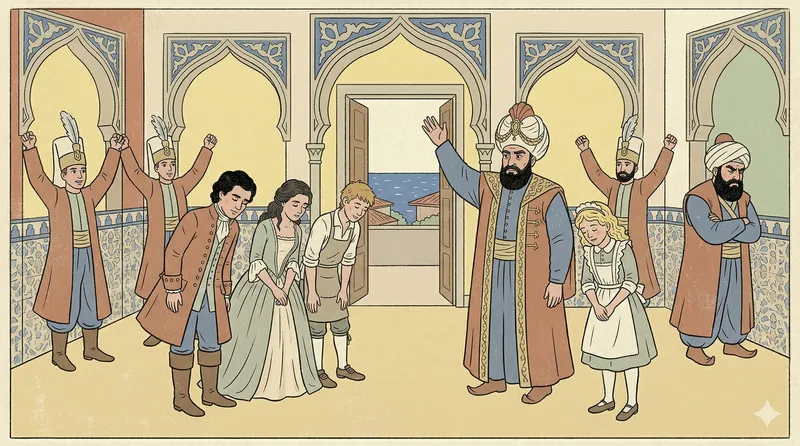
Osmin ist vor rachsüchtiger Freude außer sich. Er präsentiert die gefangenen Liebenden dem Pascha und schlägt fröhlich jede grausame Strafe vor, die ihm einfällt — Hängen, Enthaupten, Pfählen, Verbrennen auf dem Scheiterhaufen. Als der Pascha ankommt und eine Erklärung verlangt, enthüllt Belmonte seine wahre Identität: Er ist der Sohn des Kommandanten von Oran, eines Mannes, der zufällig der bitterste persönliche Feind des Paschas ist. Alle erwarten das Schlimmste. Belmonte und Konstanze, die glauben, sie würden sterben, singen ein Duett von außergewöhnlicher Zärtlichkeit — sie akzeptieren den Tod gemeinsam als den letzten Beweis ihrer Liebe.

Die Gnade des Paschas
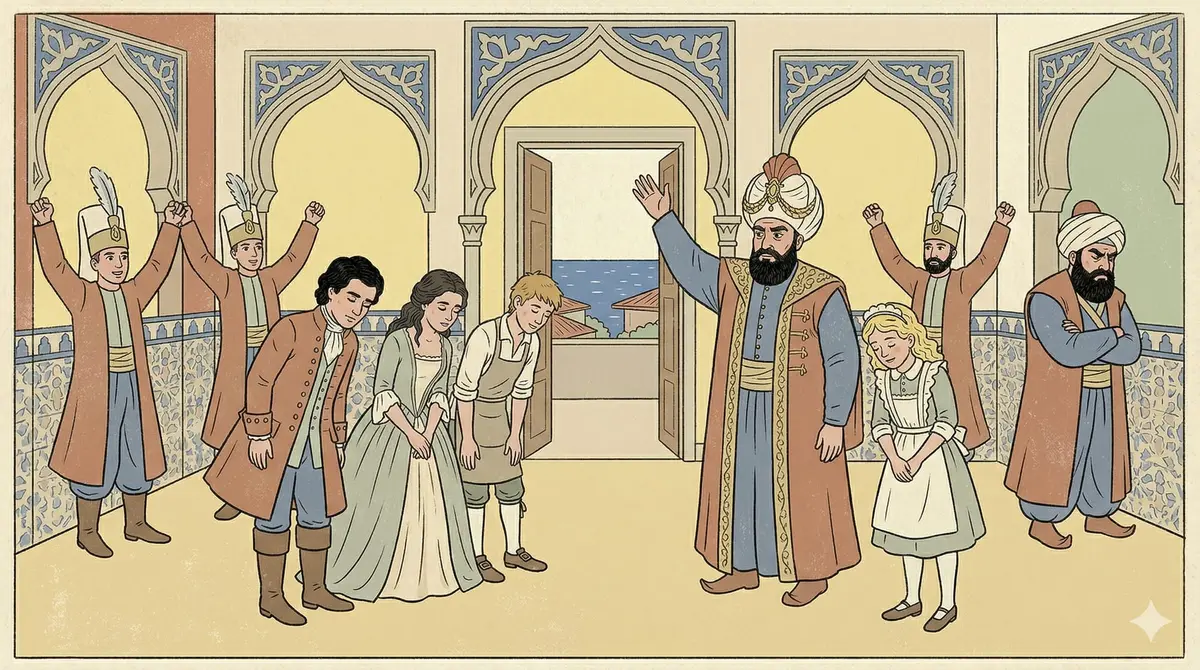
Der Pascha zieht sich zurück, um über sein Urteil nachzudenken. Als er zurückkommt, verkündet er ein Urteil, das niemand — am wenigsten das Publikum — erwartet. Er wird sich nicht für die Vergehen von Belmontes Vater rächen. Grausamkeit mit Grausamkeit zu vergelten, erklärt er, ist unter ihm. Er befreit alle vier Gefangenen und schickt sie nach Hause. Osmin ist apoplektisch. Die Liebenden, verblüfft und überwältigt von Dankbarkeit, singen jeweils eine Strophe des Dankes. Während der Janitscharenchor die Bühne mit einem letzten Lobgesang auf die Großzügigkeit des Paschas erfüllt, schließt die Oper mit der kraftvollsten Idee in Mozarts Werk: dass Barmherzigkeit größer ist als Gerechtigkeit und Vergebung die höchste Form von Stärke ist.