March for *Idomeneo* in D major (K. 206)
볼프강 아마데우스 모차르트 작
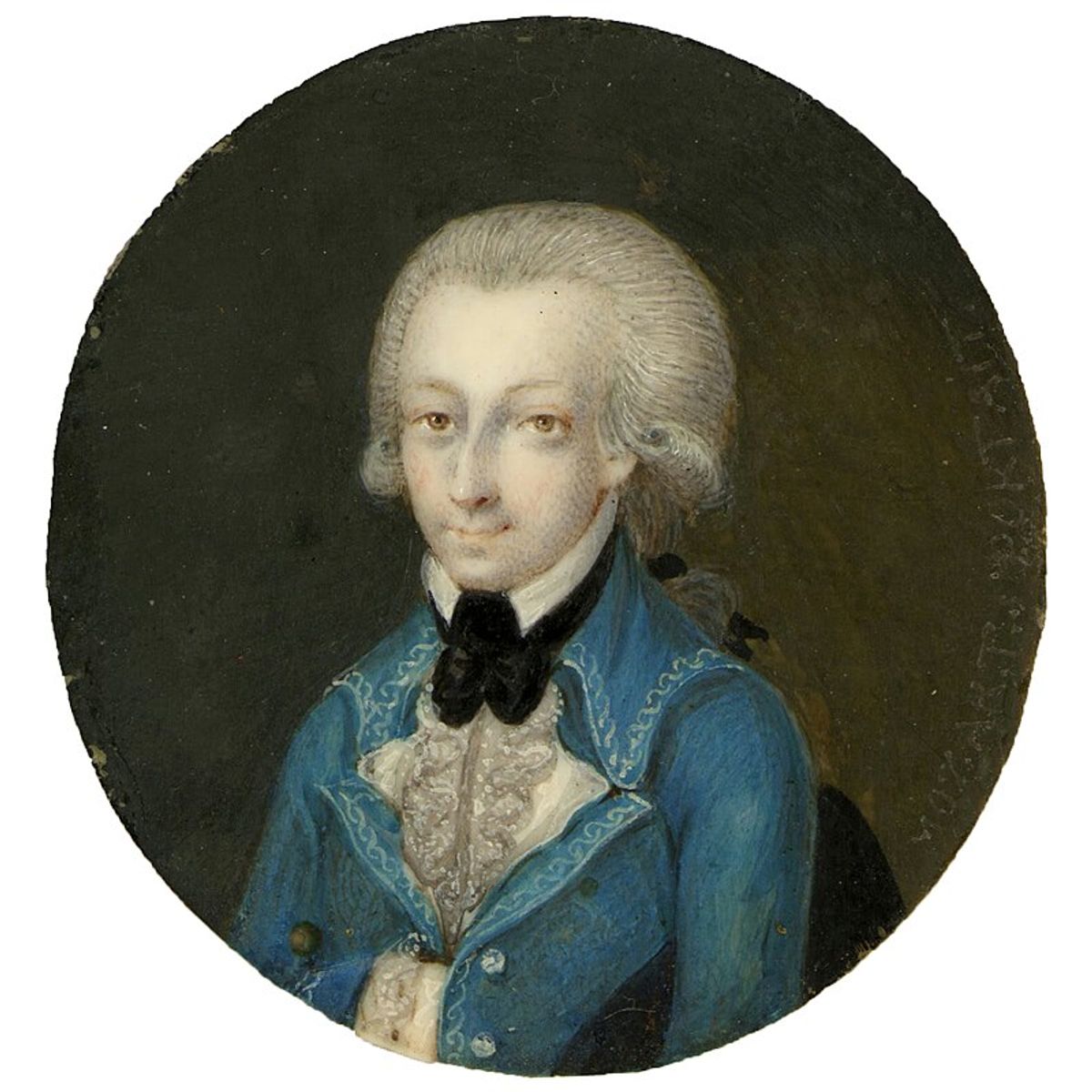
Mozart’s March for Idomeneo in D major (K. 206) is a compact ceremonial orchestral piece from Salzburg, written in 1775 when he was 19. Though easily confused with the famous opera Idomeneo, re di Creta (K. 366, premiered in Munich in 1781), this earlier march belongs to Mozart’s Salzburg theatre-and-ceremony world: music designed to frame an entrance, a procession, or a public tableau rather than to carry a dramatic scene.
Background and Context
In Mozart’s Salzburg years, public life ran on music. The Prince-Archbishop’s court, the university, and the city’s theatres all depended on short functional pieces—marches, minuets, and other “frame” movements—to accompany arrivals, transitions, and ceremonial gestures. Mozart (1756–1791) wrote such works regularly in the mid-1770s alongside serenades, divertimenti, and symphonic pieces aimed at courtly or civic occasions.



As an Amazon Associate we earn from qualifying purchases.
The March for Idomeneo (K. 206) sits squarely in that environment. It is best understood not as a “concert march” in the later nineteenth-century sense, but as a piece of Gebrauchsmusik—music for use—whose clarity of rhythm and bright scoring would have cut through the murmur of a hall and synchronized movement onstage or in a procession.
One reason K. 206 deserves attention is precisely its position in Mozart’s development: it is youthful but not immature. In 1775 Mozart was producing major works in several genres (including the violin concertos and stage pieces), and even a small march can reveal how quickly he could conjure a public, theatrical tone with economical means.
Composition and Premiere
K. 206 is catalogued as a “Marsch (Idomeneo)” in D major, associated with a Salzburg context and dated to the mid-1770s in Köchel catalog listings.[2] The subtitle “Idomeneo” is the source of frequent confusion: it does not indicate Mozart’s later Munich opera Idomeneo, re di Creta (K. 366, first performed on 29 January 1781).[1]
Rather, the title points to an earlier theatrical connection: an incidental or production-related use linked to a work or scenario named Idomeneo (in Salzburg, 1775), a reminder that classical-era theatre often employed “re-usable” ceremonial numbers—especially marches—for entrances and crowd scenes.
As with many such functional pieces, documentation of the first performance is elusive. Court and theatre music of this sort could be repeated, adapted, or inserted into different evenings with minimal comment in surviving records. The march’s very brevity and practicality—its reason for being—also help explain why it has remained marginal in mainstream Mozart literature.
Instrumentation
Sources differ in the exact scoring reported for K. 206. Some catalogue traditions treat it as a festive D-major march with full late-1770s ceremonial forces (including trumpets and timpani) alongside winds and strings.[3]
A plausible “festival” Salzburg orchestra for such a piece would include:
- Winds: 2 flutes, 2 oboes, 2 bassoons
- Brass: 2 horns, 2 natural trumpets
- Percussion: timpani
- Strings: violins I & II, viola, cello, double bass
This is consistent with the broader Salzburg pattern in Mozart’s orchestral writing: the standard core of oboes, horns, and strings, with trumpets and timpani added for brighter public ceremonial color.[4]
Form and Musical Character
A march as theatrical “signal music”
In eighteenth-century practice, a march often functions as a musical signal: it establishes order, announces authority, and makes movement legible. Mozart’s D-major marches from the Salzburg years typically rely on clear-cut phrase structure, energetic repeated rhythms, and strong cadential punctuation—ideal for entrances and exits.
D major is not incidental here. For Mozart and his contemporaries it was the “brilliant” orchestral key, closely associated with the open-string resonance of violins and (when present) the incisive, ceremonial gleam of natural trumpets and timpani. Even when the musical material is simple, the key and scoring alone can create a public, almost architectural brightness.
Economy and craft
The charm of K. 206 lies in its economy. A march must project immediately; there is no time for elaborate thematic “argument.” Mozart’s craft shows in how he can imply ceremony with the barest toolkit:



As an Amazon Associate we earn from qualifying purchases.
- a confident opening gesture (a kind of musical doorway),
- short, regular periods that support coordinated movement,
- a texture designed for audibility and rhythmic unanimity.
Listeners familiar with the later opera Idomeneo may be tempted to hear this little march as a distant pre-echo of Mozart’s mature operatic ceremonial writing. One should be cautious: the 1781 opera’s orchestral rhetoric is of a different order, and it is in Munich that Mozart famously expanded his operatic palette (notably with clarinets).[5] Yet it is still striking how early—and how fluently—Mozart could write music that behaves theatrically.
Reception and Legacy
K. 206 has never been a repertory staple, partly because it occupies an in-between category: too short to dominate a concert program, yet not attached to a universally known stage work in the way the 1781 Idomeneo is. Its survival in catalogues and recordings tends to be as a curiosity or an appendix—a reminder of how much of Mozart’s professional life consisted of composing for immediate practical needs.
For modern listeners, the work’s value is twofold. Historically, it opens a window onto Salzburg’s musical infrastructure in the 1770s, where marches functioned as essential theatrical and civic tools. Musically, it demonstrates Mozart’s ability—already at 19—to condense brilliance, ceremony, and stage-awareness into a miniature form. Heard in that light, March for Idomeneo (K. 206) becomes not a footnote to the later opera, but a small, sharply etched document of Mozart’s early orchestral professionalism.
[1] Wikipedia: *Idomeneo* (K. 366) — premiere date and general background for the later Munich opera often confused with K. 206.
[2] Spanish Wikipedia: Köchel catalogue entry list — basic catalogue identification for KV 206 ("Marcha (Idomeneo)" in D major, dated to the mid-1770s in listings).
[3] Italian Wikipedia: Köchel catalogue table — reports a fuller festive scoring tradition for K. 206 in some catalogue summaries (winds, brass, timpani, strings).
[4] Köchel Verzeichnis (Internationale Stiftung Mozarteum): general Salzburg symphony/orchestra notes — standard Salzburg orchestral core and festive additions (trumpets/timpani).
[5] San Francisco Opera educational essay: Mozart, Mannheim, and the clarinet — context for Mozart’s later operatic orchestration expansion around *Idomeneo* (1781).