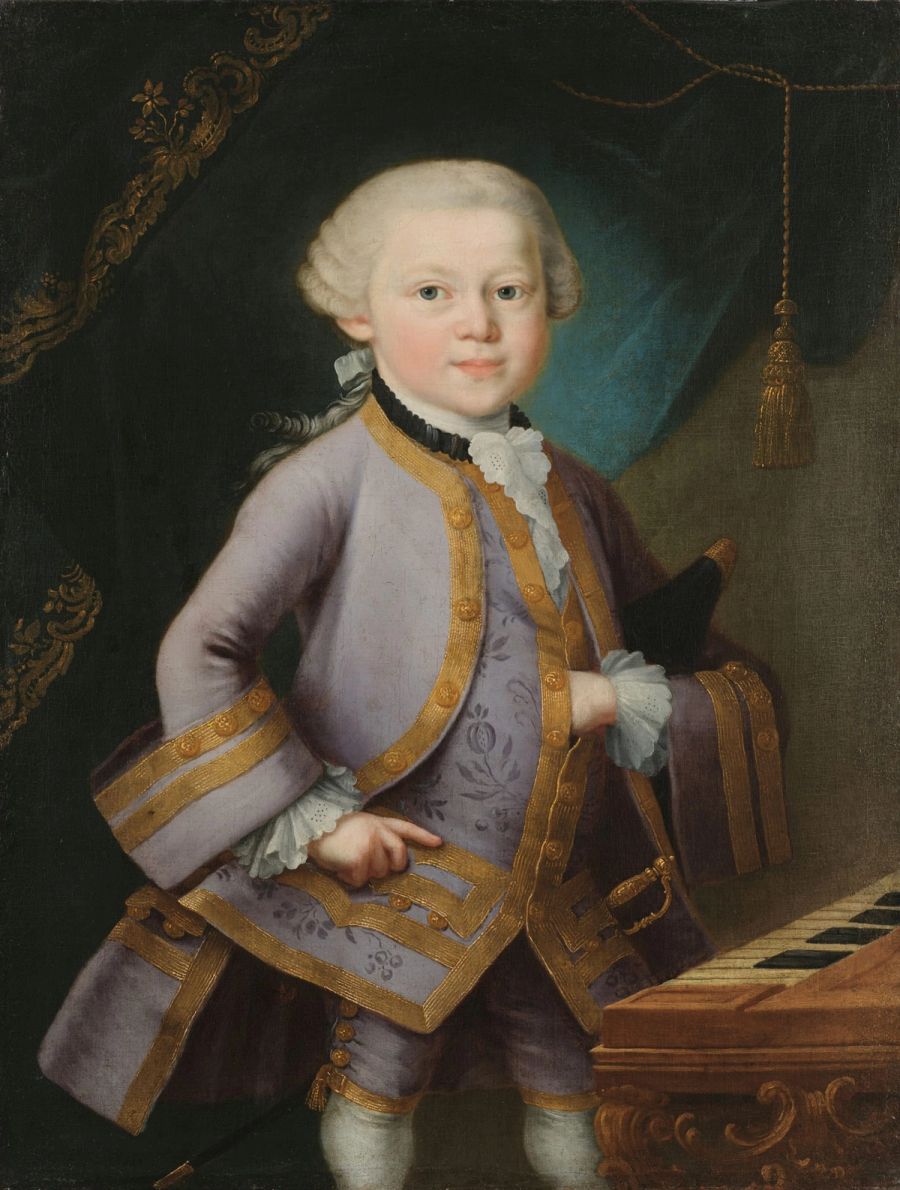
- 쾨헬 번호
- K9 2 | K6 2
- 장르
- 피아노 음악
- 형식
- 피아노 소품
- 조성
- F Major
- 날짜
- 1월 1762
- 장소
- Salzburg
- 나이
- 6
모차르트의 바장조 미뉴에트 K. 2는 1762년 잘츠부르크에서 작곡된 초기 작품으로, 어린 시절의 음악적 재능과 당시의 교육적 배경을 보여준다.
작곡 및 배경
모차르트의 바장조 미뉴에트 K. 2는 1762년 1월 잘츠부르크에서 작곡되었으며, 당시 볼프강은 겨우 다섯 살이었다. 이 곡은 그의 가장 이른 시기의 작품 가운데 하나로, 모차르트의 아버지 레오폴트가 누이 마리아 안나\(애칭 난네를\)를 위해 엮은 건반 연습곡 모음집인 “난네를의 노트북\(“Notebook for Nannerl”\)”에 수록되었다. 당시 볼프강은 아직 악보를 능숙하게 쓰지 못했기 때문에, 이 작은 미뉴에트는 레오폴트가 직접 받아 적었을 가능성이 크다[1]. 곡은 매우 짧아\(연주 시간 약 1분\) 원래는 하프시코드를 위해 쓰였는데, 하프시코드는 모차르트 남매가 음악을 배운 악기이기도 하다. 규모는 소박하지만, 이 미뉴에트에는 어린 모차르트의 음악적 조숙함과 아버지로부터 받은 체계적 지도가 이미 드러난다.
형식 및 음악적 성격
바장조 미뉴에트 K. 2는 우아한 미뉴에트 양식의 작은 춤곡 악장이다. 미뉴에트는 보통 3/4박자의 중간 빠르기 춤으로, 18세기 중엽 취향에 걸맞은 세련되고 가벼운 성격을 지닌다. 이 곡은 균형 잡힌 구절로 이루어진 단순한 2부분 형식\(바이너리\)으로 구성된다. 8마디로 된 첫 부분이 짧은 음악적 모티브\(1마디 길이의 생각\)를 제시한 뒤 반복되며, 이어지는 또 다른 8마디가 잠시 단조로 기울었다가 다시 돌아와 바장조\(으뜸조\)로 끝난다. 당시의 춤곡 관례에 따라 각 부분은 반복된다. 선율은 기초적이지만 귀에 잘 들어오며, 대부분이 분산화음\(아르페지오\) 음형으로 이루어져 “첫 마디부터 청자를 사로잡는다”. 또한 모차르트는 구절 끝에서 아포지아투라\(꾸밈음 장식\)를 사용해 종지 직전에 표현적인 긴장을 더한다[2]. 특히 종결 직전에는 “중단\(interrupted\)” 또는 기만 종지\(deceptive cadence\)가 나타나는데, 예상 밖의 화음 진행이 잠깐 청자를 놀라게 한 뒤 바장조의 최종 해결로 이어진다[3]. 이러한 작은 요소들은, 모차르트가 아주 어린 나이에도 명료하고 질서정연한 형식 안에서 효과적인 음악적 뉘앙스를 만드는 감각을 지니고 있었음을 보여준다.
수용 및 유산
모차르트 생전에는 이 작은 작품이 가족 안에서의 개인적인 교육용 곡으로 남아 있었고, 출판되지 않았다. 이 곡이 인쇄로 처음 등장한 것은 1878년으로, 모차르트 전집의 첫 완간판 일부로 수록되면서였다. 현대에 이르러 바장조 미뉴에트 K. 2는 주로 모차르트의 어린 시절이 남긴 산물이라는 역사적 의미와 매력으로 사랑받는다. 또한 피아노 교육에서 자주 활용되는데, 초급 학습자\(대략 Grade 1 수준\)에게 적합한 곡으로 평가되며 학생 레퍼토리와 시험 커리큘럼에 자주 등장한다. 교육자들은 이 곡의 cantabile\(노래하듯 유려한\) 선율과 균형 잡힌 구조를 특히 언급한다. 한 시험관은 “기분 좋은 선율 재료”와 만족스러운 형식을 갖추었다고 평했는데[4], 이런 점들이 어린 연주자에게 고전주의 양식을 소개하기에 훌륭한 입문곡이 되게 한다. 연주회장에서 자주 들을 수 있는 곡은 아니지만, 모차르트 초기 작품을 다룬 음반에서 피아노나 하프시코드로 간혹 녹음되기도 한다. 이 미뉴에트는 작곡가의 가장 이른 창작 노력의 사랑스러운 사례로 남아, 가족의 음악적 환경 속에서 길러진 모차르트의 타고난 재능을 엿보게 해 준다.
[1] 모차르트 바장조 미뉴에트: 피아노 튜토리얼 - PianoTV.net
https://www.pianotv.net/2016/04/mozarts-minuet-in-f-major-piano-tutorial/
[2][3][4] 바장조 미뉴에트 K2 모차르트 — Piano & Theory Lessons
https://www.pianoandtheory.co.nz/abrsm/2020/6/22/minuet-in-f-k2-mozart
악보
Virtual Sheet Music®에서 피아노를 위한 바장조 미뉴에트 악보 다운로드 및 인쇄