리틀 모차르트의 시험: 왕립학회는 어떻게 모차르트의 천재성을 검증했나
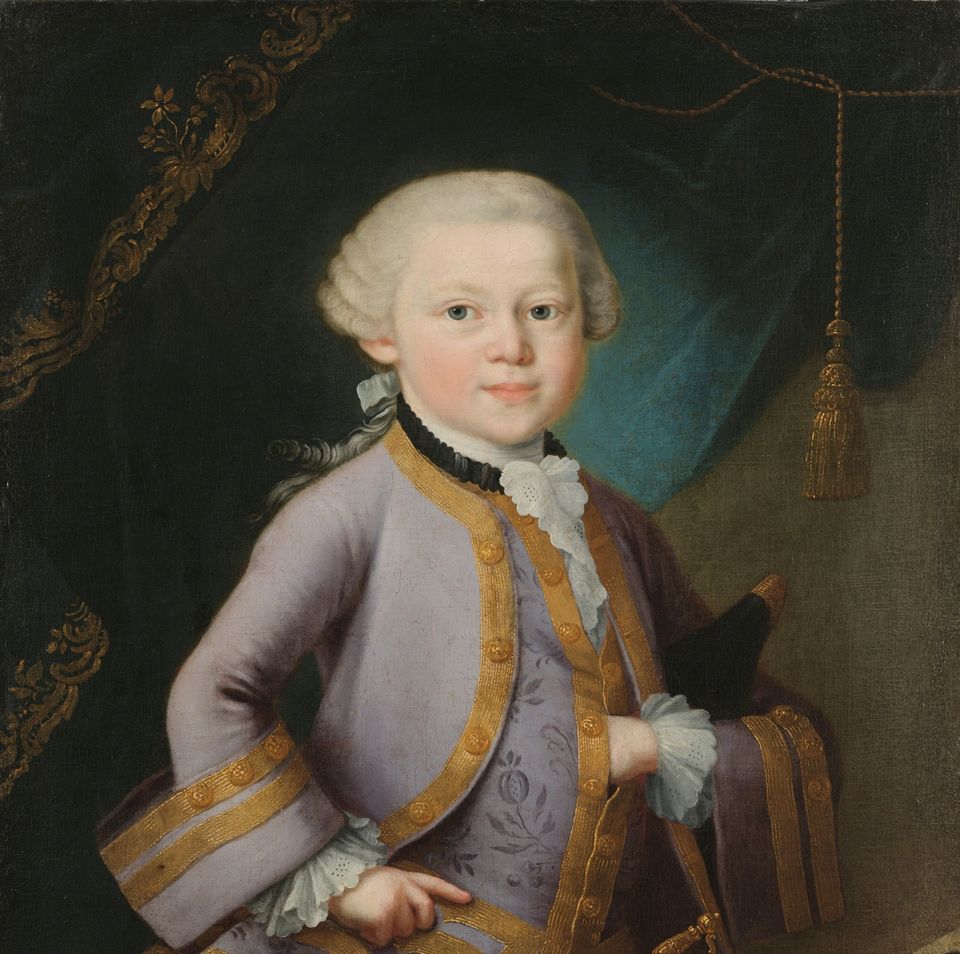
1765년 6월, 데인스 배링턴은 회의적인 과학자의 눈으로 특별한 ‘대상’을 들여다보았다. 소호의 한 방에서 하프시코드 앞에 앉은 아홉 살 소년—런던 전체가 그 재능을 화제로 삼았고, 또 런던의 절반은 믿기를 거부하던 아이였다. 그가 왕립학회에 제출한 보고서는 볼프강 아마데우스 모차르트를 찬양할 경이로 보지 않고, 시험해야 할 현상으로 다뤘다. 그리고 바로 그 점 때문에, 우리는 지금도 그 기록을 신뢰한다.
모차르트는 어떻게 런던에서 ‘과학 표본’이 되었나
레오폴트 모차르트가 1763년 6월 잘츠부르크를 떠날 때만 해도, 영국은 일정표에 없었다. 계획은 독일의 여러 궁정과 오스트리아령 네덜란드, 파리, 그리고 어쩌면 북이탈리아까지를 거치는 것이었다. 런던은 가족이 프랑스 궁정에 도착한 뒤에야 추가됐다. 레오폴트가 1764년 5월 28일 잘츠부르크의 집주인이자 채권자 로렌츠 하게나워에게 쓴 편지에는 이렇게 적혀 있다. “잘츠부르크를 떠날 때 나는 영국으로 갈지 절반만 마음을 정했었다. 하지만 파리에서조차 모두가 런던에 가라고 우리를 부추겼기에, 나는 그렇게 하기로 결심했다.”
끌어당긴 것은 돈이었다. 런던은 유럽에서 가장 크고 가장 부유한 도시였고, 공공 연주에 돈을 지불하는 유복한 상인 계층이 있었다. 다른 지역의 궁정 중심 음악 생활과는 달랐다. 가족은 1764년 4월 10일 파리를 떠나 구토로 엉망이 된 해협 횡단을 견뎌낸 뒤 4월 23일 런던에 도착했다.
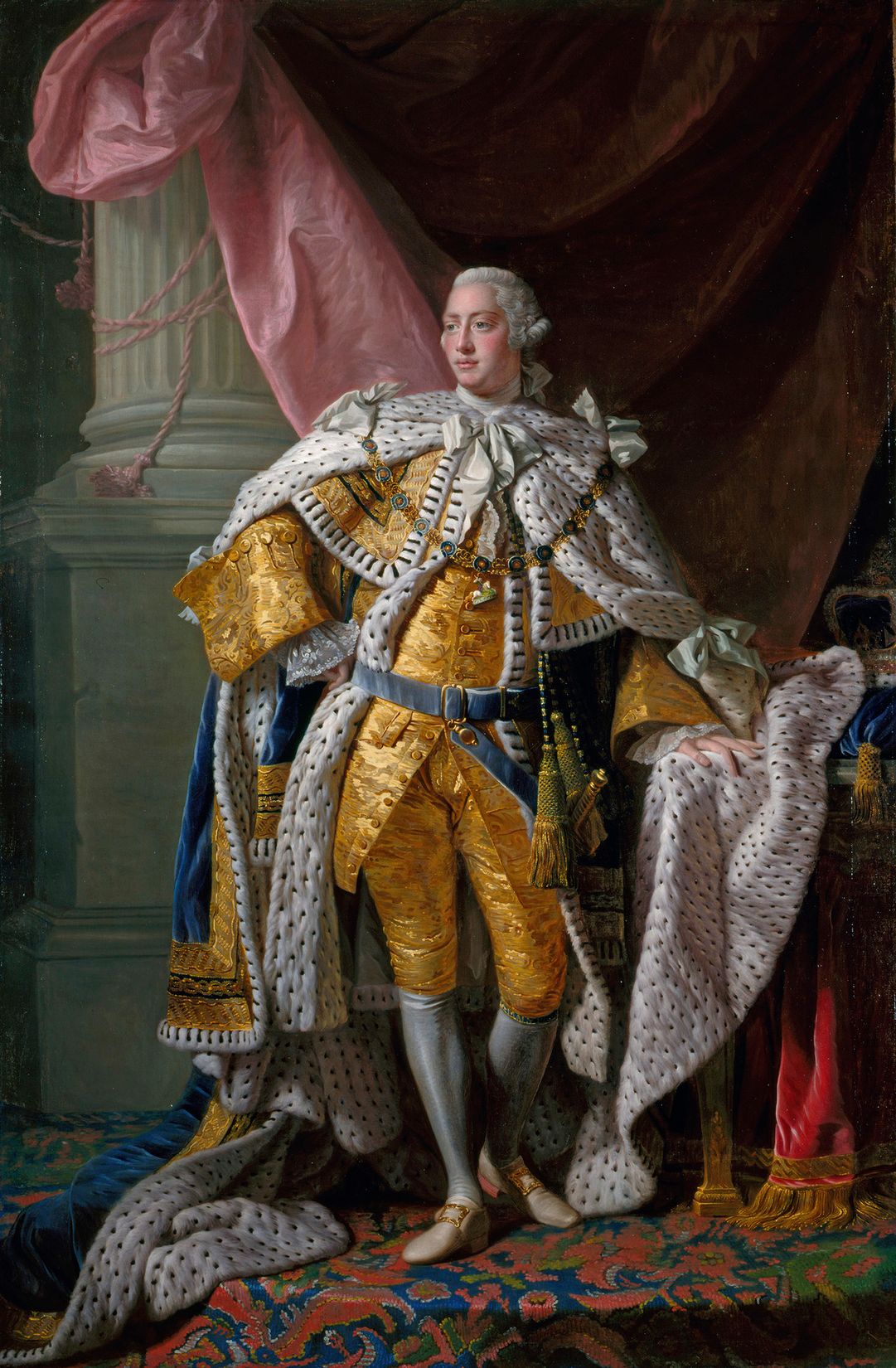
초반은 승승장구였다. 도착 후 며칠 만인 1764년 4월 27일, 볼프강과 난네를은 버킹엄 하우스에서 조지 3세와 샬럿 왕비 앞에서 연주했다. 5월 19일에는 다시 초대되어, 볼프강이 J.C. 바흐, 아벨, 헨델의 작품을 초견으로 연주하고 왕비가 노래할 때 반주까지 맡았다. 세 번째 방문은 1764년 10월 25일이었다. 국왕의 호의는 분명했다. 레오폴트는 “우리가 여기서 받은 환대는 다른 모든 곳을 능가한다”고 썼다. 소년이 쓴 건반과 바이올린을 위한 여섯 소나타(K. 10–15)는 1765년에 샬럿 왕비에게 바치는 장황한 프랑스어 헌사와 함께 출판되었다.
그러나 곧 분위기가 뒤집혔다. 1764년 여름, 레오폴트는 심각한 인후 감염으로 중병에 걸려 죽음이 임박한 것으로 여겨졌다. 가족은 그의 회복을 위해 시골 공기를 찾아 첼시(이베리 스트리트)로 옮겼고, 아이들은 건반에 손대는 것조차 금지되었다. 소년은 그 시간에 조용히 첫 교향곡을 작곡했다. 교향곡 1번 내림마장조 K. 16이었다. 난네를이 옆에서 악보를 베껴 적었다. 훗날 그녀는 볼프강이 “호른에게도 뭔가 할 만한 걸 좀 줘야 한다고 나중에 꼭 나에게 말해줘”라고 말했다고 회상했다.
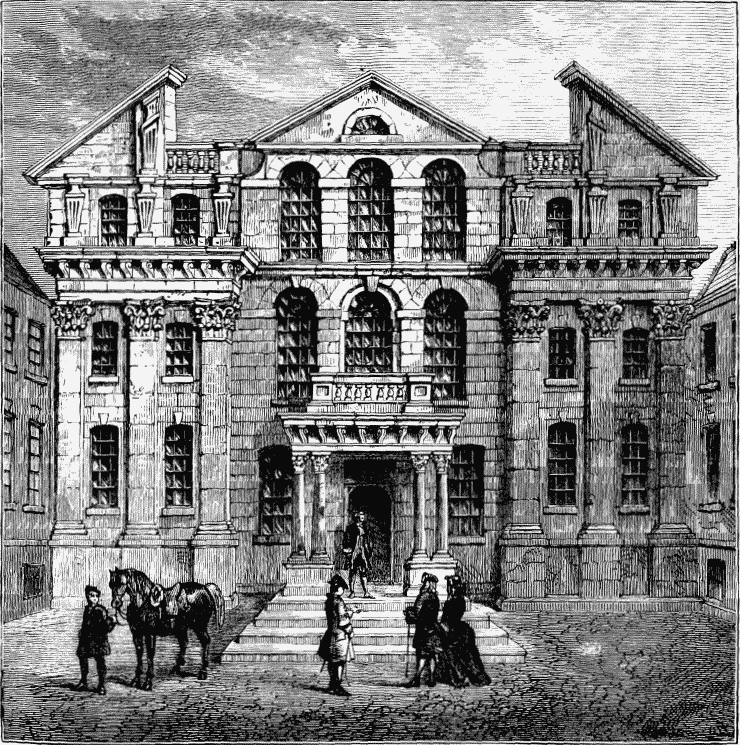
1765년이 되자 ‘새로움’은 빛을 잃었다. 가족은 런던 중심가 스리프트 스트리트로 돌아와, 사실상 장사를 해야 했다. 대략 4월부터 6월 사이 레오폴트는 숙소로 대중을 불러 소년을 시험하게 했다. 7월에는 두 아이가 콘힐의 “스완 앤 후프 선술집의 그레이트 룸”에 “일주일 동안 매일” 등장했다. 영국도서관은 이곳을 “시티의 무어게이트 근처”로 특정한다. 입장료는 2실링 6펜스로 낮췄고, 관객은 소년에게 직접 문제를 낼 수 있었다. 스탠리 세이디는 이것을 “영국 대중에게서 기니화를 마지막으로, 절박하게 뽑아내려는 레오폴트의 시도”라고 불렀다. 배링턴이 등장한 것은 왕실의 절정이 아니라, 바로 이런 바닥 국면에서였다.
시험을 부른 소문
1765년 무렵, 시기 섞인 수군거림은 구체적인 혐의로 굳어졌다. 볼프강은 어린이가 아니라 성장 장애가 있는 작은 성인—즉 난쟁이를 신동으로 둔갑시킨 것—이라는 주장이다. 소문은 공개 반박문까지 나오게 할 만큼 심각했다. 1765년 5월 10일자 Public Advertiser에 “Recto Rectior”라는 서명으로 실린 익명의 공개서한이 그것이며, 거의 확실히 레오폴트 쪽에서 넣은 글이었다. 이 자료는 일리아스 크리소코이디스가 2010년 볼프강의 논쟁적 나이를 다룬 연구에서 재발견해 재인쇄했다.
“정말 어린이가 맞나?”라는 질문은 배링턴이 개입하기 전부터 돌았고, 런던 음악가들 사이에 널리 퍼져 있었다. 그렇게 어린아이가 어른들을 그들의 예술에서 능가한다는 사실이 믿기 어려웠던 것이다. 나이 검증은 레오폴트의 생계도 지켰다. 공연의 가치 전체가 ‘광고한 만큼 어린’ 소년이라는 전제에 달려 있었기 때문이다.
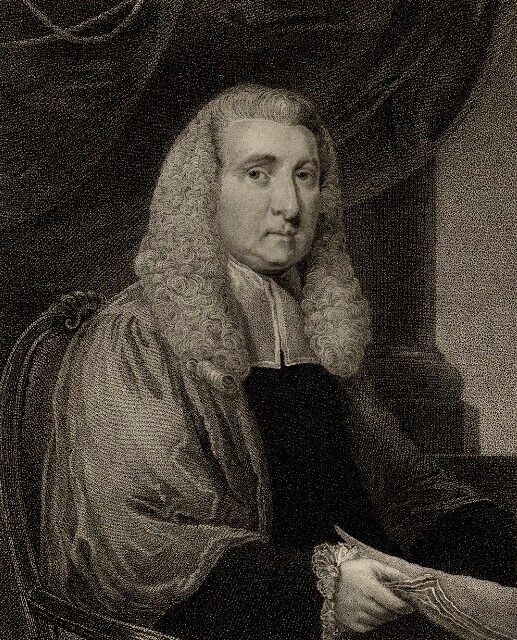
자연학자 데인스 배링턴
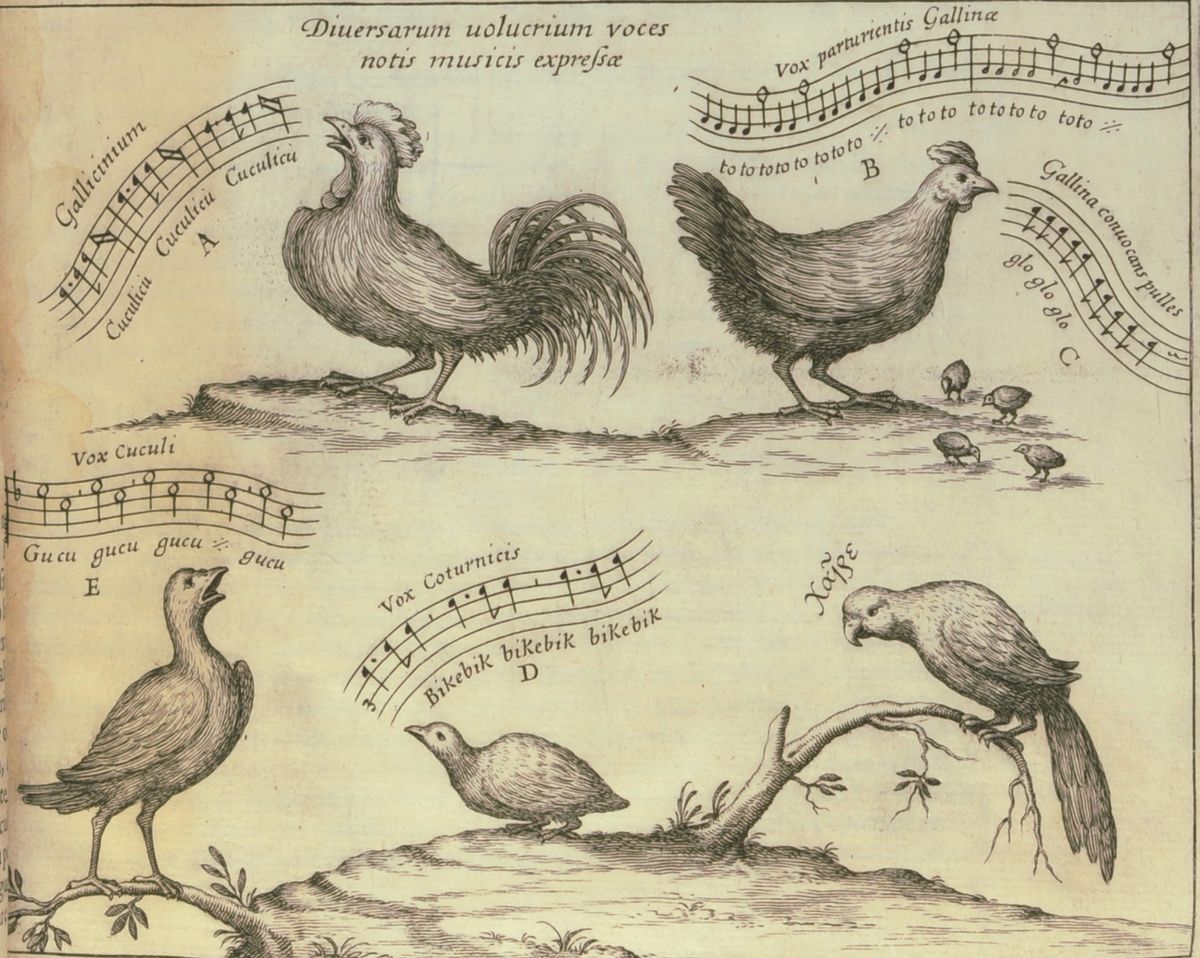
데인스 배링턴(1727/28–1800)은 법률가이자 판사, 고문헌 연구자였고 왕립학회 및 고문물학회 회원이었다. 그는 안절부절못할 만큼 기이한 호기심을 지닌 인물이었다. 명금류를 대상으로 교차 양육 실험(어린 새를 다른 종의 부모에게 맡겨 어떤 노래를 배우는지 관찰)을 했고, 「새의 노래에 관한 실험과 관찰」을 출판했다. 북극점 도달 가능성을 주장한 소책자를 써 실제 영국의 극지 탐험을 자극하기도 했다. 또 ‘콘월어 최후의 모어 화자’로 자주 불리는 콘월 여성 돌리 펜트리스의 말을 기록했는데, 그 보고서가 그 주장에 대한 주요 근거가 되었다. 그는 성직자이자 자연학자 길버트 화이트와도 서신을 주고받았고, 배링턴에게 보낸 화이트의 편지들은 The Natural History of Selborne의 상당 부분을 이룬다.
핵심은 이것이다. 배링턴은 아이를 자연학자가 표본을 대하듯 접근했다. 심리학자 우타 프리스가 왕립학회 에세이에서 관찰했듯, 그는 “의견이 아니라 행동의 구체적 사례”를 제시했다. 그는 매혹된 것이 아니라 시험하고 있었다. 바로 그 냉정함 때문에 그의 보고서는 유난히 높은 증거 가치를 갖는다.
배링턴이 실제로 한 일—그리고 ‘전해 들은’ 것
배링턴은 준비해 왔다. 그는 모차르트가 본 적 없는 악보, 즉 어느 “영국 신사”가 메타스타시오의 Demofoonte 가사에 붙인 5성부 성악·기악 작품의 필사본을 가져왔다. 성부는 불편한 콘트랄토 음자리표로 적혀 있었다. 모차르트는 이를 초견으로 “대가다운 방식”으로 연주했고, 작곡가가 의도한 박과 양식을 정확히 잡아냈다. 배링턴은 음악 비전공자들에게 이 위업을 설명하느라 애를 썼고, 소년의 “작은 손가락으로는 하프시코드에서 5도도 겨우 닿았다”고 덧붙였다.
그리고 유명한 즉흥이 이어졌다. 배링턴은 소년이 “유명한 가수 만졸리에게 크게 주목받고 있다”는 것을 알고 있었기에, “친구 만졸리가 오페라에서 고를 법한” 즉흥 사랑 노래를 부탁했다. 모차르트는 하프시코드에 앉은 채 “꽤 장난기 있게 뒤를 돌아보더니” Affetto라는 한 단어를 중심으로 레치타티보와 아리아를 만들어냈다. 배링턴의 평은 흥분이 아니라 절제였다. 그 곡은 “확실히 평균을 넘었고, 놀랄 만큼의 발명 즉흥성을 보여주었다.” 이어 그는 오페라 무대에 어울리는 분노의 노래를 요청했다. 소년은 Perfido라는 단어로 레치타티보를 시작했고, 중간에 이르자 “완전히 열이 올라, 마치 홀린 사람처럼 하프시코드를 두드렸고, 때때로 의자에서 몸을 일으키기까지 했다.”
그리고 고양이. 애지중지하던 고양이가 방 안으로 들어오자 모차르트는 즉시 하프시코드를 떠났고, “꽤 오랜 시간” 다시 앉히려 해도 소용이 없었다. 그는 막대기를 다리 사이에 끼우고 “말 놀이를 하듯” 방을 뛰어다니기도 했다. 배링턴이 이런 일탈을 일부러 기록한 것은, 그것이 이 아이가 ‘진짜 어린이’임을 확인해 주는 데이터였기 때문이다. 그는 나이에 대한 의심이 있었지만 소년이 “외양만 아이 같은 것이 아니라, 그 나이의 모든 행동을 보였다”고 썼다.
중요하게도 배링턴은 자신이 본 것과 들은 것을 구분했다. J.C. 바흐가 한가운데서 끊어 둔 푸가를 모차르트가 곧바로 이어 완성했다는 유명한 일화는 배링턴이 명시적으로 전언이라고 표시한다. “나는 유능한 음악가 두세 명에게서 들었는데” “유명 작곡가 바흐가 푸가를 시작했다가 갑자기 멈추었을 때” 리틀 모차르트가 그것을 “즉시 이어 받아 대가답게 전개했다”는 것이다. 이는 목격담이 아니다. 초견 연주, 두 곡의 즉흥 아리아, 건반 시험, 그리고 고양이 사건—이것들은 배링턴이 직접 본 것이다.
나이 검증이라는 탐정 서사
배링턴의 보고서를 모차르트 문서들 사이에서 독특하게 만드는 점은, 그가 자신의 권위만으로 출판하기를 거부했다는 데 있다. 레오폴트가 아들의 나이를 속였을지 모른다고 의심한 그는, 런던에 거주하는 독일계 음악가들에게 문의했지만 성과가 없었다. 그러다 “하슬랑 백작 각하를 통해” 잘츠부르크 세례대장 발췌본을 구해냈다. 하슬랑은 런던 주재 바이에른(팔츠) 특사였던 요제프 프란츠 크사버 폰 하슬랑이다. 그 발췌본에는 잘츠부르크 성직자 레오폴트 콤프레흐트의 선서 진술이 포함돼 있었고, 배링턴은 그것을 보고서 안에 그대로 인쇄했다. (잘츠부르크 세례 기록을 실제로 작성한 이는 도시 성직자 레오폴트 람프레흐트였으며, 배링턴의 기록에는 “Comprecht”로 나온다.)
납득한 배링턴은 Philosophical Transactions에 이렇게 썼다. “이 발췌본으로 보아, 모차르트의 아버지는 영국에 있을 때 아들의 나이에 관해 속이지 않았던 것으로 보인다. 내가 위에서 말한 일을 목격한 것은 1765년 6월이었고, 그때 소년은 겨우 여덟 살 다섯 달이었다.”
이 마지막 구절이야말로 보고서의 최대 아이러니다. 문서의 목적은 소년의 나이를 확인하는 것이었는데, 배링턴은 틀린 숫자를 적는다. 1756년 1월 27일 출생인 모차르트는 1765년 6월에 여덟 살 다섯 달이 아니라 아홉 살 다섯 달이었다. 오류는 레오폴트가 아이들의 나이를 실제보다 한두 살 어리게 광고하던 습관에서 비롯됐을 가능성이 크다. 이후 많은 자료가 시험 당시 “여덟 살”을 반복하는데, 배링턴의 오기 또는 방문 날짜에 대한 혼동을 그대로 물려받은 셈이다.
이런 까다로움은 문서의 기묘한 시간표도 설명한다. 시험은 1765년 6월이었다. 논문 날짜는 1769년 11월 28일. 왕립학회에서 낭독된 것은 1770년 2월 15일이며, Philosophical Transactions of the Royal Society of London 제60권(1770) 54–64쪽에 “Account of a Very Remarkable Young Musician. In a Letter from the Honourable Daines Barrington, F.R.S. to Mathew Maty, M.D. Sec. R.S.”로 게재됐다. 배링턴은 도발적인 비유로 글을 연다. “여덟 살에 키가 7피트였다는 소년”에 대한 확실한 보고가 있다면 학회의 관심을 받을 만하듯, 이 소년의 음악적 ‘신장’도 그만큼 믿기 어렵다는 것이다.
“사랑의 노래”는 사실 누구를 위한 것이었나
“친구 만졸리”는 조반니 만추올리(c. 1720–1782)로, 당시 런던에서 명성이 절정이던 피렌체 출신 카스트라토 소프라노였다. 그는 1764–65 시즌에 국왕극장과 계약해 1764년 11월 24일 파스티초 Ezio로 데뷔했고, 겨울 시즌 최고액 스타였다. 레오폴트는 모차르테움 전사본에 따르면 1765년 2월 8일 하게나워에게 질투 섞인 편지를 썼다. “만졸리는 이번 겨울에 1500파운드 스털링을 받는다 … 이번 겨울에만 2만 독일 굴덴을 넘게 가져간다.”
만추올리는 모차르트 가족과 가까워졌고 소년에게 성악을 가르쳤다. Digitale Mozart-Edition의 같은 편지 편집자 주석은 단호하게 말한다. “그는 볼프강에게 무상으로 성악 레슨을 해주었다”—모차르트가 받은 유일한 정규 성악 교육이었다. 두 사람은 1765년 3월 13일 버클리 스퀘어의 클라이브 경과 부인의 집에서 열린 비공개 음악회에서 함께 연주했는데, 이 행사는 덱스터 엣지가 Mozart: New Documents에서 복원했다. 프리드리히 멜히오르 그림 남작은 훗날 1766년 7월 15일자 Correspondance littéraire에서 볼프강이 만추올리의 노래를 듣고 크게 이득을 보아 “il en a si bien profité que … il chante avec autant de goût que d'âme”—“그는 취향만큼이나 영혼을 담아 노래한다”고 썼다. 세월이 흐른 뒤 만추올리는 은퇴에서 돌아와 모차르트의 Ascanio in Alba(밀라노, 1771)에서 주역을 맡아 노래했다. 그러니 배링턴이 만졸리를 거론했을 때, 그는 추상적인 ‘오페라 가수’를 말한 것이 아니라, 아홉 살 소년이 이미 발을 들여놓은 눈부신 오페라 세계를 실명으로 지목한 셈이다.
편지를 받은 사람
보고서는 왕립학회 서기이자 대영박물관의 주요 사서이기도 했던 의사 매튜 메이티(Mathew Maty, Matthew Maty)에게 보내는 편지 형식이다. 대영박물관과의 연결은 각별하다. 1765년 7월, 런던에서의 마지막 몇 주 동안 모차르트 가족은 (어린이는 공식적으로 출입이 금지되었음에도) 박물관을 방문했고, 이사회에 볼프강의 인쇄된 소나타 한 부, 가족 판화, 그리고 소년의 자필 모테트 “God is our Refuge,” K. 20의 원고를 기증했다. 이것은 그가 영어 가사에 붙인 유일한 작품이었다. 작은 작곡가는 7–9마디에서 가사를 음표에 맞추는 데 애를 먹었고, 아버지가 나머지를 채워 넣었다. 기증은 1765년 7월 9일 메이티가 직접 공식 확인했다. “대영박물관 이사회 상임위원회의 명에 따라, 귀하의 매우 영리한 아드님이 작곡한 음악 작품을 선물로 받았음을 알려드립니다.” 원고는 오늘날 영국도서관(소장번호 K.10.a.17.(3))에 남아 있다. 즉, 영국도서관은 ‘작곡가 자신이 시작한 모차르트 컬렉션’을 보유한다고 말할 수 있는 셈이다.
배링턴이 연구한 다른 신동들
배링턴이 자신의 글을 Miscellanies(1781)로 묶어 낼 때, 모차르트에 관한 기록은 다른 네 명의 어린 음악 신동 보고서와 나란히 실렸다. 사실상 음악 천재성에 대한 초기 비교 연구였다.
- 윌리엄 크로치(1775–1847): 노리치 목수의 아들로, 세 살도 되기 전에 “God Save the King”을 연주했다. 그는 옥스퍼드의 헤더 음악 교수(Heather Professor of Music)가 되었고 박사 학위를 받았으며, 1822년 왕립음악원(Royal Academy of Music) 초대 원장에 임명되었다. 오라토리오 Palestine(1812)이 가장 오래 남은 작품이며, 웨스트민스터 차임을 작곡했을 가능성도 거론된다. 그러나 성인으로서의 경력은 유년기의 눈부심을 끝내 따라잡지 못했다. 또한 어린 시절의 전시(공연) 경험이 그를 다소 상처 입고 보수적인 성인으로 남겼다는 언급도 있다.
- 찰스 웨슬리 주니어(1757–1834)와 사무엘 웨슬리(1766–1837): 찬송가 작가 찰스 웨슬리의 아들들. “영국의 모차르트”로 불린 사무엘은 주요 작곡가이자 오르가니스트였고, 영국 바흐 부흥의 선구자였으며 사무엘 서배스천 웨슬리의 아버지이기도 했다. 다만 기성 체제는 그를 신뢰하지 않았고, 그는 끝내 굵직한 오르간 직책을 얻지 못했다.
- 개릿 웨슬리, 모닝턴 백작 1세(1735–1781): 앵글로-아일랜드 귀족 작곡가로, 더블린 트리니티 칼리지 초대 음악 교수였다. “Here in cool grot” 같은 글리로 기억된다. 그는 훗날 웰링턴 공작이 되는 아서 웰즐리의 아버지였으며, 자녀 중 음악적 재능을 물려받은 이는 아서 한 사람뿐이었다.
비교는 시사적이다. 배링턴이 목록화한 신동들 가운데 대부분은 존경할 만하되 땅에 발붙인 경력으로 귀결되었다. 오직 모차르트만이 ‘모차르트’가 되었다.
헨델의 실
배링턴은 글의 끝에서 소년을 어린 시절의 게오르크 프리드리히 헨델에 견준다. 이는 헨델의 회고록을 쓴 존 메인워링의 기록에 기대어, 헨델이 어린 나이에 작곡했고 침대에서도 음악적 아이디어에 사로잡혔다고 전한다. 그리고 정서적인 전환이 이어진다. “나는 이 두 음악 신동의 짧은 비교를 덧붙이게 되어 더없이 기쁘다. 통상 이러한 ingenia praecocia는 대개 단명한다는 관찰과는 달리, 리틀 모차르트가 헨델처럼 장수할 수 있기를 바랄 수 있기 때문이다.”
헨델은 74세까지 살았다. 그 바람은 이루어지지 않았다. 모차르트는 1791년 12월 5일, 35세로 세상을 떠났다. 길버트 화이트의 Selborne이 출간된 지 2년 뒤였고, 배링턴 자신이 죽기 9년 전이었다.
보고서가 남긴 것
가장 깊은 아이러니는, 모차르트의 어린 시절 재능에 대한 ‘가장 신뢰받는 외부 증언’이 회의론자에게서 나왔다는 점이다. 배링턴은 사기를 잡아내려고 했다. 그는 출생 증명서를 요구했고, 소년이 고양이를 쫓는 모습을 기록했으며, 즉흥 아리아를 “평균 이상” 정도로 평가했고, 전언은 전언이라고 분명히 표시했다. 바로 이런 거리감—매혹되기를 거부한 자연학자의 태도—때문에, 아버지의 자랑과는 달리 이 문서는 믿을 만하다. 레오폴트의 편지는 기적을 ‘판매’한다. 배링턴의 보고서는 기적을 ‘검증’하며, 그 검증은 통과한다.
논쟁점에 대한 주: 숙소 위치(첼시 vs. 스리프트 스트리트)와 시티의 선술집 이름(Swan and Hoop vs. Swan and Harp)은 자료마다 다르다. 이 글은 1765년 6월의 스리프트 스트리트 설을 따르며 Swan and Hoop 표기를 언급한다. 성직자 이름은 배링턴 보고서에는 “Comprecht”, 잘츠부르크 등록부에는 “Lamprecht”로 보인다. J.C. 바흐 푸가 일화는 배링턴이 스스로 명확히 표지한 전언이지, 목격담이 아니다.
---
원 보고서(1769)
아래는 데인스 배링턴의 편지 전문으로, Philosophical Transactions of the Royal Society of London 제60권(1770) 54–64쪽에 실린 텍스트다. 위키소스에서 원문 전체를 읽을 수 있다
Received November 28, 1769.
VIII. Account of a very remarkable young Musician. In a Letter from the Honourable Daines Barrington, F.R.S. to Mathew Maty, M.D. Sec. R.S.
Read Feb. 15, 1770.
S I R,
If I was to send you a well attested account of a boy who measured seven feet in height, when he was not more than eight years of age, it might be considered as not undeserving the notice of the Royal Society.
The instance which I now desire you will communicate to that learned body, of as early an exertion of most extraordinary musical talents, seems perhaps equally to claim their attention.
Joannes Chrysostomus Wolfgangus Theophilus Mozart, was born at Saltzbourg in Bavaria, on the 17th of January, 1756.
| 배링턴 주: 나는 여기 잘츠부르크 등록부에서 옮긴 번역의 사본을 덧붙인다. 이 문서는 바이에른 및 팔츠 선제후의 특명 전권공사인 하슬랑 백작 각하를 통해 입수되었다.
"I, the under-written, certify, that in the year 1756, the 17th of January, at eight o'clock in the evening, was born Joannes Chrysostomus Wolfgangus Theophilus, son of Mr. Leopold Mozart, organist of his highness the prince of Saltzbourg, and of Maria Ann his lawful wife (whose maiden name was Pertlin), and christened the day following, at ten o'clock in the morning, at the prince's cathedral church here; his godfather being Gottliel Pergmayr, merchant in this city. In truth whereof, I have taken this certificate from the parochial register of christenings, and under the usual seal, signed the same with my own hand. Saltzbourg, Jan. 3, 1769. Leopald Comprecht, Chaplain to his Highness in this city."
I have been informed by a most able musician and composer, that he frequently saw him at Vienna, when he was little more than four years old.
By this time he not only was capable of executing lessons on his favourite instrument the harpsichord, but composed some in an early stile and taste, which were much approved of.
His extraordinary musical talents soon reached the ears of the empress dowager, who used to place him upon her knees whilst he played on the harpsichord.
This notice taken of him by so great a personage, together with a certain consciousness of his most singular abilities, had much emboldened the little musician. Being therefore the next year at one of the German courts, where the elector encouraged him, by saying, that he had nothing to fear from his august presence; little Mozart immediately sat down with great confidence to his harpsichord, informing his highness, that he had played before the empress.
At seven years of age his father carried him to Paris, where he so distinguished himself by his compositions, that an engraving was made of him.
The father and sister who are introduced in this print, are excessively like their portraits, as is also little Mozart, who is stiled "Compositeur et Maitre de Musique, agé de sept ans."
After the name of the engraver, follows the date, which is in 1764; Mozart was therefore at this time in the eighth year of his age.
Upon leaving Paris, he came over to England, where he continued more than a year. As during this time I was witness of his most extraordinary abilities as a musician, both at some publick concerts, and likewise by having been alone with him for a considerable time at his father's house; I send you this following account, amazing and incredible almost as it may appear.
I carried to him a manuscript duet, which was composed by an English gentleman to some favourite words in Metastasio's opera of Demofoonte.
The whole score was in five parts, viz. accompaniments for a first and second violin, the two vocal parts, and a base.
I shall here likewise mention, that the parts for the first and second voice were written in what the Italians stile the Contralto cleff; the reason for taking notice of which particular will appear hereafter.
My intention in carrying with me this manuscript composition, was to have an irrefragable proof of his abilities, as a player at sight, it being absolutely impossible that he could have ever seen the music before.
The score was no sooner put upon his desk, than he began to play the symphony in a most masterly manner, as well as in the time and stile which corresponded with the intention of the composer.
I mention this circumstance, because the greatest masters often fail in these particulars on the first trial.
The symphony ended, he took the upper part, leaving the under one to his father.
His voice in the tone of it was thin and infantine, but nothing could exceed the masterly manner in which he sung.
His father, who took the under part in this duet, was once or twice out, though the passages were not more difficult than those in the upper one; on which occasions the son looked back with some anger, pointing out to him his mistakes, and setting him right.
He not only however did complete justice to the duet, by singing his own part in the truest taste, and with the greatest precision: he also threw in the accompaniments of the two violins, wherever they were most necessary, and produced the best effects.
It is well known that none but the most capital musicians are capable of accompanying in this superior stile.
As many of those who may be present, when this letter may have the honour of being read before the society, may not possibly be acquainted with the difficulty of playing thus from a musical score, I will endeavour to explain it by the most similar comparison I can think of.
I must at the same time admit that the illustration will fail in one particular, as the voice in reading cannot comprehend more than what is contained in a single line. I must suppose, however, that the reader's eye, by habit and quickness, may take in other lines, though the voice cannot articulate them, as the musician accompanies the words of an air by his harpsichord.
Let it be imagined, therefore, that a child of eight years old was directed to read five lines at once, in four of which the letters of the alphabet were to have different powers.
For example, in the first line A, to have its common powers. In the second that of B. In the third of C. In the fourth of D.
Let it be conceived also, that the lines so composed of characters, with different powers, are not ranged so as to be read at all times one exactly under the other, but often in a desultory manner.
Suppose then, a capital speech in Shakespeare never seen before, and yet read by a child of eight years old, with all the pathetic energy of a Garrick.
Let it be conceived likewise, that the same child is reading, with a glance of his eye, three different comments on this speech tending to its illustration; and that one comment is written in Greek, the second in Hebrew, and the third in Etruscan characters.
Let it be also supposed, that by different signs he could point out which comment is most material upon every word; and sometimes that perhaps all three are so, at others only two of them.
When all this is conceived, it will convey some idea of what this boy was capable of, in singing such a duet at sight in a masterly manner from the score, throwing in at the same time all its proper accompaniments.
When he had finished the duet, he expressed himself highly in its approbation, asking with some eagerness whether I had brought any more such music.
Having been informed, however, that he was often visited with musical ideas, to which, even in the midst of the night, he would give utterance on his harpsichord; I told his father that I should be glad to hear some of his extemporary compositions.
The father shook his head at this, saying, that it depended entirely upon his being as it were musically inspired, but that I might ask him whether he was in humour for such a composition.
Happening to know that little Mozart was much taken notice of by Manzoli, the famous singer, who came over to England in 1764, I said to the boy, that I should be glad to hear an extemporary Love Song, such as his friend Manzoli might choose in an opera.
The boy on this (who continued to sit at his harpsichord) looked back with much archness, and immediately began five or six lines of a jargon recitative proper to introduce a love song.
He then played a symphony which might correspond with an air composed to the single word, Affetto.
It had a first and second part, which, together with the symphonies, was of the length that opera songs generally last: if this extemporary composition was not amazingly capital, yet it was really above mediocrity, and shewed most extraordinary readiness of invention.
Finding that he was in humour, and as it were inspired, I then desired him to compose a Song of Rage, such as might be proper for the opera stage.
The boy again looked back with much archness, and began five or six lines of a jargon recitative proper to precede a Song of Anger.
This lasted also about the same time with the Song of Love; and in the middle of it, he had worked himself up to such a pitch, that he beat his harpsichord like a person possessed, rising sometimes in his chair.
The word he pitched upon for this second extemporary composition was, Perfido.
After this he played a difficult lesson, which he had finished a day or two before: his execution was amazing, considering that his little fingers could scarcely reach a fifth on the harpsichord.
His astonishing readiness, however, did not arise merely from great practice; he had a thorough knowledge of the fundamental principles of composition, as, upon producing a treble, he immediately wrote a base under it, which, when tried, had a very good effect.
He was also a great master of modulation, and his transitions from one key to another were excessively natural and judicious; he practiced in this manner for a considerable time with an handkerchief over the keys of the harpsichord.
The facts which I have been mentioning I was myself an eye witness of; to which I must add, that I have been informed by two or three able musicians, when Bach the celebrated composer had begun a fugue and left off abruptly, that little Mozart hath immediately taken it up, and worked it after a most masterly manner.
Witness as I was myself of most of these extraordinary facts, I must own that I could not help suspecting his father imposed with regard to the real age of the boy, though he had not only a most childish appearance, but likewise had all the actions of that stage of life.
For example, whilst he was playing to me, a favourite cat came in, upon which he immediately left his harpsichord, nor could we bring him back for a considerable time.
He would also sometimes run about the room with a stick between his legs by way of horse.
I found likewise that most of the London musicians were of the same opinion with regard to his age, not believing it possible that a child of so tender years could surpass most of the masters in that science.
I have therefore for a considerable time made the best inquiries I was able from some of the German musicians resident in London, but could never receive any further information than that he was born near Saltzbourg, till I was so fortunate as to procure an extract from the register of that place, through his excellence count Haslang.
It appears from this extract, that Mozart's father did not impose with regard to his age when he was in England, for it was in June, 1765, that I was witness to what I have above related, when the boy was only eight years and five months old.
I have made frequent inquiries with regard to this very extraordinary genius since he left England, and was told last summer, that he was then at Saltzbourg, where he had composed several oratorios, which were much admired.
I am also informed, that the prince of Saltzbourg, not crediting that such masterly compositions were really those of a child, shut him up for a week, during which he was not permitted to see any one, and was left only with music paper, and the words of an oratorio.
During this short time he composed a very capital oratorio, which was most highly approved of upon being performed.
Having stated the above mentioned proofs of Mozart's genius, when of almost an infantine age, it may not be improper perhaps to compare them with what hath been well attested with regard to other instances of the same sort.
Amongst these, John Barratier hath been most particularly distinguished, who is said to have understood Latin when he was but four years old, Hebrew when six, and three other languages at the age of nine.
This same prodigy of philological learning also translated the travels of Rabbi Benjamin when eleven years old, accompanying his version with notes and dissertations. Before his death, which happened under the age of twenty, Barratier seems to have astonished Germany with his amazing extent of learning; and it need not be said, that its increase in such a soil, from year to year, is commonly amazing.
Mozart, however, is not now much more than thirteen years of age, and it is not therefore necessary to carry my comparison further.
The other instance of early musical genius I shall now mention is that of the late George Frederic Handel, who composed when he was little more than nine years of age, as was attested by his own account, and which was verified afterwards.
I am the more glad to state this short comparison between these two early prodigies in music, as it may be hoped that little Mozart may possibly attain to the same advanced years as Handel, contrary to the common observation, that such ingenia praecocia are generally short-lived.
---
The report itself (primary source)
- Daines Barrington, "Account of a Very Remarkable Young Musician. In a Letter from the Honourable Daines Barrington, F.R.S. to Mathew Maty, M.D. Sec. R.S." — Wikisource transcription. <https://en.wikisource.org/wiki/Account_of_a_very_remarkable_young_Musician>
- Philosophical Transactions of the Royal Society of London, vol. 60 (1770/1771), pp. 54–64 (DOI: 10.1098/rstl.1770.0008). <https://royalsocietypublishing.org/rstl/article/doi/10.1098/rstl.1770.0008/120129/VIII-Account-of-a-very-remarkable-young-musician>
- Royal Society, "Science in the Making" — digitized original manuscript of the paper. <https://makingscience.royalsociety.org/items/l-and-p_5_156/paper-account-of-a-remarkable-young-musician-joannes-chrysotomus-wolfgangus-theophilus-mozart-by-daines-barrington>
Scholarly and institutional commentary
- Uta Frith, "Meeting Mozart in London," The Royal Society blog (2015). <https://royalsociety.org/blog/2015/03/meeting-mozart-in-london/>
- "The Mozarts in London," British Library Music blog (2018). <https://blogs.bl.uk/music/2018/05/mozartinlondon.html>
- "Mozart in London," The Grub Street Project. <https://www.grubstreetproject.net/essays/mozartinlondon/>
- "Wolfgang Amadeus Mozart," Mozart & Material Culture, King's College London. <https://mmc.kdl.kcl.ac.uk/entities/person/mozart-wolfgang-amadeus/index.html>
- "Happy Birthday to 'Little Mozart'," Library of Congress, In the Muse blog (2017). <https://blogs.loc.gov/music/2017/01/happy-birthday-to-little-mozart/>
- "Young Mozart and the Five Tests," Liszt Academy. <https://concert.lisztacademy.hu/news/young-mozart-and-the-five-tests-120002>
- "Account of a Very Remarkable Young Musician (1769)," The Public Domain Review. <https://publicdomainreview.org/collection/account-of-a-very-remarkable-young-musician-1769/>
- "London Mozartiana: Wolfgang's disputed age & early performances of Allegri's Miserere", by Ilias Chrissochoidis. <https://www.academia.edu/249273/London_Mozartiana_Wolfgangs_disputed_age_and_early_performances_of_Allegris_Miserere>
Books and dissertations
- Stanley Sadie, Mozart: The Early Years, 1756–1781 (Oxford University Press / W.W. Norton, 2006).
- Cliff Eisen, New Mozart Documents: A Supplement to O.E. Deutsch's Documentary Biography (Macmillan / Stanford University Press, 1991); and Dexter Edge & David Black (eds.), Mozart: New Documents (online edition). <https://sites.google.com/site/mozartdocuments/>
- Emily Anderson (ed. and trans.), The Letters of Mozart and His Family (Macmillan) — the primary source for Leopold's letters to Lorenz Hagenauer on the family's London finances.
- Hannah Templeton, "The Mozarts in London: exploring the family's professional, social and intellectual networks in 1764–65" (PhD dissertation, King's College London, 2016). <https://kclpure.kcl.ac.uk/portal/en/theses/the-mozarts-in-london>
- Daines Barrington, Miscellanies on Various Subjects (London, 1781) — collects the Mozart account with those of Crotch, Charles and Samuel Wesley, and the Earl of Mornington.
Reference entries
- "Daines Barrington," Wikipedia. <https://en.wikipedia.org/wiki/Daines_Barrington>
- "Mozart family grand tour," Wikipedia. <https://en.wikipedia.org/wiki/Mozart_family_grand_tour>
- "20 Frith Street," Wikipedia (the Thrift Street / Frith Street lodgings). <https://en.wikipedia.org/wiki/20_Frith_Street>
- "Samuel Wesley (composer, born 1766)," Wikipedia. <https://en.wikipedia.org/wiki/Samuel_Wesley_(composer,_born_1766)>
- "Wolfgang Amadeus Mozart," English Heritage blue plaques. <https://www.english-heritage.org.uk/visit/blue-plaques/wolfgang-amadeus-mozart/>
- Handel Reference Database, 1770 (Ilias Chrissochoidis, Stanford). <http://web.stanford.edu/~ichriss/HRD/1770.htm>