K. 588

Così fan tutte (K. 588): Mozart and Da Ponte’s ‘School for Lovers’

av Wolfgang Amadeus Mozart

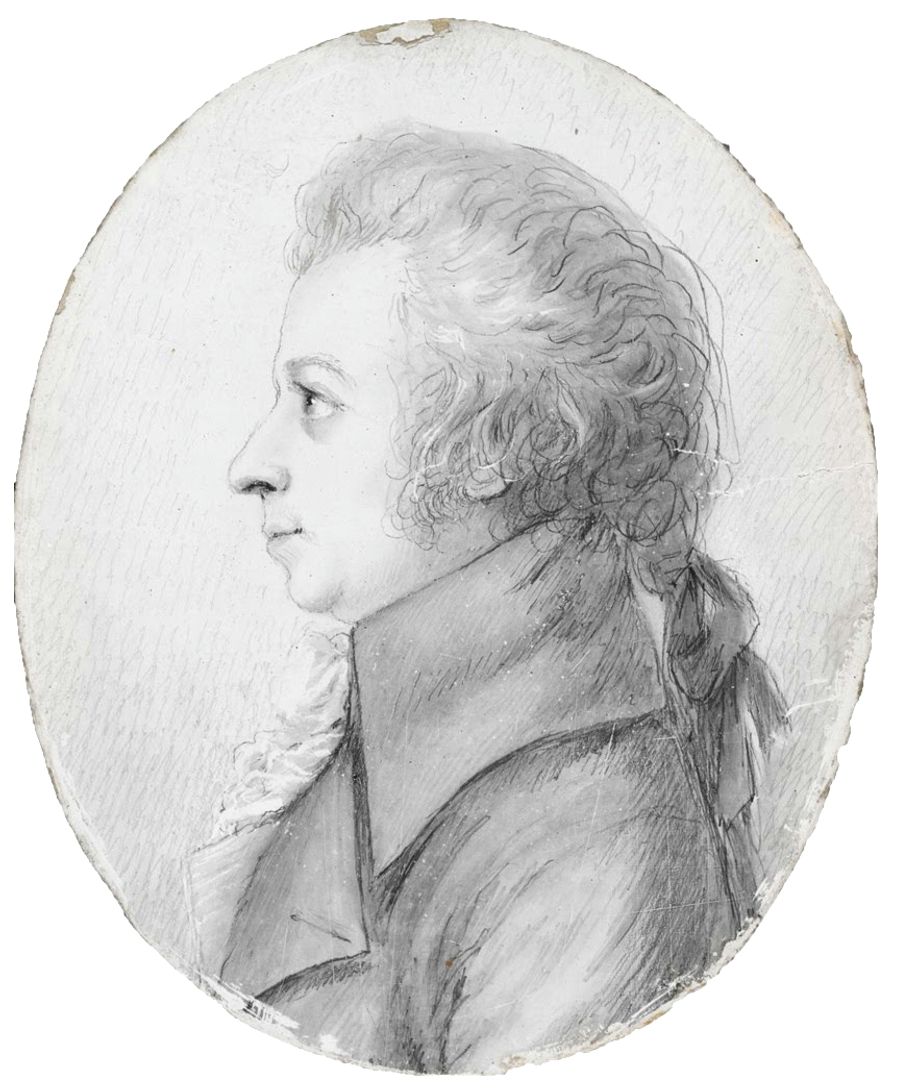
Silverpoint drawing of Mozart by Dora Stock, 1789
Mozart, silverpoint by Dora Stock, 1789 — last authenticated portrait

Così fan tutte, ossia La scuola degli amanti (K. 588) is Mozart’s two-act opera buffa, completed for Vienna and first performed at the Burgtheater on 26 January 1790 [1]. Written at age 34 in the city that had made him famous—and increasingly anxious—Mozart’s final Da Ponte collaboration turns a seemingly frivolous wager-plot into an exacting drama of testing, role-playing, and self-knowledge.

Background and Context

Vienna in late 1789 and early 1790 was an environment in which operatic taste, court politics, and economic realities pressed hard against one another. Italian opera at the Burgtheater remained a prestige enterprise, but it was also a repertory machine: works were written for specific ensembles of singers, fitted to their strengths (and mannerisms), and expected to succeed quickly if they were to stay on the bill. Così fan tutte belongs to this practical world, yet its tone is unusually searching. The opera’s subtitle, La scuola degli amanti (“The School for Lovers”), signals a didactic experiment rather than mere farce—an experiment that repeatedly asks whether fidelity is a moral absolute, a social performance, or a psychological fiction.

As an Amazon Associate we earn from qualifying purchases.

The opera is also the third panel of the Mozart–Da Ponte trilogy (after Le nozze di Figaro, K. 492, and Don Giovanni, K. 527), and it behaves like a late-style summation. Notably, scholarship has questioned the long-repeated story that Emperor Joseph II personally suggested the plot; “recent research does not support this idea,” as reference accounts now routinely caution [1]. What matters is less a single origin anecdote than the atmosphere in which the work took shape: a cultivated Viennese public, a troupe seasoned in Mozart’s idiom, and a composer whose private finances were precarious even as his dramatic technique was at its most supple.

Composition and Commission

If the opera’s genesis is hard to reduce to one tidy “commission story,” Mozart’s correspondence gives at least one vivid glimpse of work-in-progress social reality. The critical report of the New Mozart Edition preserves Mozart’s invitation to his friend and benefactor Michael Puchberg for a small rehearsal: “—I am only inviting you and Haydn.” [2] That single detail is unusually revealing. It suggests a private test-run of the score among trusted ears, and it places Joseph Haydn—Vienna’s most admired composer—near the opera at the moment of its emergence.

Money and theatre were intertwined. The same New Mozart Edition report notes an entry concerning payment to Mozart “for the composition of the music to the opera Così fan tutte, 450” (florins) in connection with Puchberg [2]. In other words, the opera is not only a philosophical comedy about exchange and substitution; it was also written amid very literal negotiations of credit, fees, and survival.

Casting shaped the composition in the usual late-18th-century way: Mozart wrote for particular personalities. The first Fiordiligi, Adriana Ferrarese del Bene, became surrounded by later gossip that Mozart seeded her music with ungainly leaps to expose an alleged stage habit; modern summaries often note the anecdote but also flag its uncertain status (and its dependence on later reporting rather than contemporary documentation) [3] [4]. Whatever the truth of the story, the vocal writing itself is beyond dispute: Fiordiligi’s music is a laboratory of extremes—wide intervals, sudden changes of register, and a kind of heroic rhetoric that sits almost provocatively inside a comedy. Mozart’s method here is characteristic of Così: the surface genre says “buffa,” while the music insists on the body’s difficulty—breath, range, stamina—as a metaphor for moral strain.

Libretto and Dramatic Structure

Da Ponte wanted the subtitle La scuola degli amanti to stand as the principal title (and, according to later commentary, continued to treat it as such), while Mozart favored the sharper, more epigrammatic Così fan tutte, a phrase that knowingly echoes Figaro [5]. That tension of framing—“school” versus “slogan”—already encapsulates the opera’s dramaturgy. Is this story an experiment designed to teach, or a cynical proverb about human nature?

Structurally, the libretto is remarkable for how insistently it builds situations in which characters must act in two senses at once: they perform roles on stage, and they perform identities for one another within the plot. The men’s disguise is only the most obvious layer. More unsettling is the way the women are asked to rehearse alternative selves: not simply to be “tempted,” but to discover which version of themselves is socially rewarded, which is erotically plausible, and which is psychologically sustainable.

As an Amazon Associate we earn from qualifying purchases.

The plot mechanism—the wager engineered by Don Alfonso, with Despina as practical accomplice—has often provoked moralistic discomfort. Yet the opera’s drama is not best understood as a crude lesson in women’s inconstancy; rather, it is a study of how quickly the rules of love can be rewritten when social conditions change. Cambridge scholarship usefully underlines how slippery the opera’s material history is: early performance and source transmission quickly proliferated in German translations in the 1790s, and it was “not until well into the nineteenth century” that the work was regularly performed again in its original Italian [6]. That historical fact matters dramatically: the opera’s tone—its ethical temperature—has never been fixed, because language, taste, and performance convention have continually retranslated its irony.

Musical Structure and Key Numbers

Mozart’s score makes a bold claim: human feeling is not stable, and therefore musical form must be elastic. Instead of treating arias as sealed “portraits,” Così repeatedly allows ensembles to become the true sites of psychological revelation—public music for private confusion.

A few numbers show how the opera’s buffa machinery is quietly repurposed into something closer to a moral chamber drama:

Overture

The overture (often performed independently, and catalogued as part of the work’s public identity) aligns the opera with the Da Ponte opere buffe while planting the seed of ambiguity: brilliance on the surface, restlessness underneath [7]. Listeners can hear an opening confidence that is repeatedly interrupted by turns and hesitations—gestures that feel less like “comic bustle” than like a mind reconsidering its own certainties.

Fiordiligi: “Come scoglio”

Fiordiligi’s famous act-one aria is frequently heard as a virtuoso declaration of fidelity; it is also a study in self-fashioning. The wide leaps and emphatic rhetoric are not merely “difficult singing”—they are dramatic overcompensation, an attempt to harden the self into something monumental. The later anecdote about Ferrarese’s leaps is, at minimum, a clue to how strongly this aria invites embodiment: it turns the singer’s physical negotiation of register into visible theatre [3] [4].

The sisters’ duet “Ah guarda sorella”

Early in the opera, Mozart gives the sisters a duet whose elegance can sound like simple charm. Dramatically, however, it establishes a crucial premise: the women understand love through shared language and mutual surveillance. The “school” begins here—not with Don Alfonso’s wager, but with the sisters training each other in what they believe constancy should look like.

Despina’s interventions

Despina’s disguises often get played for broad comedy, but musically they function as a kind of staging device inside the score: Mozart keeps reminding the audience that roles are contagious. When the servant can change identity at will, the opera’s “noble” moral categories begin to look like costumes too.

The Act II ensemble-finale logic

By Act II, the opera’s most distinctive power lies in the way ensembles refuse to grant any character the last word. Mozart continually layers simultaneous perspectives: certainty next to doubt, tenderness next to calculation. In this sense, Così is less a story about “betrayal” than about the impossibility of maintaining a single narrative of oneself when the social environment demands adaptation.

As an Amazon Associate we earn from qualifying purchases.

Premiere and Reception

Così fan tutte premiered at Vienna’s Burgtheater on 26 January 1790 [1]. Its initial run was short not because Vienna rejected it outright, but because history intervened: Joseph II died on 20 February 1790, and court mourning halted performances after only a handful of shows [1]. The opera therefore entered the world with a strangely interrupted public life—an early reminder that operatic “success” is sometimes determined by forces utterly external to art.

Mozart’s own words, in a letter associated with the work’s later 1790 revival period, suggest that performances could still draw enthusiastic houses and encore demands (“repetition of numbers”), even on a typically unfavorable day for attendance [8]. The remark is easy to romanticize, but it has a sober implication: this was a practical, working opera in a commercial repertory environment, capable of pleasing audiences even as its subject matter troubled later moralists.

Performance Tradition and Legacy

The performance tradition of Così fan tutte is unusually bound up with questions of tone. Is it cruel? Tender? Nihilistic? A “wisest farce”? Different eras have answered differently, and the work’s history of translation and adaptation underscores why. Cambridge source studies point out that German translations dominated in the decades after the premiere, with Italian regaining regularity only later [6]. That linguistic shift is not trivial: the opera’s balance of irony and sincerity is encoded in Da Ponte’s diction, and translation can tip the drama toward either moral satire or sentimental romance.

Modern interpretive debate often centers on whether the opera endorses Don Alfonso’s cynical thesis (“thus do all…”) or exposes it as a self-fulfilling manipulation. Here, the subtitle can be rehabilitated: the “school” may be less about proving universal inconstancy than about showing how an experiment can deform what it claims to measure. In performance, this becomes a directorial and conducting problem. A reading that treats the score as lightly comic risks flattening Mozart’s recurrent harmonic shadows; a reading that treats it as existential tragedy can deny the work’s very precise comic timing.

What has remained constant is the opera’s compositional daring. In Figaro, Mozart stages a society; in Don Giovanni, he stages a myth; in Così, he stages a methodology—an inquiry into how desire, language, and social pressure interact. The result is an opera buffa that behaves like moral philosophy without forfeiting theatrical pleasure. Its lasting provocation is that it does not permit the audience the comfort of a single verdict: it insists that love is both real and performed, both chosen and negotiated, and that music—more than plot—can hold those contradictions in equilibrium.

As an Amazon Associate we earn from qualifying purchases.

Noter

Last ned og skriv ut noter for Così fan tutte (K. 588): Mozart and Da Ponte’s ‘School for Lovers’ fra Virtual Sheet Music®.

[1] Wikipedia: overview, premiere date and venue; note on initial run interrupted by Joseph II’s death

[2] Digital Mozart Edition (Mozarteum): New Mozart Edition critical report excerpt (English PDF) with Mozart’s invitation to Puchberg (“only inviting you and Haydn”) and payment entry

[3] WOSU Classical 101: discussion of Fiordiligi and the (possibly apocryphal) ‘leaps’ anecdote; context for the role’s vocal writing

[4] Wikipedia: Adriana Ferrarese del Bene (Fiordiligi at the premiere) and reporting of the ‘bob like a chicken’ story attributed to later sources

[5] The Guardian: discussion of titles (Da Ponte’s preference for *La scuola degli amanti* vs Mozart’s *Così fan tutte*) and the phrase’s echo of *Figaro*

[6] Cambridge Core (PDF chapter): early manuscript sources and performance-language history (prevalence of German translations; later return to Italian)

[7] Köchel Verzeichnis (Mozarteum): KV 588 overture work entry (context within Da Ponte operas)

[8] Wolferl.us: English-language presentation of a Mozart letter to Michael Puchberg (June 1790) referring to renewed performances and audience response