Quatuor à cordes no 22 en si bémol majeur (K. 589) — le deuxième « quatuor prussien » de Mozart
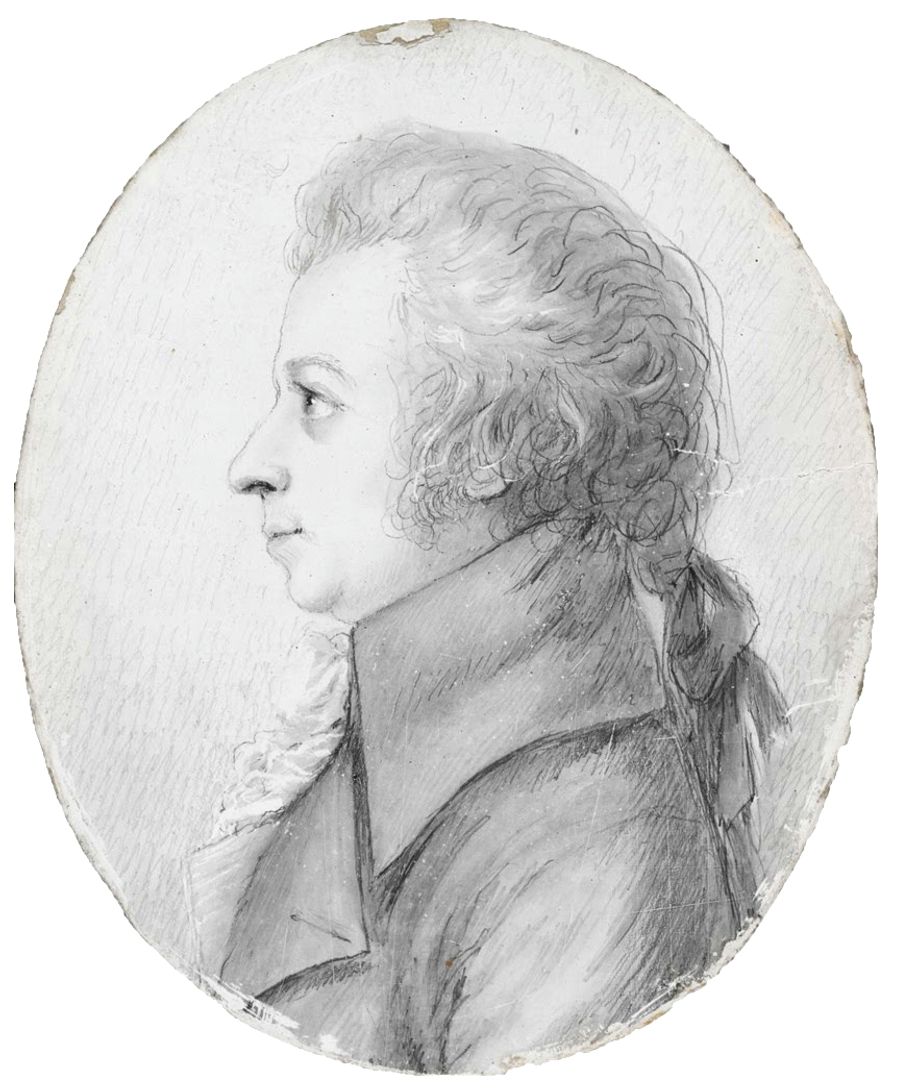
- Numéro Köchel
- K9 589 | K6 589
- Genre
- Musique de chambre
- Forme
- Quatuors à cordes et quatuors à vent
- Tonalité
- B Flat Major
- Date
- Mai 1790
- Lieu
- Vienna
- Âge
- 34
Le Quatuor à cordes no 22 en si bémol majeur (K. 589) de Mozart fut achevé à Vienne en mai 1790 et appartient aux trois quatuors tardifs longtemps associés au roi Friedrich Wilhelm II de Prusse — un violoncelliste amateur accompli, pour lequel Mozart façonna une écriture de basse exceptionnellement concertante [1] [2]. Loin de n’être qu’une « pièce de commande royale », le quatuor révèle le style tardif de Mozart dans ce qu’il a de plus subtil : des textures dépouillées mais animées d’un souffle vocal, et une partie de violoncelle qui, tout à la fois, flatte et bouscule la hiérarchie de l’ensemble.
Contexte et arrière-plan
En 1790, Mozart a trente-quatre ans, réside à Vienne et vit avec ce mélange familier d’ambition artistique et de trésorerie précaire. Le visage public de l’année est théâtral : Così fan tutte a été créé le 26 janvier 1790 et demeure présent dans sa vie de chef tout au long de la saison (dix représentations en 1790) [3]. Pourtant, derrière la routine de l’opéra se déploie une économie plus intime de musique de chambre — des œuvres destinées à des mécènes, à des éditeurs, et surtout à ces petits cercles d’interprètes chevronnés où Mozart pouvait encore compter sur une écoute attentive.
K. 589 se situe au cœur de cette tension. La correspondance de Mozart au début de l’été 1790 est sans détour sur la pression financière qui le contraint à « se défaire » de ses quatuors — « ce travail laborieux » — pour presque rien, simplement afin d’obtenir de l’argent comptant [3]. L’aveu est particulièrement révélateur, car il heurte la mythologie moderne d’un Mozart tardif produisant sans effort des chefs-d’œuvre « pour l’éternité ». Avec les quatuors prussiens, les sources dessinent au contraire le portrait d’un compositeur qui sait exactement ce que vaut son travail — et à quel point le marché peut le sous-estimer.
Parallèlement, K. 589 relève d’une esthétique tardive où Mozart repense ce qu’un quatuor peut faire. Simon P. Keefe a soutenu que l’ensemble prussien (K. 575, 589, 590) participe d’une « nouvelle esthétique » du genre : moins une démonstration publique de difficulté savante qu’une conversation raffinée, visée sur le plan affectif, où les moyens techniques sont choisis en fonction d’objectifs expressifs [2]. K. 589, œuvre centrale du triptyque, est la plus discrètement radicale : elle sonne souvent détendue, voire « domestique », mais repose sur un équilibre sophistiqué entre charme de cour et maîtrise compositionnelle au tranchant acéré.
Composition et dédicace
Mozart acheva K. 589 à Vienne en mai 1790, une datation confirmée par les recherches modernes et reflétée dans les commentaires éditoriaux liés au propre catalogue thématique du compositeur (Verzeichnüß aller meiner Werke) [2] [4]. La base Köchel de la Fondation internationale Mozarteum situe également l’œuvre parmi les trois derniers quatuors de Mozart destinés à Friedrich Wilhelm II et souligne la ligne de basse techniquement exigeante, parfois solistique, qui les distingue des quatuors antérieurs [1].
Le lien prussien est historiquement plausible et musicalement perceptible : Friedrich Wilhelm II n’était pas seulement un mécène, mais un violoncelliste accompli, et l’écriture de Mozart met à plusieurs reprises le violoncelle en avant, avec un profil cantabile et une responsabilité thématique indépendante [1]. Plus délicate est la question du statut de « dédicace » et de « commande ». Le catalogue thématique de Mozart indique explicitement que K. 575 fut écrit « pour Sa Majesté le Roi de Prusse », et l’histoire plus large des contacts avec Berlin/Potsdam et de l’intérêt royal est documentée dans le contexte des voyages de Mozart [5]. Mais les quatuors K. 589 et K. 590 semblent avoir vu le jour de manière moins directe : lorsque Artaria publia la première édition à la fin de 1791, l’édition ne proclamait pas haut et fort la dédicace royale comme on pourrait s’y attendre pour une véritable commande de cour [6].
Ce décalage — une musique apparemment taillée pour un roi, mais diffusée commercialement sans un imprimatur royal explicite — importe pour l’interprétation. Il suggère que K. 589 n’est pas simplement une « musique de cour », mais un quatuor écrit à l’intersection de plusieurs économies : celle de la cour (flatter un interprète royal), celle de la bourgeoisie (vendre à des éditeurs et à des amateurs) et celle des connaisseurs (s’adresser à ceux capables d’en saisir l’art raffiné). En ce sens, l’étiquette « prussien » désigne moins une fonction sociale unique qu’un ensemble de pressions sous lesquelles Mozart a réinventé le discours du quatuor.
Forme et caractère musical
I. Allegro (si bémol majeur)
L’Allegro initial se distingue par la rapidité avec laquelle une idée en apparence « facile » devient un réseau de responsabilités partagées entre les quatre instrumentistes. La surface du mouvement est gracieuse, mais sa rhétorique, économique : thèmes ramassés, transitions habiles, et l’oreille est sans cesse attirée vers le violoncelle, non comme simple assise harmonique, mais comme partie prenante de l’argument.
Ce qui distingue K. 589 du stéréotype plus ostensiblement spectaculaire d’un « violoncelle en avant », c’est la manière dont le violoncelle est promu. Mozart lui confie souvent une matière à la fois chantante et structurellement indispensable : il peut initier une idée, confirmer une cadence par une logique mélodique plutôt que par le seul poids, ou orienter l’harmonie à des moments où l’auditeur s’attend à voir le premier violon mener. Il en résulte une redistribution raffinée de l’autorité — un ensemble où la direction est situationnelle, non permanente.
L’idée plus générale de Keefe sur une « esthétique » du quatuor tardif éclaire ce point : les textures des derniers quatuors de Mozart peuvent paraître clairsemées, mais ce dépouillement est stratégique, permettant au moindre geste motivique de se faire entendre comme une parole signifiante plutôt que comme un accompagnement [2]. Dans le premier mouvement de K. 589, l’idéal conversationnel n’est pas un bavardage constant à quatre voix ; c’est un échange discipliné où la « bonne » voix parle au « bon » moment.
II. Larghetto (mi bémol majeur)
Le mouvement lent est le centre émotionnel du quatuor, et c’est ici que la prémisse prussienne de Mozart devient plus qu’un accommodement technique. Le Larghetto en mi bémol majeur confère au violoncelle une présence durable, vocale : moins un soliste mis en vedette qu’un personnage dont le timbre — or sombre, intime, humain — colore tout l’affect.
La tentation interprétative serait de qualifier cela de simplement « beau », mais l’intérêt plus profond réside dans la manière dont Mozart gouverne l’intimité. Le mouvement se comporte comme une scène sans paroles : les phrases se répondent avec le tact d’un dialogue de chambre, et les moments les plus expressifs sont souvent ceux où Mozart évite toute rhétorique appuyée. Chez le Mozart tardif, l’intensité naît fréquemment de la retenue — du choix de savoir quand ne pas épaissir la texture, quand laisser une ligne seule dévoiler la vérité harmonique.
C’est précisément le type de mouvement qui fait de K. 589 une pierre de touche pour les interprètes qui débattent du style classique tardif : faut-il viser un legato presque vocal, effaçant les coutures au profit d’une ligne opératique, ou préserver l’articulation de la « parole », en gardant la rhétorique audible comme une musique qui pense en phrases ? La partition autorise les deux accentuations, et les meilleures interprétations trouvent un moyen de laisser chanter le cantabile du violoncelle tout en conservant la syntaxe du quatuor limpide.
III. Menuetto (Allegretto) – Trio (si bémol majeur)
Les menuets tardifs de Mozart recèlent souvent une complexité codée : ils présentent une danse socialement lisible tout en en subvertissant discrètement la symétrie. Dans K. 589, le Menuetto équilibre poids et légèreté, et l’oreille remarque à maintes reprises que la basse fait bien davantage que marquer la mesure. La mise en avant du violoncelle n’est pas seulement affaire de registre ; elle tient à la place rhétorique — Mozart confie à l’instrument des lignes capables de commenter la danse.
Le Trio, d’ordinaire lieu d’un contraste pastoral, devient un laboratoire de texture. Ici, le quatuor peut sonner presque comme un petit orchestre réduit à l’essentiel : lignes nettes, direction harmonique claire, et pourtant un travail de voix intérieure qui exige une vigilance habituellement associée à une écriture de quatuor plus « savante ». L’art de Mozart est de faire ressentir cette vigilance comme de l’aisance.
IV. Allegro assai (si bémol majeur)
Le finale, marqué Allegro assai, est souvent décrit comme joyeux ; c’est vrai, mais cela sous-estime le métier du mouvement. Mozart construit une argumentation rapide où l’élan naît moins d’une virtuosité pure que de la clarté rythmique et d’une répartition précise des fragments thématiques.
Dans le contexte prussien, le finale constitue aussi un théâtre pratique. En donnant au violoncelle une participation vive et agile, plutôt que de longues lignes cantabile seulement, Mozart flatte un amateur accompli sans transformer le mouvement en concerto. L’effet est celui d’un brillant collégial : on entend un quatuor où chacun est « sur scène », et la joie provient de l’athlétisme partagé de l’ensemble.
Réception et postérité
La réception initiale des quatuors prussiens est exceptionnellement bien documentée, et elle complique la tendance moderne à les considérer comme de charmants appendices tardifs au recueil « Haydn ». Keefe relève des notices remarquablement élogieuses autour de la mort de Mozart — un vocabulaire louant « l’art, la modulation et l’intensité d’expression » — ainsi que les annonces d’Artaria, motivées par la vente mais révélatrices, affirmant que les quatuors furent accueillis avec une « acclamation générale » et admirés à la fois par les amateurs et par les connaisseurs [2]. Même en tenant compte des mobiles commerciaux des éditeurs, la précision des louanges suggère que les contemporains entendaient dans ces œuvres autre chose qu’un divertissement de cour.
L’ironie est que Mozart lui-même, en 1790, parle des quatuors comme d’actifs qu’il doit liquider — un travail épuisant vendu à bas prix dans l’urgence [3]. K. 589 porte donc un double héritage : c’est un chef-d’œuvre tardif d’équilibre et de tact expressif, et c’est un document sur la manière dont même la musique de chambre la plus sophistiquée pouvait se trouver prise dans les urgences du gagne-pain.
Dans l’histoire de l’interprétation, K. 589 a souvent servi d’œuvre-test. Les ensembles s’en servent pour vérifier si leur « Mozart » n’est que joli (bien fondu, agréable) ou véritablement vivant, ouvert au risque de la conversation : le quatuor exige de la transparence sans sécheresse, du charme sans complaisance, et surtout une égalité d’écoute à la hauteur de la redistribution mozartienne de l’autorité instrumentale. En ce sens, son statut durable ne tient pas seulement à la composition, mais à l’éthique interprétative qu’il requiert — quatre musiciens s’accordant, à chaque instant, pour traiter chaque ligne comme porteuse de sens.
Sources
[1] International Mozarteum Foundation (Köchel Catalogue): KV 589 work page with instrumentation, context, sources/publication data
[2] Simon P. Keefe, Cambridge Core: chapter on Mozart’s ‘Prussian’ Quartets (K. 575, 589, 590) with dates and contemporary reception notices
[3] Digital Mozart Edition (Mozarteum): Mozart letter to Michael Puchberg, Vienna (before/on 12 June 1790), mentioning selling his quartets for cash
[4] Bärenreiter preface preview (editorial context for dating and catalogue entry for K. 589 and related quartets)
[5] Wikipedia: context for Mozart’s Berlin journey and reported royal commissions/award (background for Prussian connection)
[6] Wikipedia: String Quartet No. 22 (Mozart), overview including Prussian association and publication note