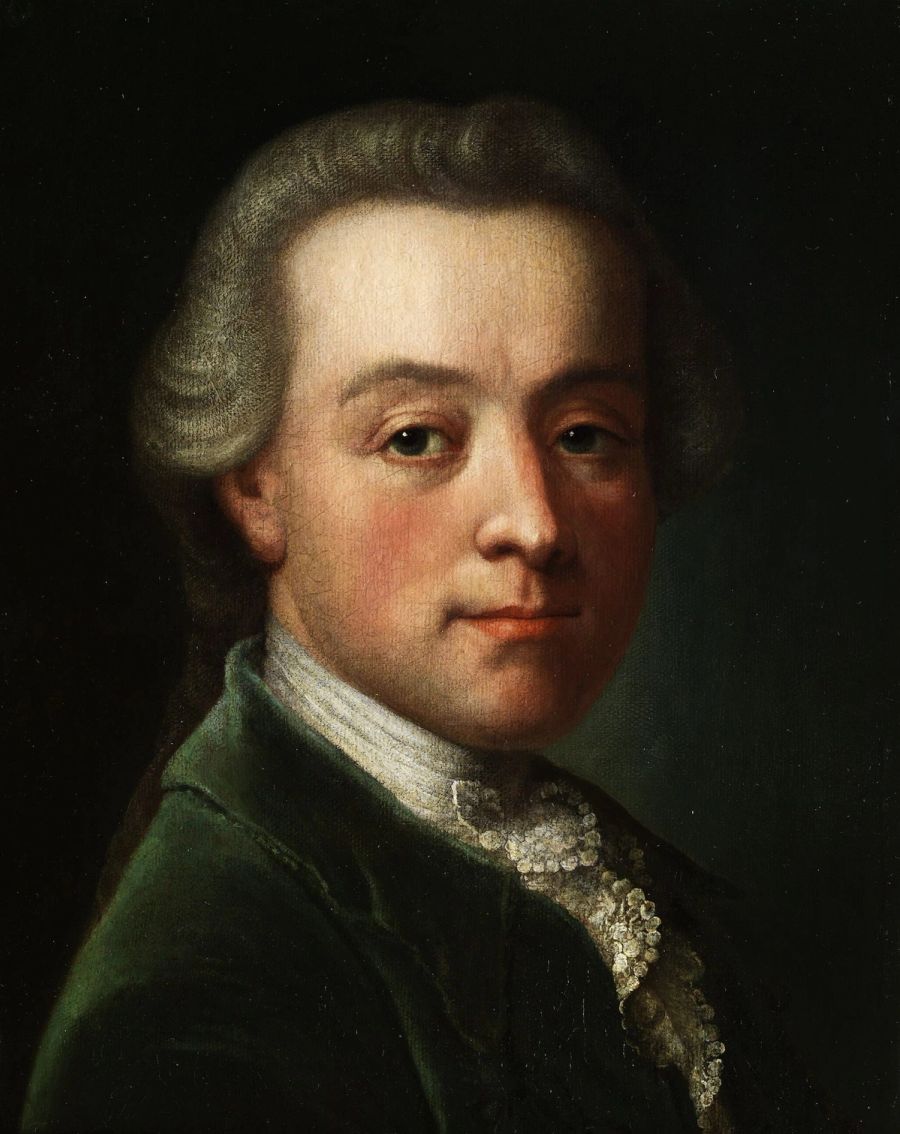
- Numéro Köchel
- K9 543 | K6 543
- Genre
- Musique orchestrale
- Forme
- Symphonies
- Tonalité
- E Flat Major
- Date
- 26 Juin 1788
- Lieu
- Vienna
- Âge
- 32
La Symphonie nº 39 en mi bémol majeur, K. 543, de Mozart, achevée le 26 juin 1788, ouvre le groupe de ses trois dernières symphonies, suivie des nº 40 et 41. Découvrez sa grande introduction, ses quatre mouvements et son usage distinctif des clarinettes.
Contexte et cadre : À l’été 1788, Mozart, âgé de 32 ans, vivait à Vienne dans une période agitée. Plus tôt cette année-là, l’Empire d’Autriche (sous l’empereur Joseph II) était entré dans la guerre austro-turque, entraînant de nombreux nobles au service militaire et réduisant le public des concerts viennois[1][2]. Mozart lui-même était un compositeur-interprète indépendant à succès, mais la guerre et la récession avaient perturbé ses revenus[1]. Il planifia avec optimisme une série de concerts d’été, mais dut finalement les annuler[1][3]. Malgré ces difficultés (et même une tragédie personnelle – sa jeune fille mourut quelques jours après qu’il eut achevé cette œuvre[3]), Mozart mit à profit ce temps libre pour se jeter avec énergie dans la composition. En seulement six semaines, de juin à août 1788, il écrivit ses trois dernières symphonies. La Symphonie nº 39 (K. 543) fut achevée le 26 juin 1788[4] comme la première de ce trio ; Mozart termina ensuite la nº 40 le 25 juillet et la nº 41 (« Jupiter ») le 10 août[5][6]. (Certains chercheurs considèrent ces trois œuvres comme une sorte de triptyque ou de « trilogie monumentale »[7].) Le monde de 1788 était à la veille de grands bouleversements : les idées des Lumières circulaient tandis que l’Europe glissait vers des convulsions politiques, et le style mûr de Mozart se montrait d’une audace peu commune pour son époque[8]. De fait, des commentateurs rappellent que le public de la fin du XVIIIe siècle attendait généralement des symphonies qu’elles soient « petites et légères » ; les textures riches et la profondeur émotionnelle de Mozart dans ces œuvres étaient donc tout à fait nouvelles[8].
Composition et création : On ne connaît pas de commande dédiée pour K. 543. Mozart l’écrivit probablement pour l’un des concerts viennois qu’il projetait, mais la série fut annulée faute de ventes suffisantes[3]. On ne sait pas qu’elle ait été jouée de son vivant (Mozart aurait apparemment distribué des parties d’orchestre, signe qu’il espérait qu’on l’entendrait[9], mais aucun compte rendu de concert n’a subsisté). La première exécution attestée eut lieu après sa mort — lors d’un concert commémoratif Mozart à Hambourg, en mars 1792 — où un témoin décrivit l’ouverture comme « si majestueuse… que même l’auditeur le plus froid, le plus insensible… en fut tout ouïe »[10]. Ce témoignage souligne l’impression qu’exerçait sur les premiers auditeurs la grande entrée en matière de l’œuvre.
Instrumentation
La Symphonie nº 39 requiert un orchestre classique plus vaste que les symphonies antérieures de Mozart. L’effectif est le suivant :
Bois : 1 flûte, 2 clarinettes (en la et en si bémol), 2 bassons
Cuivres : 2 cors naturels, 2 trompettes naturelles (en mi bémol)
Percussions : timbales (accordées sur mi bémol et si bémol)
Cordes : premiers et seconds violons, altos, violoncelles et contrebasses
En pratique, Mozart remplaça la paire habituelle de hautbois par des clarinettes[11]. C’était très inhabituel chez lui — K. 543 est la seule grande symphonie de la vie adulte de Mozart sans hautbois[11] — et cela confère à l’œuvre un timbre de bois riche et moelleux. Les clarinettes y sont mises au premier plan (un auteur ancien y voit la « première grande utilisation orchestrale » de l’instrument chez Mozart)[12][13]. L’ajout des trompettes et des timbales (qui étaient facultatives dans les orchestres de l’époque) apporte une couleur festive et cérémonielle[14][15]. Au total, l’orchestration est flûte, 2 clarinettes, 2 bassons, 2 cors, 2 trompettes, timbales et cordes[16][17].
Structure et caractère musical
La symphonie comporte quatre mouvements, suivant la forme classique avec quelques inflexions caractéristiques :
- I. Adagio – Allegro (mi bémol majeur, mesure à 2/2 puis 3/4) : Une vaste introduction Adagio ouvre l’œuvre. Elle est solennelle et chromatique, marquée par d’audacieuses fanfares des cuivres et des figures descendantes[18][19]. Après cette entrée en matière majestueuse, la musique se déploie dans un Allegro en forme sonate[20][18]. Dans l’Allegro, Mozart propose des thèmes principaux pleins d’entrain (certains auteurs signalent, dans le second groupe, un thème étincelant « en marche »), avec un dialogue très actif entre vents et cordes[20]. Le caractère général est à la fois majestueux et énergique.
- II. Andante con moto (la bémol majeur, 2/4) : Le deuxième mouvement est un mouvement lent lyrique. Il commence avec douceur, sur un thème simple aux cordes[21][22]. Mozart le traite dans un style de sonate abrégée : il expose un thème (en le répétant avec une instrumentation variée), mais omet la section habituelle de développement[21][22]. L’effet est intime et chantant. À mi-parcours, l’atmosphère s’anime légèrement avant de revenir à l’idée principale, paisible. La tonalité de la bémol majeur (la sous-dominante de mi bémol majeur) ajoute une couleur chaude et veloutée.
- III. Menuetto: Allegretto – Trio (mi bémol majeur, 3/4) : Ce menuet est vif et dansant, avec une pulsation nette à 3/4. Les sections extérieures du Menuetto sont franches et robustes. La section centrale du Trio est particulièrement distinctive : Mozart l’écrit dans le style d’une danse populaire autrichienne, le ländler[23][24]. Ici, les vents rayonnent — les clarinettes (avec une flûte) forment un duo où l’une joue une mélodie simple et gracieuse au-dessus des arpèges rythmiques de l’autre[25][24]. Cela confère au Trio un charme rustique et pastoral. Dans l’ensemble, le menuet et trio alterne entre la solennité de la forme de cour et un caractère populaire, fait maison.
- IV. Allegro (mi bémol majeur, 2/4) : Le finale est un Allegro vif et affairé, en forme sonate. Son thème principal est largement construit sur une gamme de mi bémol ascendante puis descendante (un peu comme une ligne d’escalade joueuse)[26]. Mozart développe cette idée avec beaucoup d’esprit et de malice ; la musique est lumineuse, affirmée, et portée par un élan rythmique constant. Fait notable, le mouvement ne comporte pas de grande coda conventionnelle. Après la réexposition, au lieu d’un geste conclusif éclatant, Mozart mène la symphonie vers une fin discrète. Les toutes dernières mesures s’évanouissent simplement sur une gamme descendante de mi bémol majeur[26][27], donnant à la conclusion un presque impertinent sentiment d’espièglerie (comme si le thème avait « le dernier mot »[28]).
Réception et postérité
La Symphonie nº 39 est depuis longtemps admirée comme l’une des grandes œuvres orchestrales de Mozart. Ironie du sort, il semble que Mozart ne l’ait jamais présentée publiquement : les « Concerts in the Casino » où elle aurait pu être créée furent annulés[3]. Après sa mort, l’œuvre entra dans l’oreille du public grâce à une exécution à Hambourg en 1792, d’où provient la célèbre réaction de l’auditeur (citée plus haut) louant son ouverture « majestueuse »[10].
Aujourd’hui, la symphonie en mi bémol majeur est un pilier du répertoire de concert. Critiques et historiens la qualifient souvent de chef-d’œuvre du style classique. Le journaliste Andrew Clements remarque que les trois dernières symphonies de Mozart comptent « parmi les œuvres les plus familières du répertoire symphonique »[29], et de nombreux programmes associent la nº 39 aux nº 40 et 41. Les auditeurs d’aujourd’hui trouvent toujours sa musique saisissante : encore maintenant, « la majestueuse introduction… conserve un pouvoir de fascination »[30]. La richesse des vents et l’originalité de l’écriture (notamment des clarinettes) influencèrent l’orchestration de compositeurs ultérieurs. Certains analystes contemporains, comme le chef Nikolaus Harnoncourt, ont même avancé que Mozart avait conçu les nº 39–41 comme une trilogie unifiée (l’Adagio lent de la nº 39 jouant le rôle d’une sorte d’ouverture)[7].
En somme, la Symphonie nº 39 reflète le génie mûr de Mozart : elle mêle grandeur cérémonielle, lyrisme chaleureux et drame inventif. Elle occupe une place assurée dans l’héritage musical, largement jouée au concert comme au disque. Ses thèmes mémorables et ses traits inhabituels (tels que l’introduction lente et l’écriture des clarinettes) continuent de captiver le public et d’éclairer la dernière période créatrice de Mozart[11][30].
Sources
Sources
Authoritative program notes, historical accounts and musicological studies[4][20][10][11][31].
[1] [8] [9] [11] [16] [19] [25] [28] Symphony No. 39 in E-flat, K. 543, Wolfgang Amadeus Mozart
https://www.laphil.com/musicdb/pieces/3981/symphony-no-39-in-e-flat-k-543
[2] 1788-1791: Austro-Turkish War | Mozart & Material Culture
https://mmc.kdl.kcl.ac.uk/entities/event/austro-turkish-war/
[3] [18] [22] [24] Mozart: Symphony No 39 | Indianapolis Symphony Orchestra
https://www.indianapolissymphony.org/backstage/program-notes/mozart-symphony-no-39/
[4] [5] [17] [20] [21] [23] [26] Symphony No. 39 (Mozart) - Wikipedia
https://en.wikipedia.org/wiki/Symphony_No._39_(Mozart)
[6] [13] Mozart's 8 Most Popular Symphonies on YouTube Ranked
https://interlude.hk/the-8-most-viewed-mozart-symphonies-on-youtube/
[7] [29] [31] Mozart: The Last Symphonies review – a thrilling journey through a tantalising new theory | Wolfgang Amadeus Mozart | The Guardian
https://www.theguardian.com/music/2014/jul/23/mozart-last-symphonies-nikolaus-harnoncourt-review
[10] [15] [27] [30] Mozart’s Symphony No. 39 in E-flat Major: Majestic and Celebratory – The Listeners' Club
[12] [14] Symphony No. 39 in E♭ major, K. 543 - Tucson Symphony Orchestra
https://www.tucsonsymphony.org/program-notes/mozart/symphony-39/