Mozart’s Instrumentation for a Viotti Violin Concerto (K. Anh.A 48) in E minor
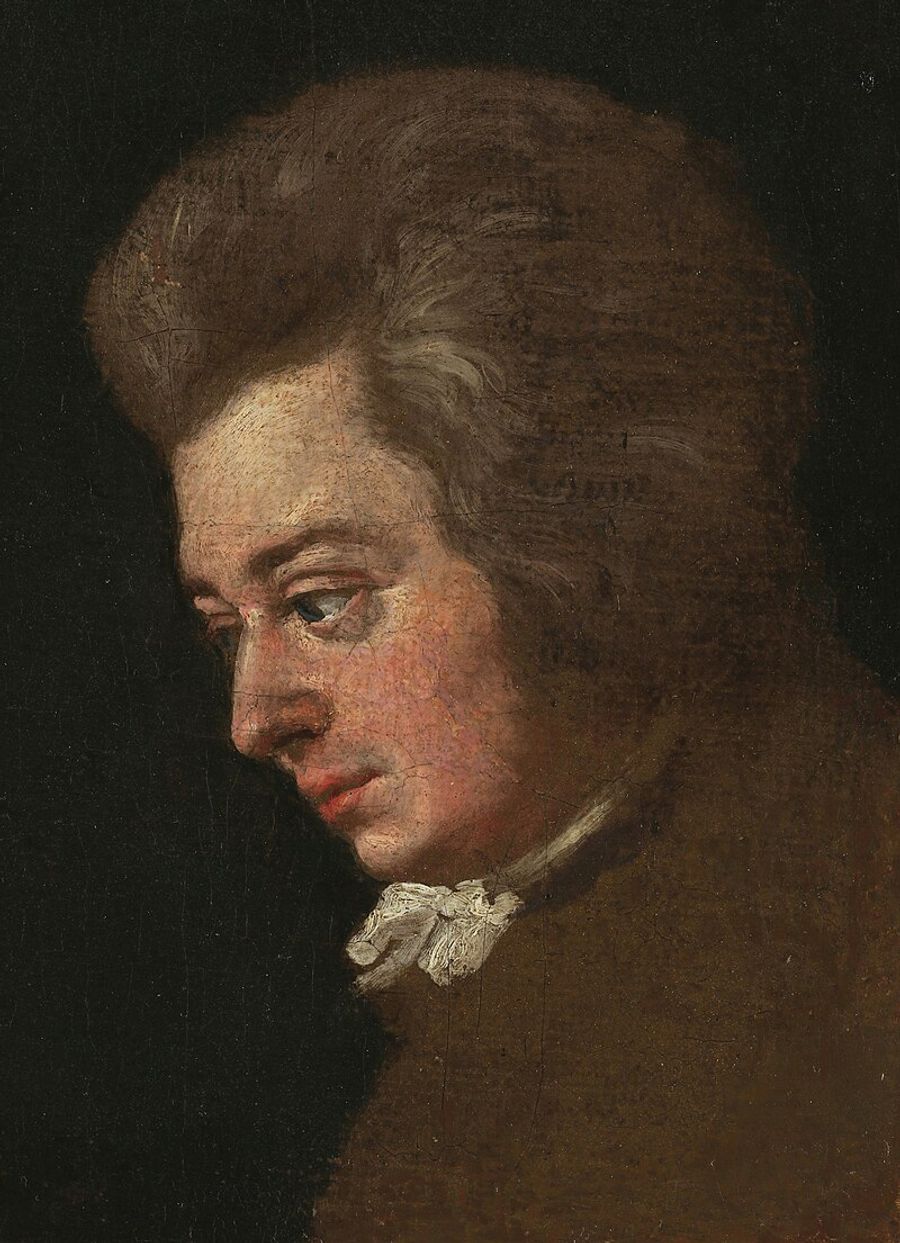
- Köchel Number
- K9 Anh.A 48 | K6 470a
- Genre
- Piano Music
- Form
- Piano Pieces
- Key
- E Minor
- Date
- April 1785
- Place
- Vienna
- Age
- 29
Instrumentation for a Concerto for Violin by G.B. Viotti (K. Anh.A 48) is an unusual, borderline case in Mozart’s output: an extant, autograph-linked set of materials connected with a Viotti violin concerto in E minor, commonly associated with Mozart’s Vienna years. Although sometimes cited in older cataloguing traditions around 1785, the Stiftung Mozarteum’s Köchel-Verzeichnis currently dates the surviving material to c. 1789–1790.
Background and Context
In Vienna, Mozart’s daily work in the mid-to-late 1780s mixed public virtuosity with intensely practical musicianship: arranging, adapting, and preparing music for specific occasions and performers. The Viotti-related entry K. Anh.A 48 belongs to that pragmatic side of his life—a set of surviving materials tied to a Concerto in e for violin and orchestra by Giovanni Battista Viotti, with Mozart named as arranger in the Köchel-Verzeichnis record. While the user-facing catalog data is often given as “Vienna, 1785,” the Mozarteum catalogue presently suggests a dating of 1789–1790 for the transmitted sources, so any link to a precise moment in 1785 should be treated cautiously. [1]
Musical Character
What can be described with some confidence is not a full concerto score in Mozart’s hand, but the type of material that survives.
The Mozarteum entry lists two components:
- Wind parts in short score (Bläserparticell), preserved on a single leaf (two written pages)
- a piano reduction (Klavierauszug)
Taken together, this points to Mozart’s involvement at the level of realization and scoring practice: supplying or clarifying wind writing (or at least copying/organizing it) and shaping the concerto into a keyboard-friendly format for rehearsal, domestic performance, or study. The key of E minor suggests a darker, more tense expressive palette than the “sunlit” major-key concerto norm—an affect that, in late-18th-century concerto style, often invites more pointed orchestral punctuation and sharper harmonic turns around the soloist’s rhetoric, even when the orchestral forces remain essentially Classical in scale. [1]
Place in the Catalog
K. Anh.A 48 sits among entries for concertos and individual concerto movements for solo instrument and orchestra, but it stands apart in authorship: it is fundamentally Viotti’s concerto, with Mozart’s role best understood as an arranger/editorial hand reflected in the surviving wind particell and keyboard reduction rather than an “original” Mozart concerto conception. [1]
Sources
[1] Stiftung Mozarteum Salzburg, Köchel-Verzeichnis entry for KV Anh. A 48 (key, status, dating, and source description including wind particell and piano reduction).