- Köchel Number
- K9 97 | K6 73m
- Genre
- Orchestral Music
- Form
- Symphonies
- Key
- D Major
- Date
- April 1770
- Place
- Rome
- Age
- 14
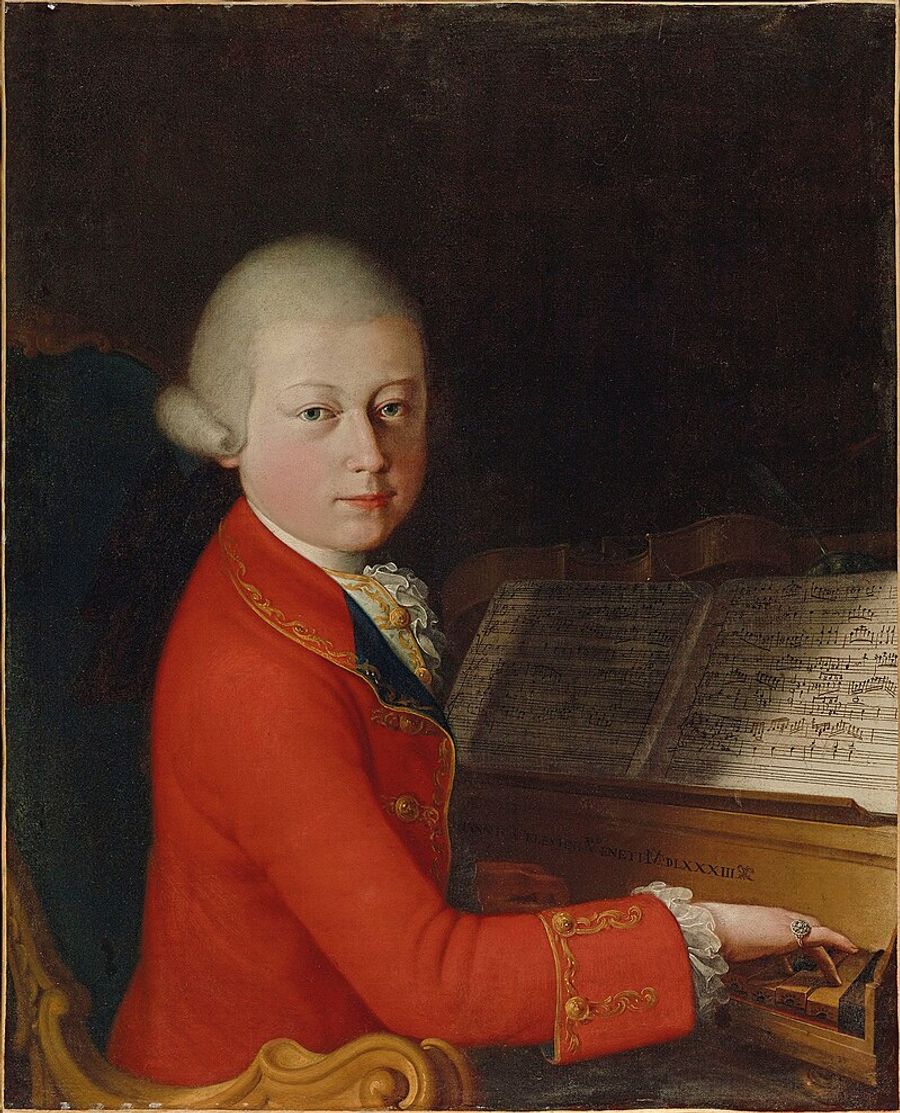
Mozart’s Symphony in D major (K. 97)—sometimes called Symphony No. 47 in older catalogues—is traditionally dated to April 1770 in Rome, when he was 14. It survives only in later copies, and its attribution has long been treated as doubtful, even though some writers accept it as genuinely Mozartian.
Background and Context
In spring 1770, Wolfgang Amadeus Mozart (1756–1791) was in Rome during his first Italian journey, absorbing Italian orchestral style at first hand while traveling with his father, Leopold. The Symphony in D major, K. 97, is commonly placed in this Roman context and often grouped with the early “Rome symphonies,” yet the work’s authorship remains uncertain because no autograph score is known and the piece is transmitted in non-autograph sources.[1][2]
Musical Character
On the page, K. 97 reads as a compact, four-movement symphony—Allegro, Andante, Menuetto e Trio, Presto—in the bright, public D-major sound-world associated with ceremonial orchestral writing.[3] Its scoring appears to align with an early-Classical orchestra. Sources and modern cataloging commonly indicate oboes and horns with strings, and some materials also transmit parts that add trumpets and timpani—details that underline how easily such early symphonies could circulate, be copied, and sometimes be “filled out” to suit local forces.[1][3]
Musically, the outer movements favor brisk thematic rhetoric and quick cadential turns rather than the expansive argument of Mozart’s later symphonies; the Andante offers a simpler, song-like contrast, while the Menuetto places the work firmly in the social-dance orbit of the period.[3] Heard alongside securely attributed works from the same trip, K. 97 can suggest a young composer practicing Italianate orchestral manners—though the doubtful transmission means such stylistic impressions cannot settle the question of authorship.
Place in the Catalog
Whether by Mozart or by a close contemporary (as sometimes proposed), K. 97 sits at the edge of his symphonic canon: a short Roman-period D-major symphony preserved without an autograph and therefore often labeled “doubtful,” yet also frequently performed and discussed as plausibly authentic.[2][4]
Sources
[1] Mozarteum Salzburg, Köchel Catalogue entry for KV 97/01 (work data; notes standardized scoring for Mozart’s early symphonies; flags doubtful authenticity).
[2] Wikipedia: “Mozart symphonies of spurious or doubtful authenticity” (context for K. 97’s doubtful status and transmission issues).
[3] IMSLP: “Symphony No.47 in D major, K.97/73m (doubtful)” (movement list; commonly transmitted instrumentation details; publication/copying overview).
[4] Wikipedia: “Symphony, K. 97 (Mozart)” (summary of authorship discussions and traditional Rome/1770 dating in reference literature).