- Köchel Number
- K9 81 | K6 73l
- Genre
- Orchestral Music
- Form
- Symphonies
- Key
- D Major
- Date
- April 1770
- Place
- Rome
- Age
- 14
Traditionally catalogued as a youthful Symphony in D major (K. 81), this compact work is said to date from Mozart’s first Italian journey, probably in Rome in 1770, when he was 14. Its attribution, however, remains disputed in modern scholarship, and it is often discussed among Mozart’s symphonies of doubtful authenticity.
Background and Context
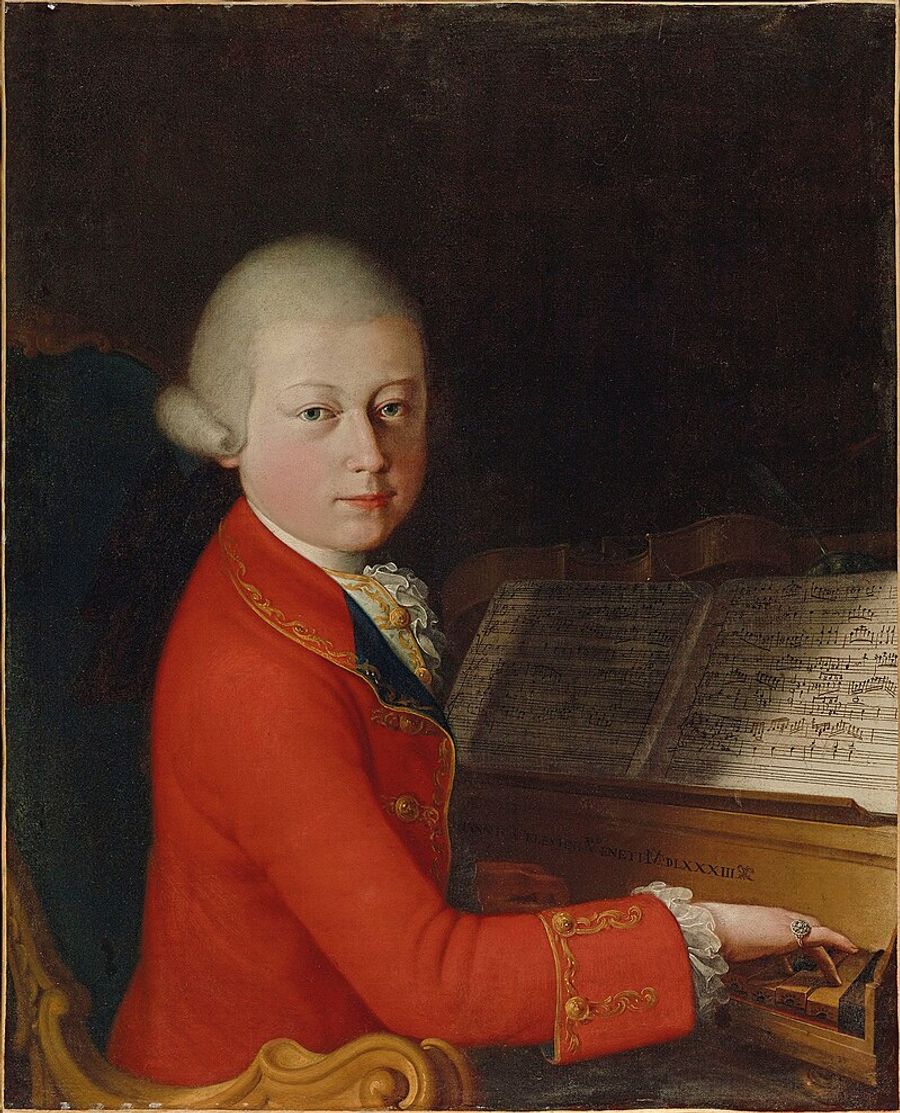
In the spring of 1770, Wolfgang Amadeus Mozart (1756–1791) was traveling in Italy with his father, Leopold Mozart, as part of the celebrated first Italian tour. K. 81 is traditionally placed in Rome in 1770 (often with the specific date 25 April), and it has long circulated under Mozart’s name as a short D-major symphony—sometimes numbered “No. 44” in older listings.[1][2]
At the same time, the work’s authorship is not secure. Modern reference surveys regularly group K. 81 among the symphonies that are spurious or of doubtful authenticity, and some writers have suggested that Leopold Mozart may be the composer.[3][2] Even so, it remains useful to read the piece as part of the orchestral “Italian sinfonia” world the Mozarts encountered—music intended for quick effect in a theater or festive setting, typically with bright outer movements and a lighter, songful center.
Musical Character
K. 81 is a concise three-movement symphony (fast–slow–fast), the prevailing layout of the mid-18th-century Italian sinfonia.[1] The key of D major, strongly associated with ceremonial brilliance, suits the music’s outward, extrovert stance: the outer movements favor clear-cut rhythmic profiles, emphatic cadences, and straightforward tonal plans that keep the argument moving.
The scoring is the expected early-Classical orchestra of the period—strings with pairs of oboes and horns—designed to project strongly in public spaces without the heavier rhetorical weight of trumpets and timpani.[1] If one listens (or reads) with an eye to Mozart’s later symphonic manner, the most telling features are not “great ideas” but craft: the quick way the opening movement establishes D major, the reliance on repeated-note figures and triadic outlines, and the instinct for balancing small phrases into regular, memorable spans.
Place in the Catalog
Whether K. 81 is by Mozart or not, it belongs stylistically beside the cluster of short D-major symphonies associated with the 1770 Italian journey—works that show a teenage composer (or a close contemporary) absorbing the prevailing Italian orchestral idiom before Mozart’s Salzburg symphonies of the mid-1770s began to broaden in scale and harmonic ambition.[3][1]
Sources
[1] IMSLP work page for Symphony No. 44 in D major, K. 81/73l (includes basic cataloging, scoring, and sources for parts/scores).
[2] Wikipedia article: “Symphony, K. 81 (Mozart)” (overview, traditional dating/place, and discussion of doubtful attribution).
[3] Wikipedia list: “Mozart symphonies of spurious or doubtful authenticity” (places K. 81 among doubtful works; contextualizes the disputed status).