- Köchel Number
- K9 69 | K6 41k
- Genre
- Sacred Music
- Form
- Church Sonatas
- Key
- D Major
- Date
- c. 1772
- Place
- Salzburg
- Age
- 15
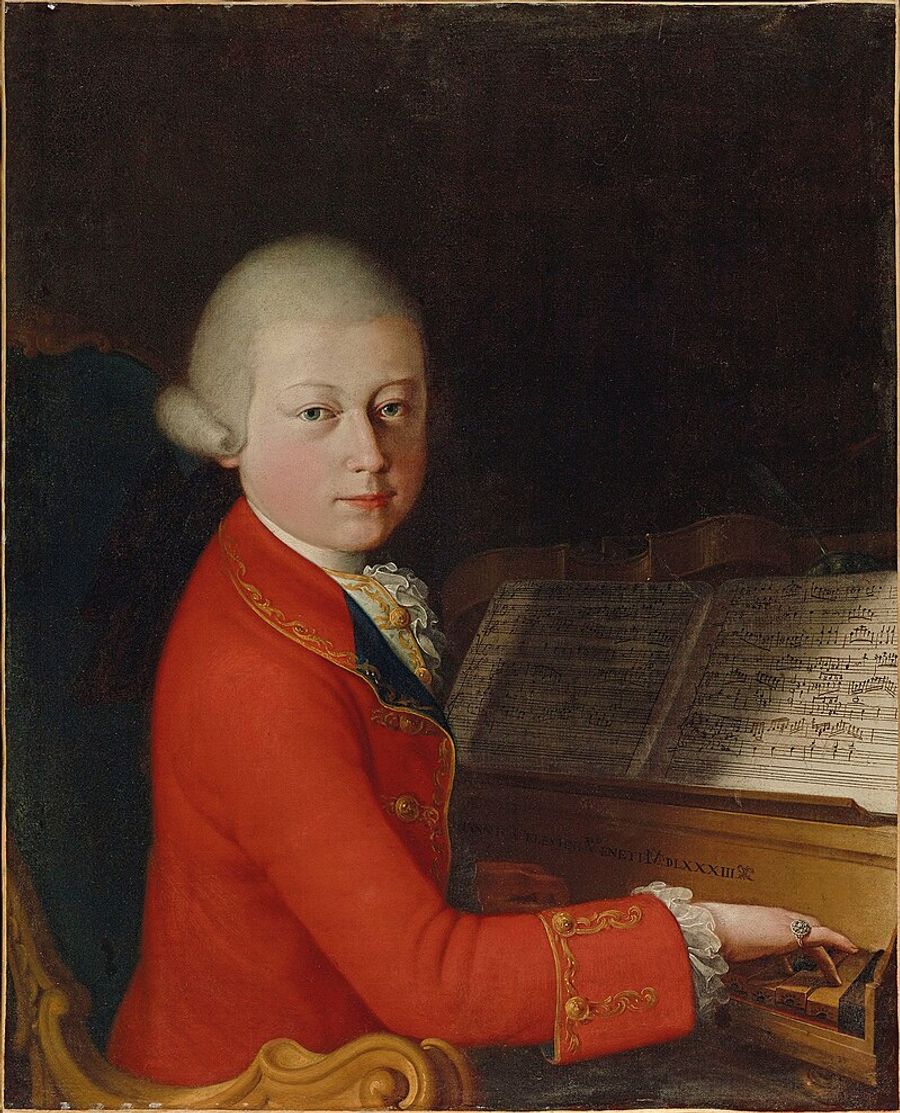
Mozart’s Church Sonata No. 3 in D major (K. 69/41k) is a compact, single-movement “epistle sonata” written in Salzburg in 1771–72, when he was about fifteen. Built for liturgical use rather than the concert hall, it nonetheless shows the young composer testing the poised rhetoric of early Classical sonata style in miniature form.
Background and Context
In Salzburg, instrumental music had a defined—if carefully limited—place within the Mass. Alongside choral settings and plainchant, short instrumental pieces could be inserted at particular moments of the service, and in Mozart’s day this often meant the so-called Kirchensonate (church sonata), also known as an “epistle sonata” because it was typically played between the Epistle and the Gospel. Mozart composed seventeen such works, mostly for modest forces, during his Salzburg years—a practical genre that also served as a laboratory for the fast, articulate style of the 1770s.2
Church Sonata No. 3 belongs to the earliest group of these pieces. Although brief and functional, works like K. 69 deserve attention because they capture Mozart learning how to “speak” in concise instrumental paragraphs: clear cadences, alert harmonic turns, and a sense of public ceremony—all traits that will later animate the concertos and symphonies.
Composition and Liturgical Function
The Köchel catalogue lists K. 69 as a Kirchensonate in D major (K. 69/41k). It is associated with Salzburg and generally dated to the early 1770s; sources differ in whether they label it 1771 or 1772, a reminder that the church sonatas can be awkward to pin down with day-to-day precision compared with Mozart’s better-documented theatrical and concerto projects.12
Its scoring reflects Salzburg’s practical church ensemble: 2 violins and organ with bass (cello/bass)—the “Salzburg church quartet” texture heard throughout the set.2 The organ part can function both as continuo support and as a leading voice, creating the characteristic dialogue of the genre: strings provide bright, ceremonial sonority, while the organ anchors the harmony and articulates the quick turns of phrase that keep the music moving forward.3
Musical Structure
K. 69 is a single movement marked Allegro.2 The choice of D major is telling: in eighteenth-century ceremonial music it projects brilliance and confidence, and here it suits the sonata’s role as a brief, uplifting interlude within the liturgy.
In many church sonatas, Mozart compresses the logic of sonata-allegro form (exposition, development, recapitulation) into a span that can pass in only a few minutes. In K. 69 the rhetoric is notably “to the point”: ideas tend to be stated in balanced, easily grasped units, and the harmonic motion is active enough to create momentum without calling undue attention to itself—an ideal stance for music meant to enhance, not compete with, the ritual action of the Mass.
Just as importantly, the genre teaches economy of orchestration. With only two violins above the bass line, the writing must create contrast through texture (unison vs. imitation), register, and the organ’s capacity to supply inner voices. The result is a small-scale but genuinely crafted piece, where necessity encourages clarity.
Reception and Legacy
The church sonatas fell out of routine Salzburg use after Mozart’s departure; later reforms favored sung items at the same liturgical point.2 Yet the genre remains valuable today for performers and listeners interested in Mozart “at work” in the institutional life of Salzburg: K. 69 shows a teenage composer meeting a precise functional brief while already shaping a recognizable voice.
Modern editions and readily available parts (including public-domain scores) have helped the church sonatas return to circulation, especially in church services, recordings of Salzburg liturgical repertory, and concerts seeking shorter Classical works featuring organ with strings.3 Heard on its own, Church Sonata No. 3 is not a grand statement—but it is a finely made miniature, and one that illuminates how Mozart’s larger forms grew from disciplined, liturgically grounded craft.
Sources
[1] Köchel Verzeichnis (Mozarteum): KV 69 — Church sonata in D
[2] Wikipedia overview: Mozart’s Church Sonatas (context, function, typical scoring; includes entry for K. 69)
[3] IMSLP: Church Sonata in D major, K. 69/41k (public-domain scores/parts; confirms work identity and scoring in common editions)