- Köchel Number
- K9 662 | K6
- Genre
- Vocal Music
- Form
- Lieder
- Date
- 1774
- Place
- Salzburg or Vienna
- Age
- 18
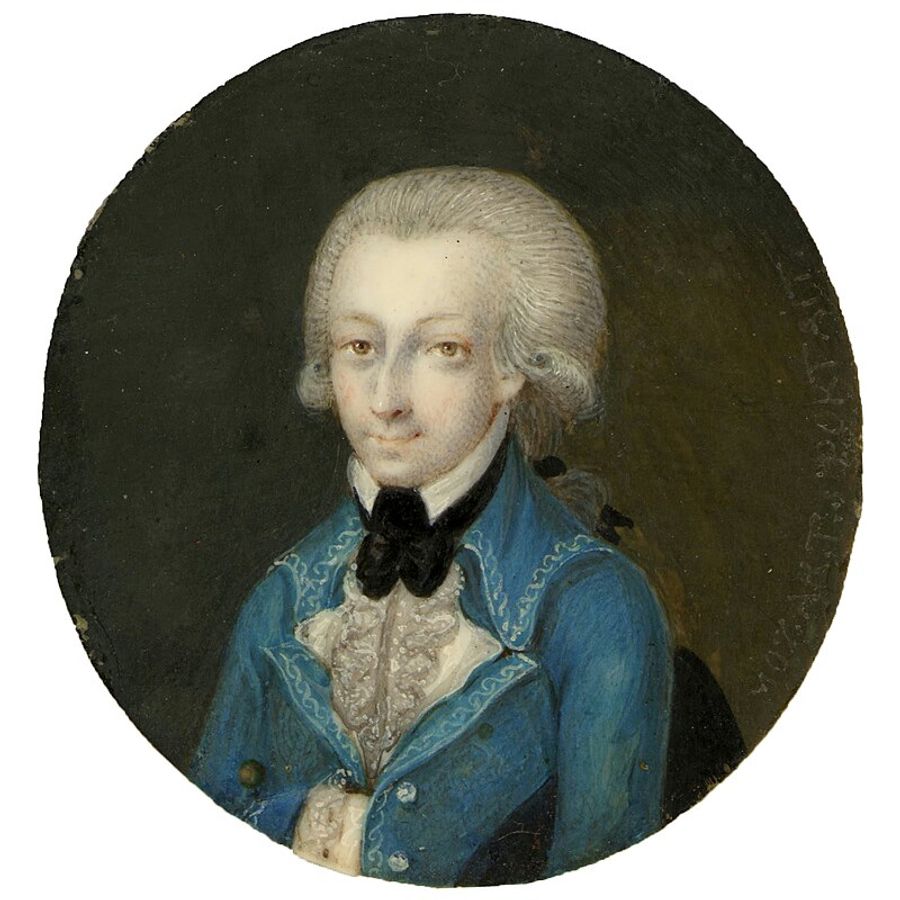
The Twelve songs for voice and “Harmoniale” (K. 662) are transmitted as an extant set dated to 1774 (Salzburg or Vienna), but their attribution to Wolfgang Amadeus Mozart (1756–1791) is doubtful. The surviving evidence associates the texts with Christian Fürchtegott Gellert and points to an unusual, still-unexplained accompaniment instrument or label, “harmoniale.”
Background and Context
K. 662 is listed in the Mozarteum’s Köchel-Verzeichnis as a work of doubtful authenticity, dated to 1774 and associated with Salzburg or Vienna; the texts are attributed to Christian Fürchtegott Gellert [1]. The set is transmitted as extant, and at least some individual songs are traceable as separate work-parts within the same catalog entry (for example, the Danklied “Du bist’s, dem Ruhm und Ehre gebühret”) [1].
The accompaniment indication “harmoniale” remains one of the most striking features of the transmission. In the Neue Mozart-Ausgabe supplementary volume on dubious works, the editors note that the term appears “quite naturally” in the relevant documentation but is not identified in instrumental treatises—neither as an independent instrument, nor securely as an alternative name (for instance) for the glass harmonica, nor as an organ register; Mozart himself, moreover, does not appear to have used the term [2]. The same discussion observes that the surviving accompaniments are, at least in practical terms, playable on a glass harmonica, even if they do not exploit the instrument’s more idiomatic, chordal and high-register possibilities familiar from Mozart’s authenticated late works for it [2].
Musical Character
Where the music can be assessed from the transmitted pieces, the basic profile is that of strophic, devotional German song: a vocal melody supported by a comparatively simple, two-staff accompaniment whose texture appears designed to underlay clear declamation rather than to compete with it [2]. Editorial commentary surrounding the source tradition also points to notational and transmission anomalies (including questions of clef-setting in early prints) that complicate any attempt to treat the accompaniment as straightforward keyboard notation [2].
If K. 662 were by Mozart at age 18, it would belong to the period in which he was still writing extensively for Salzburg’s vocal and church-music needs; yet the very features that might make these songs plausible in context—functional sacred verse and restrained accompaniment—are also compatible with other contemporary hands, and the doubtful status therefore remains central to how the set is heard and programmed [1].
Sources
[1] International Mozarteum Foundation (Köchel-Verzeichnis): KV 662 work entry, status/dating, and listed work-parts.
[2] Digital Mozart Edition (Neue Mozart-Ausgabe, Supplement): Series X, Works of Dubious Authenticity — editorial discussion including the term “harmoniale” and issues of transmission/notation.