- Köchel Number
- K9 542 | K6 542
- Genre
- Chamber Music
- Form
- Piano Quintets, Quartets & Trios
- Key
- E Major
- Date
- 22 June 1788
- Place
- Vienna
- Age
- 32
Mozart’s Piano Trio No. 4 in E major, K. 542 was completed in Vienna in 1788 (dated 22 June) and stands among the most searching of his late chamber works with keyboard. Though the piano still leads the discourse, the strings are drawn into unusually intricate, sometimes contrapuntal partnership—an inward, luminous trio in Mozart’s rare and telling choice of E major.
Background and Context
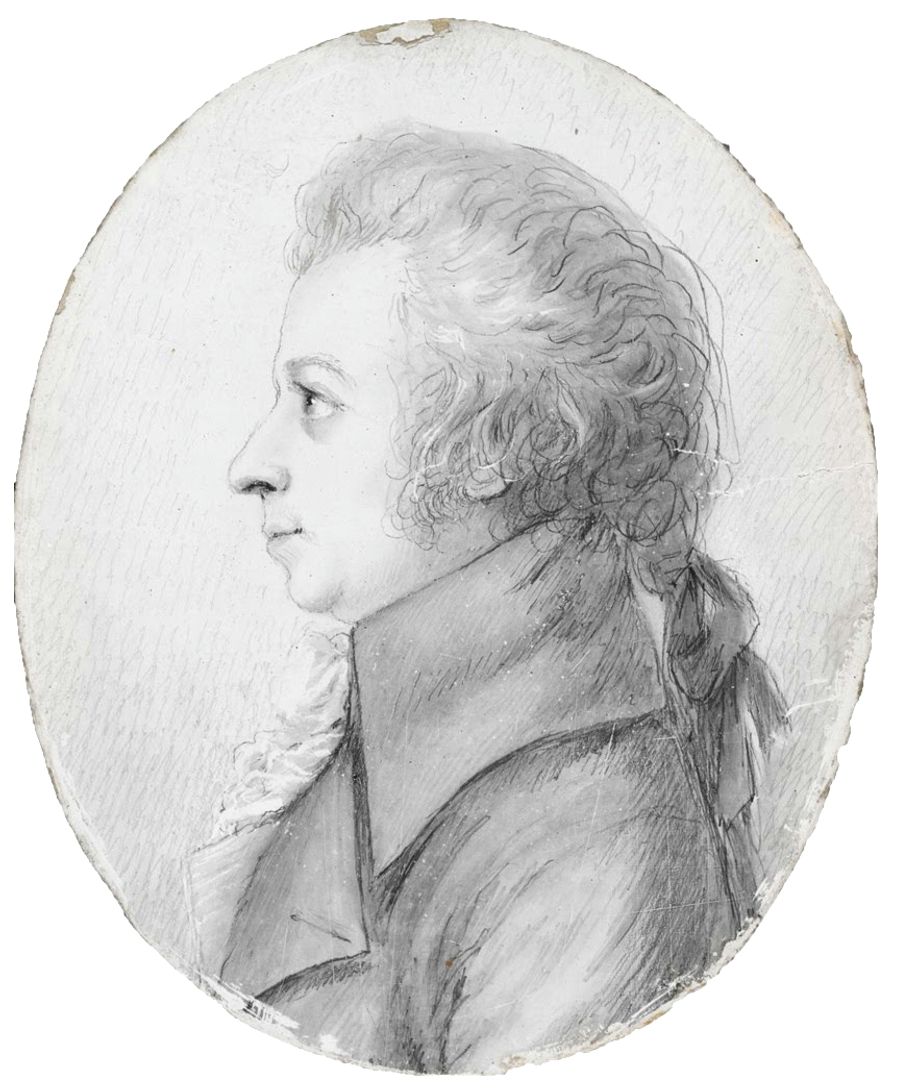
In the summer of 1788 Wolfgang Amadeus Mozart (1756–1791) was living in Vienna and composing at a remarkable pace, despite the financial and professional instability that shadowed his last years. In this same season he produced works that have come to epitomize his late style: an astonishing concentration of invention, a heightened emotional chiaroscuro, and a new density of part-writing. Piano Trio in E major, K. 542 belongs to that moment, and it rewards hearing not as “a piano sonata with strings,” but as chamber music whose drama often arises from how the ensemble negotiates leadership and accompaniment. The work is dated 22 June 1788, placing it squarely within Mozart’s most intense Viennese creative period.[2]
The trio’s key is itself a quiet signal of distinction. E major is comparatively rare in Mozart’s mature multi-movement output—partly for practical reasons (its four sharps are less congenial for many Classical-era wind and string contexts), partly because it carried a certain brilliance and “radiance” that composers used sparingly. K. 542 has been described as Mozart’s only completed multi-movement work in E major, a fact that makes the trio’s sound world—bright, tensile, and harmonically alert—feel like a deliberate late-period experiment rather than routine craftsmanship.[3])
Composition and Dedication
K. 542 is securely attributed to Mozart and is typically dated to Vienna, 1788.[3]) The autograph date (22 June 1788) is frequently cited in modern scholarly and performing contexts, and it helps situate the trio alongside Mozart’s other late-Viennese chamber works and keyboard pieces of 1788.[2] Unlike some of Mozart’s chamber compositions (which can be linked to a named patron, dedicatee, or specific social circle), K. 542 does not have a universally cited dedication in standard reference summaries; what matters more, musically, is that it belongs to a series of late piano trios in which Mozart increasingly tests how far the genre can be enlarged in scale and seriousness.[2]
For modern listeners, the trio can sound “piano-dominated” in texture—true to eighteenth-century practice, where the keyboard part often carries the main thematic and harmonic burden. Yet K. 542 repeatedly complicates that hierarchy: the strings do not merely double the piano but press into dialogue, imitation, and rhythmic counterpoint, especially when Mozart wants to thicken the expressive temperature without increasing volume.[2]
Form and Musical Character
Instrumentation
- Keyboard: piano
- Strings: violin, cello[3])
Movements
I. Allegro (E major)
The opening movement announces at once that this is not merely salon music. Performers and commentators often note the way Mozart destabilizes the “obvious” Classical balance of phrases with quick changes of dynamic character—an idea that can be felt even before one starts to parse the details of form.[2] The piano sets much of the agenda, but the strings—especially when they enter into imitation or provide a counter-line against the keyboard’s figuration—create a tautness that feels almost symphonic in intent.
What makes the movement distinctive within Mozart’s piano-trio output is its seriousness of argument. Rather than relying on graceful melody alone, Mozart builds momentum through motivic working, passing figures between instruments, and a kind of “woven” texture that allows the trio to sound fuller than its forces. It is music that asks the listener to follow how voices interlock, not only what tune is being sung.
II. Andante grazioso (A major)
The slow movement’s title—Andante grazioso—suggests ease, yet Mozart achieves “grace” through refinement and restraint rather than simple prettiness. The theme is first presented by the piano alone, and Mozart then re-colors it by reintroducing the melody with the violin and cello framing the keyboard line, as if the strings were illuminating the piano’s thought from different angles.[3])
A striking feature here is Mozart’s sense of long-breathed lyricism: ornamented cantabile lines, gently shifting accompaniment patterns, and the impression of an extended dialogue rather than an aria with accompaniment. One modern commentary describes the movement as a large-scale da capo design (ABABA), with a subtly darkened turn when the material returns in the minor—an example of Mozart’s late habit of letting melancholy seep into otherwise serene surfaces.[2]
III. Allegro (E major, alla breve)
The finale, an Allegro in cut time, restores outward momentum, but it does not simply “let off steam.” Its energy is sharpened by rhythmic clarity and by Mozart’s gift for making a seemingly straightforward theme the basis for continually fresh harmonization and textural play.[3]) The movement’s brilliance is therefore not only virtuoso (though the piano writing demands articulation and stamina), but also compositional: Mozart keeps the ear engaged by changing the conversational roles of the three instruments, sometimes aligning them, sometimes pulling them apart.
Reception and Legacy
K. 542 is less ubiquitous in the concert hall than Mozart’s late symphonies or piano concertos, yet among musicians it has long had a special reputation as one of the deepest of the piano trios. Critical commentary has singled it out as especially large-scale and profound, precisely because it broadens the genre’s expressive range without abandoning Classical poise.[4]
It also occupies a pivotal stylistic place in the history of the piano trio. Earlier eighteenth-century trios often treated the strings as optional coloring; Mozart’s mature trios, and K. 542 in particular, reveal a composer pushing toward a more genuinely three-voiced chamber conversation—even if the piano remains primus inter pares (first among equals).[2] In this sense the work points forward: not because it abandons Mozart’s idiom, but because it shows how much intellectual weight—and emotional complexity—the piano trio could carry by the end of the 1780s.
For listeners today, Piano Trio No. 4 in E major, K. 542 deserves attention as a late-Viennese masterpiece in miniature: radiant on the surface, quietly unsettled underneath, and crafted with a contrapuntal sophistication that repays repeated hearing. Its “rarity” (in key, in concentrated seriousness, and in the sheer finesse of its ensemble writing) is not a footnote—it is the point.
Sources
[1] IMSLP — "Piano Trio in E major, K.542 (Mozart)" (score and work page).
[2] Gryphon Trio — album notes for "Mozart: Complete Piano Trios" (includes date 22 June 1788 and interpretive discussion of K. 542).
[3] Wikipedia — "Piano Trio No. 4 (Mozart)" (overview, instrumentation, movements; notes on E major rarity).
[4] BBC Classical Music — review/article "Mozart: Piano Trios, K502, 542 & 564" (critical assessment of K. 542 as large-scale/profound).