- Köchel Number
- K9 536 | K6 536
- Genre
- Orchestral Music
- Form
- Dances & Marches
- Key
- F Major
- Date
- 27 January 1788
- Place
- Vienna
- Age
- 32
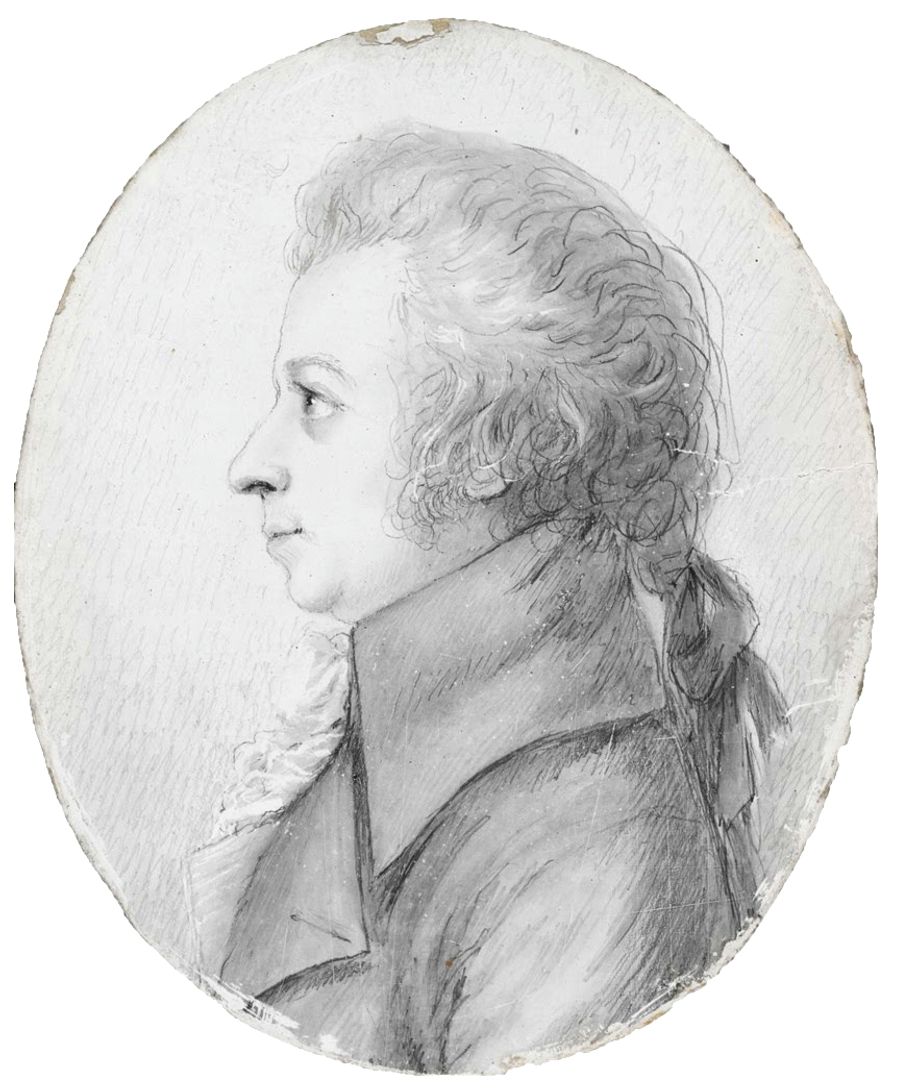
Mozart’s 6 German Dances in F major (K. 536) form a compact set of ballroom pieces composed in Vienna on 27 January 1788, shortly after his appointment to the imperial court. Written for the Carnival season and the Redoutensaal’s public balls, they show how Mozart could compress wit, orchestral color, and clear-cut form into music designed—quite literally—for dancing.[1]
Background and Context
In late 1787 Wolfgang Amadeus Mozart (1756–1791) received the title of Royal and Imperial Chamber Composer (Kammermusicus) in Vienna, a post closely tied to writing dance music for the court’s public festivities—especially the Carnival balls held in the Redoutensaal.[1] These commissions did not carry the prestige of a symphony or concerto, yet they placed Mozart in direct contact with the city’s social life and demanded a special kind of craft: music that must be immediately graspable, rhythmically dependable, and varied enough to sustain a sequence of dances.
The “German dance” (Deutscher Tanz)—a lively triple-meter partner dance related to the Ländler and often described as a precursor to the waltz—was typically quicker and more rustic in profile than the courtly minuet.[1] Mozart wrote many such sets in Vienna, and K. 536 belongs to this late-period stream of functional music in which invention is measured not by length or complexity, but by economy: a telling turn of phrase, a canny orchestral accent, a fresh modulation that brightens the room without stopping the dancers.
Composition and Premiere
The Köchel-Verzeichnis entry dates K. 536 precisely to 27 January 1788 in Vienna.[1] The same source situates the dances within Mozart’s regular contributions to the Redoutensaal balls after his December 1787 court appointment, noting that such dance cycles often circulated in multiple scorings (from a practical “2 violins and bass” core to fuller orchestral dress, and sometimes keyboard arrangements).[1]
For modern listeners, the important point is less the idea of a single “premiere” in the concert-hall sense than the context of repeated, seasonal performance: these dances were made to be played, night after night, by the kinds of ensembles available for public entertainment. Their musical logic is therefore intentionally plain-spoken—yet, in Mozart’s hands, never merely generic.
Instrumentation
Mozart’s Viennese dance music was commonly designed so it could work in a reduced string scoring, with winds and percussion added for color when available.[1] A widely circulated orchestral scoring for K. 536 (as reflected in reference listings and performance materials) uses a bright, festive palette—strikingly without violas, a common economy in this repertory.[2]
- Woodwinds: piccolo, 2 flutes, 2 oboes, 2 clarinets, 2 bassoons[2]
- Brass: 2 horns, 2 trumpets[2]
- Percussion: timpani[2]
- Strings: violins I & II, bass line (cellos and double basses together; no violas)[2]
That omission of violas is not a “deficiency” so much as a stylistic signature. It clears the midrange, leaving the music’s profile dominated by melodic treble (violins and winds) and a firm, uncomplicated bass—ideal for projecting rhythm in a large room, and for allowing quick timbral contrasts from dance to dance.
Form and Musical Character
As a set, K. 536 is built for variety across short spans. Mozart’s dance sets commonly proceed in self-contained numbers rather than a continuous, symphonic argument; the art lies in making each miniature feel distinct while maintaining an overall social fluency.
Each dance is cast in triple meter and follows the familiar ballroom principle outlined in the Köchel-Verzeichnis description: a main dance section with an alternate portion (often called a Trio, or sometimes Minore), after which the main section returns.[1] In practice, this yields a succession of concise binary or rounded-binary paragraphs—music that can be repeated ad libitum to match the length of the dancing.
What makes K. 536 worth attention is Mozart’s skill at character-writing under strict constraints. Even in a few dozen bars, he can suggest:
- Rustic charm through open-air horn writing and uncomplicated tonic–dominant harmony, evoking popular dance rather than courtly ceremony.
- Operatic quickness of gesture in the way a tune “turns” like a spoken phrase—an upbeat that feels like a remark, an answering cadence that feels like a wink.
- Orchestral chiaroscuro (light–shade contrasts) produced not by development, but by scoring: winds entering as a flash of color, trumpets and timpani adding festive punctuation, and the lean string texture keeping the beat crisp.[2]
He also writes with an acute sense of physical motion. These dances do not “float” like stylized minuets; they tend to press forward, with buoyant accents that encourage turning steps. In that respect, K. 536 stands as a small but telling witness to Viennese taste in the late 1780s—taste that would soon crystallize into the waltz culture of the next century.
Reception and Legacy
Because K. 536 is occasional music, it has lived a double life. Historically, it belonged to a practical repertory—composed for specific venues, often performed in adaptable scorings, and published in ways that encouraged domestic or reduced-format use.[1] In the modern era, it appears less often on “greatest hits” programs, yet it persists in recordings and collections devoted to Mozart’s dances, and it remains readily accessible in score.[2]
Its continuing appeal lies in a paradox: the music is modest in ambition, but unmistakably Mozartian in touch. K. 536 shows the composer at age 32 working within the everyday soundscape of Vienna—turning social necessity into art, and proving that even the most functional genres can carry elegance, surprise, and a vivid sense of human occasion.[1]