- Köchel Number
- K9 48 | K6 48
- Genre
- Orchestral Music
- Form
- Symphonies
- Key
- D Major
- Date
- 13 December 1768
- Place
- Vienna
- Age
- 12
Mozart’s Symphony No. 8 in D major, K. 48 is an early symphony completed in Vienna when he was still a child. This article outlines its composition context and surviving autograph, then surveys the festive scoring with trumpets and timpani, the four-movement design, and the musical character of each movement.
Composition & Context
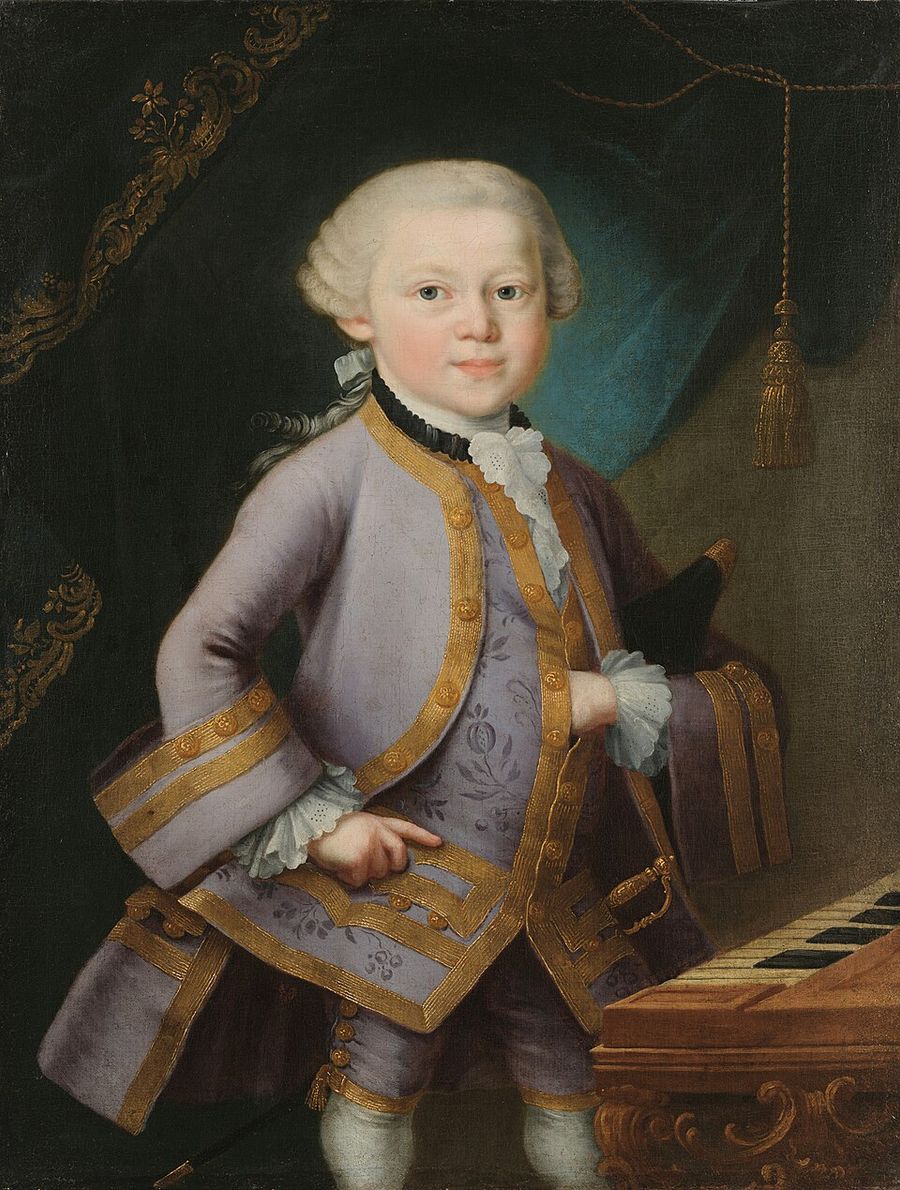
Symphony No. 8 in D major, K. 48 by Wolfgang Amadeus Mozart was completed on 13 December 1768 in Vienna, when the composer was only twelve years old. The Mozart family were preparing to leave Vienna for Salzburg at the time, and Mozart’s father, Leopold Mozart, mentions in a letter that “we could not bring our affairs to a conclusion earlier”. The autograph manuscript is preserved in the Berlin State Library.
Instrumentation
The symphony is scored for two oboes, two horns in D, two trumpets in D, timpani (tuned D/A), and string section (first and second violins, viola, cello/bass). Significantly, the inclusion of trumpets and timpani in one of Mozart’s early symphonies is quite unusual, giving the work a more “festive” or ceremonial character than many of his other youth symphonies.

Form & Musical Character
The symphony adopts a four-movement structure, a more fully symphonic layout than Mozart’s earlier three-movement works. The movements are:
Allegro (D major, 3/4) — opens with upward scale‐figures and downward leaps in the violins, alternating between strings and winds.
Andante (G major, 2/4) — scored for strings alone, with a narrow melodic range that gradually expands in expressive breadth.
Menuetto & Trio (D major then G major, 3/4) — the Minuet is lively with rapid string interplay and the full brass/percussion; the Trio omits trumpets and timpani and offers a lighter contrast.
Molto Allegro (D major, 12/8) — a gigue-like finale, notable for its vigorous rhythmic drive and an unconventional closing theme.
Stylistically, the work blends the galant elegance of the era with Mozart’s precocious grasp of orchestral colour and formal design.
Reception & Legacy
While not as frequently performed as Mozart’s later symphonies, K. 48 is appreciated by scholars as a key stepping stone in his early symphonic development. Its festive scoring and structural maturity show Mozart adapting to Viennese orchestral models at a young age. Its manuscript and presence in modern editions ensure it remains accessible to performers and researchers as a window into Mozart’s youthful style.
References
Sources
- Wikipedia article: https://en.wikipedia.org/wiki/Symphony_No._8_%28Mozart%29
- IMSLP score listing: https://imslp.org/wiki/Symphony_No.8_in_D_major%2C_K.48_%28Mozart%2C_Wolfgang_Amadeus%29
- MozartPortal overview: https://www.mozartportal.com/composition/kv-48-symphony-no-8-in-d
- Sin80 work details: https://www.sin80.com/en/work/mozart-symphony-8-k48
- AndanteModerato commentary: https://andantemoderato.com/mozart-symphony-no-8/