- Köchel Number
- K9 47 | K6 47
- Genre
- Sacred Music
- Form
- Smaller Church Works
- Key
- C Major
- Date
- Autumn 1768
- Place
- Vienna
- Age
- 12
Mozart’s Veni Sancte Spiritus in C major (K. 47) is a compact Pentecost motet from Vienna (1768), written when the composer was only twelve. Cast in two short sections—an opening Allegro followed by a jubilant Alleluia—it offers an early glimpse of his liturgical craft in a straightforward, ceremonial idiom.[1]
Background and Context
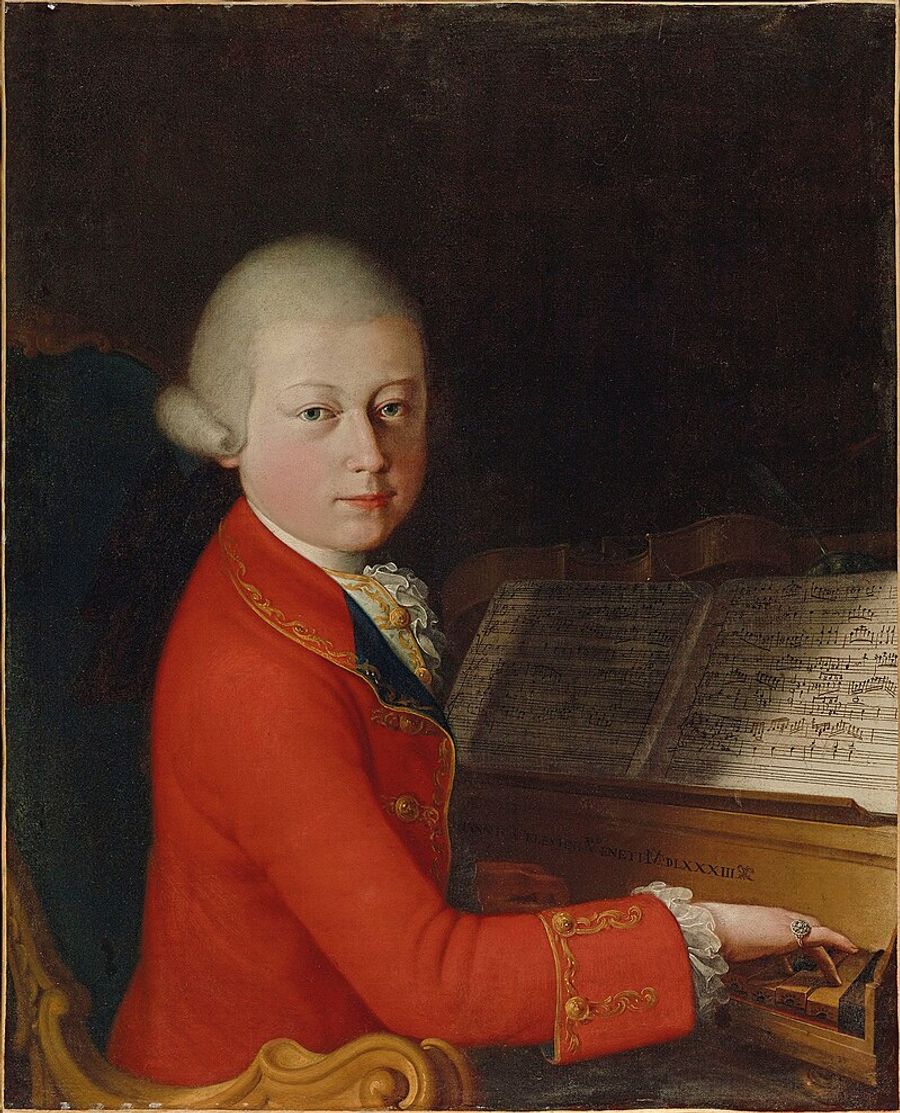
In 1768, the twelve-year-old Wolfgang Amadeus Mozart (1756–1791) was in Vienna with his family, a period that produced several sacred pieces alongside works for the theatre and concert room. Veni Sancte Spiritus (K. 47) belongs to this Viennese juvenilia: a brief, functional liturgical setting associated with Pentecost, shaped for practical church use rather than display.[2]
The text begins with the familiar incipit “Veni Sancte Spiritus,” but in this work it follows the antiphon Ad invocandum Spiritum Sanctum and proceeds directly into an Alleluia, pointing to a specific devotional-liturgical function rather than a full setting of the famous sequence.[2][3]
Musical Character
Mozart sets the piece in two movements: “Veni Sancte Spiritus” (Allegro) and “Alleluia” (Presto), together lasting only a few minutes.[1] The scoring is for SATB choir with occasional solo lines, supported by a festive late-Baroque/Classical church orchestra: 2 oboes, 2 horns, 2 trumpets, timpani, strings, and organ continuo.[1][4]
Within this modest frame, the writing relies on brisk choral declamation and clear cadential punctuation, enlivened by quick alternation between solo/tutti textures and brief passages of imitation—devices that keep the rhetoric animated while staying within the bounds of a small-scale church work.[3] The result is earnest and bright: music that prioritizes intelligibility and momentum, yet already shows the young Mozart’s ease in coordinating voices and instruments into a compact liturgical argument.
Sources
[1] IMSLP work page (movements, date/place, and instrumentation details) — Veni Sancte Spiritus, K. 47
[2] Wikipedia overview (Vienna 1768, age 12; text identified as Pentecost antiphon beginning with the sequence incipit)
[3] Bärenreiter US product description (two-part setting; antiphon text; alternation of solo/tutti and imitative passages)
[4] Carus (Stuttgarter Mozart-Ausgaben) PDF front matter (scoring list including winds, brass, timpani, strings, basso continuo/organ)