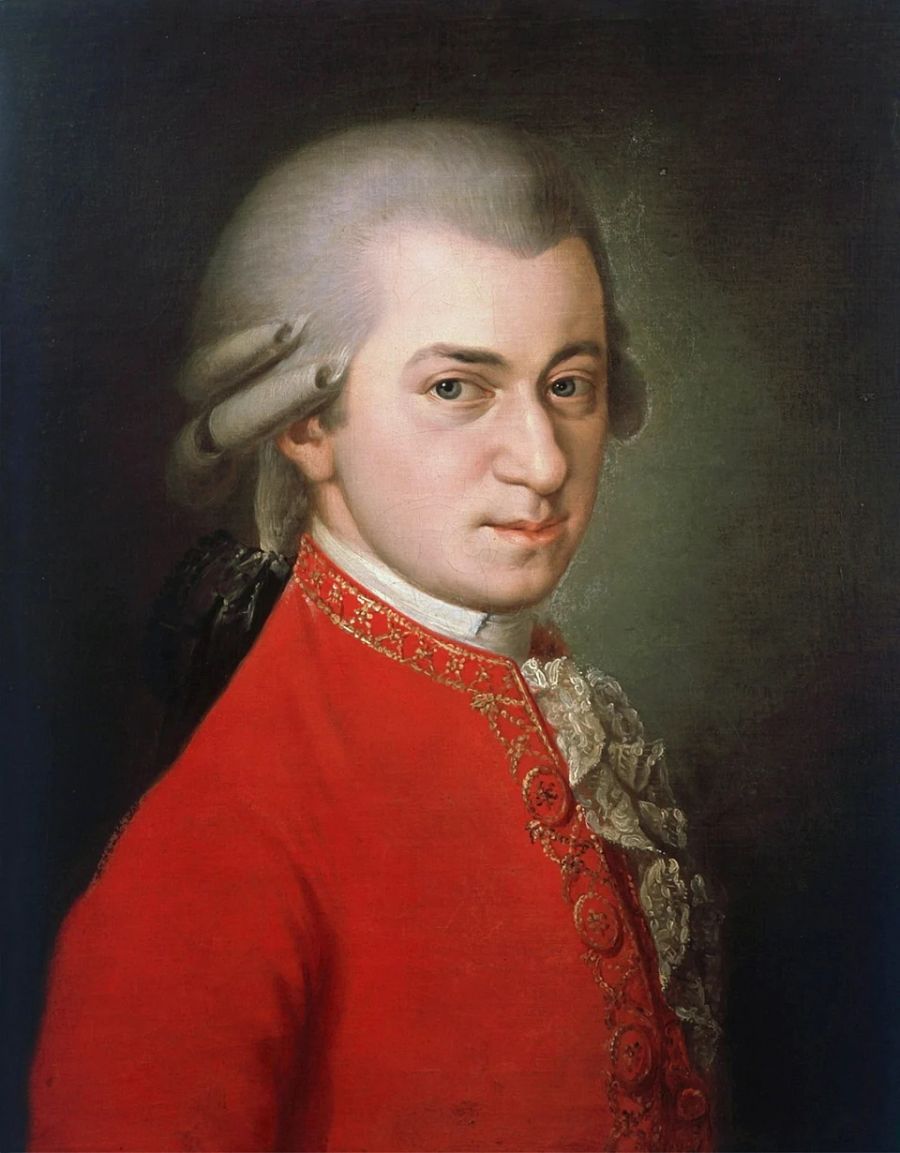
- Köchel Number
- K9 456 | K6 456
- Genre
- Concertos
- Form
- Piano Concertos
- Key
- B Flat Major
- Date
- 30 September 1784
- Place
- Vienna
- Age
- 28
Mozart’s Piano Concerto No. 18 in B♭ major, K. 456, is often nicknamed “Paradis” for its possible link to the pianist Maria Theresia von Paradis. This article outlines the work’s background, instrumentation, movement designs and notable musical features, and traces its reception.
Composition and Context
Wolfgang Amadeus Mozart completed his Piano Concerto No. 18 in B♭ major, K. 456, on September 30, 1784[1]. At that time, the 28-year-old Mozart was living in Vienna – then a thriving cultural capital under the enlightened reign of Emperor Joseph II – and building his reputation as a virtuoso composer-pianist. He had moved to Vienna in 1781 and by 1784 was astonishingly productive, composing six piano concertos in that year alone for his own subscription concerts[1]. This burst of concerto writing coincided with a period of intense public demand for Mozart’s performances. Indeed, Mozart was so busy that he began keeping a personal catalog of his works in 1784 to log each new composition[1]. These concertos were presented at Vienna’s bustling concerts and academies, where audiences (including the Emperor) eagerly gathered to hear the latest music. In this milieu of Enlightenment-era Vienna, the musical scene thrived alongside intellectual salons and scientific curiosities – from Joseph II’s progressive cultural policies to fads like Dr. Franz Mesmer’s “animal magnetism” therapy that briefly captivated society.
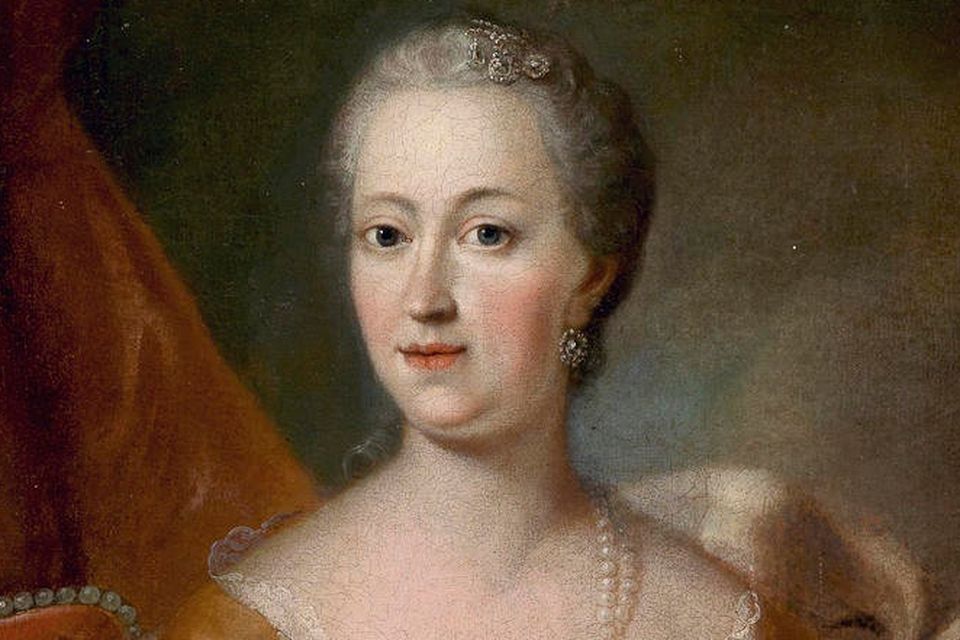
One notable circumstance surrounding the B♭ Concerto is its association with Maria Theresia von Paradis, an accomplished Viennese musician who had lost her sight in childhood. Paradis was a prodigy and touring piano virtuosa – educated by Antonio Salieri and others – who maintained a memorized repertoire of over 60 concertos[2][3]. Historical evidence suggests that Mozart may have composed this concerto for Paradis, possibly as a commission for her European tour. In fact, Mozart’s father Leopold wrote to Nannerl (Mozart’s sister) in February 1785 about hearing “a glorious concerto written for Paradis for Paris”[4]. During Leopold’s visit to Vienna, he attended a concert on 13 February 1785 where Wolfgang played “a masterful concerto that he wrote for Paradis,” and Leopold was moved to tears by “hearing all the interplay of the instruments so clearly”[5]. (Emperor Joseph II himself was in the audience, tipping his hat and calling out “Bravo Mozart!” in appreciation[6].) This contemporaneous letter strongly implies that K. 456 was intended for Paradis to perform during her tour, which included Paris and London. (Paradis had in fact debuted in Paris in early 1784 and later traveled to London.) Although one scholar questioned whether the timing allowed the work to reach Paradis in Paris, others suggest the concerto could have been forwarded to her in London, where she might have performed it in March 1785[7]. In any case, this connection earned the piece its nickname “Paradis.” Today the concerto is commonly referred to by that name, even though definitive proof of Paradis’ performance is inconclusive[5]. The nickname endures as a tribute to the blind pianist for whom Mozart reportedly composed the work.
Below is a live recording of Wolfgang Amadeus Mozart’s Piano Concerto No. 18 in B-flat major, K. 456. The concerto is performed by Sviatoslav Richter together with the Japan Shinsei Symphony Orchestra, conducted by Rudolf Barshai:
Instrumentation and Orchestration
Mozart scored the concerto for a solo fortepiano (piano) and a classical orchestra of mixed winds and strings. The full instrumentation includes a flute, two oboes, two bassoons, two horns, and strings (violins, violas, cellos, and basses)[8]. This scoring is notable for its rich woodwind section: Mozart employs the flute and double-reeds in addition to horns, which adds a warm, conversational color to the orchestra. The horns are in B♭ (with a change to G crooks for the second movement in G minor) to suit the concerto’s keys[9]. As was typical, Mozart wrote the piece for a fortepiano, the late-18th-century precursor to the modern piano, whose lighter sound balanced well with the wind instruments. The orchestration showcases an intimate interplay between the piano and wind instruments – a hallmark of Mozart’s Viennese concertos. Leopold Mozart’s letter marveled at how clearly the musical dialog could be heard, indicating Mozart’s skill in distributing melodies across the orchestra[5]. For example, in the opening of this concerto, a crisp, quiet fanfare in the strings is immediately echoed by the woodwinds, and throughout the piece the piano engages in elegant call-and-response exchanges with wind solos[10]. This concerto’s orchestration thus creates a chamber-like texture where the soloist and orchestral players interact as collaborative voices, rather than the orchestra merely accompanying. Mozart even provided two alternative cadenzas for the first movement, possibly to give the soloist (Paradis, in theory) a choice suited to her taste or technique[11]. Overall, the scoring and instrument roles in K. 456 contribute to what contemporaries described as a “thrilling interplay of instruments,” blending the piano’s virtuosity with the timbral variety of the winds[12][13].
Form and Musical Character
Structurally, Piano Concerto No. 18 follows the three-movement Classical concerto format (fast–slow–fast), but with some imaginative twists. Each movement has its own character and innovations:
Allegro vivace (B♭ major) – The first movement is an upbeat Allegro vivace in B♭ major, written in sonata-allegro form with a double exposition (a standard concerto form where orchestra and soloist each present the themes). It opens with a bright, march-like theme: the strings introduce a sprightly fanfare figure, soon answered by the woodwinds in echo, after which the whole orchestra joins to assert the festive first theme[14]. A gracious second theme follows, more lyrical and “genial,” often featuring the woodwinds trading phrases over gentle string accompaniment[15]. Mozart subtly colors this lyrical theme with minor-key inflections (briefly shifting to minor modes) for emotional depth[14]. The orchestral introduction concludes with playful “hunting call” motifs on horns, and then the solo piano enters, restating the opening theme with ornate embellishments[14]. The piano and orchestra proceed in a spirited dialogue through the development section, exchanging musical ideas in a “tasteful conversation”[15]. Contemporary listeners found this interplay especially delightful – as Leopold noted, every instrument’s line could be enjoyed clearly[5]. Mozart’s synthesis of virtuosity and structural clarity is evident: the piano’s runs and passagework are integrated into the melodic discourse rather than mere display. He even wrote down two different cadenzas for this movement, suggesting options for the soloist to cap the movement with an improvised-style flourish[11]. Overall, the first movement’s tone is sunny and ebullient, with occasional military march echoes and dynamic contrasts that create an air of confident optimism[12][13].
Andante un poco sostenuto (G minor) – The second movement shifts to G minor, providing a striking contrast of key and mood. Unusually for Mozart’s concertos, this slow movement is a Theme and Variations: a solemn, plaintive theme is presented and then followed by a series of five variations and a coda[16][17]. The theme, introduced softly by the strings, has a melancholic, “bittersweet” character[18]. Each variation then explores a different expressive shading. Notably, the first variation features the piano alone—the soloist plays an ornamented version of the theme with only minimal orchestral punctuation[16], creating an intimate, almost aria-like soliloquy. Later variations bring back the orchestra: for instance, one variation shifts into the major mode (G major), introduced by a pair of oboes, and this major-key episode offers a gentle, “bucolic tranquility” in the midst of the minor-key pathos[19]. (Commentators have singled out the delicate flute writing in the G-major variation as one of Mozart’s most “tranquil” and beautiful flute solos[20].) The return to G minor brings “haunting and mysterious” turns of harmony[21], with wrenching chromatic surprises that some listeners of Mozart’s day associated with an almost supernatural mood[21]. Throughout this movement, the piano and orchestra share the material gracefully – sometimes the winds take the lead, other times the piano does – maintaining a poised elegance even in the movement’s dark, introspective moments. The minor-key slow movement in a concerto otherwise in major was a bold choice, imbuing the work with an emotional depth and drama that listeners found moving.
Allegro vivace (B♭ major) – The finale is a lively Allegro vivace back in B♭ major, cast in rondo form. Its main theme is an innocent, playful tune – almost like a carefree “music box” melody, as one writer describes[18] – which alternates with more energetic contrasting episodes. The prevailing meter is a jaunty 6/8, giving the music a dancing, pastoral lilt. Mozart infuses the rondo with brilliant virtuoso passages for the soloist and also some ingenious surprises. In one extraordinary episode, Mozart briefly superimposes a new meter and distant key: partway through the movement, the woodwinds suddenly switch to a duple 2/4 meter while the strings (and the basic pulse) continue in 6/8[22]. This creates a startling rhythmic “metric conflict,” as the piano and winds momentarily accent a 2/4 pattern against the 6/8 flow[22]. Remarkably, Mozart carries this off without changing the tempo – the effect is as if two dances overlap – and then smoothly resolves the discrepancy by bringing all players back to 6/8 for the final stretch[22]. Adding to the intrigue, Mozart even ventures into the remote key of B minor during one of the episodes (B minor is far removed from B♭ major), an extremely unusual excursion in Classical-era music[23]. Such innovations in rhythm and harmony were virtually unheard-of in Mozart’s time, showcasing his adventurous spirit within the graceful rondo form[23]. Despite these surprises, the music never loses its joyful character – the piano often tosses out a phrase only to have the woodwinds echo it in a lighthearted game of imitation[13]. The movement concludes on a “sunny” note, as the playful rondo theme returns for a final time, bringing the concerto to a cheerful and witty close[22].
Reception and Legacy
Mozart’s B♭ major Concerto was warmly received by those who heard it in his day. At the February 1785 concert in Vienna, Leopold Mozart’s emotional reaction and Emperor Joseph II’s public acclaim (“Bravo Mozart!”) indicated that the work made a strong positive impression[5][6]. If Maria Theresia Paradis did perform the concerto in London in 1785 (as some speculate), it would have further demonstrated the piece’s effectiveness, especially given her own renown as a performer[24]. However, like many of Mozart’s piano concertos, the “Paradis” Concerto was not widely published or frequently played in the decades immediately after Mozart’s death. In the 19th century, Mozart’s concertos were somewhat neglected in favor of newer Romantic works, but they remained admired by connoisseurs. By the 20th century, these concertos – including No. 18 – gained recognition as masterpieces and returned to the active repertoire[25]. Scholars and musicians have praised K. 456 in particular for its originality (the only Mozart piano concerto with a minor-key variation movement, and its bold metric/harmonic experiments) and its elegant synthesis of virtuosity and orchestral craft. Musicologist Maynard Solomon noted that Mozart’s Viennese concertos far surpassed those of his contemporaries in “their thematic richness and highly developed relationship between soloist and orchestra”[26][27] – qualities exemplified by the clear instrumental dialogues in this concerto. In modern times, the “Paradis” Concerto has been championed by leading pianists and is regularly performed and recorded. Notable recordings by artists such as Mitsuko Uchida, Murray Perahia, and Malcolm Bilson have helped bring the piece to audiences, highlighting its delicate beauty and joyful brilliance[28]. While it may not be as universally famous as Mozart’s later concertos in C major or D minor, Piano Concerto No. 18 enjoys a secure place in the Mozart canon. Its nickname “Paradis” serves as a reminder of the remarkable musician who inspired it, and its music continues to delight listeners with its blend of Classical grace, inventive touches, and heartfelt lyricism.
Sources
Sources
Mozart’s own catalog and letters; program notes by Linda Shaver-Gleason for the Los Angeles Philharmonic[1][5][22]; analysis by Georg Predota (Interlude)[4][29]; The Listener’s Club blog by Timothy Judd[6][12]; and the Wikipedia entry on Piano Concerto No. 18 (Mozart)[30][23].
[1] [5] [8] [10] [15] [16] [17] [19] [22] Piano Concerto No. 18, K. 456, “Paradis”, Wolfgang Amadeus Mozart
https://www.laphil.com/musicdb/pieces/2741/piano-concerto-no-18-k-456-paradis
[2] [3] [4] [11] [14] [18] [26] [27] [29] Mozart: Piano Concerto No.18 in B-flat major, K. 456
https://interlude.hk/mozart-piano-concerto-18-b-flat-major-k-456/
[6] [12] [13] [21] [28] Mozart’s Piano Concerto No. 18: A Thrilling “Interplay of Instruments” – The Listeners' Club
[7] [9] [20] [23] [24] [30] Piano Concerto No. 18 (Mozart) - Wikipedia
https://en.wikipedia.org/wiki/Piano_Concerto_No._18_(Mozart)
[25] Piano concertos by Wolfgang Amadeus Mozart - Wikipedia
https://en.wikipedia.org/wiki/Piano_concertos_by_Wolfgang_Amadeus_Mozart