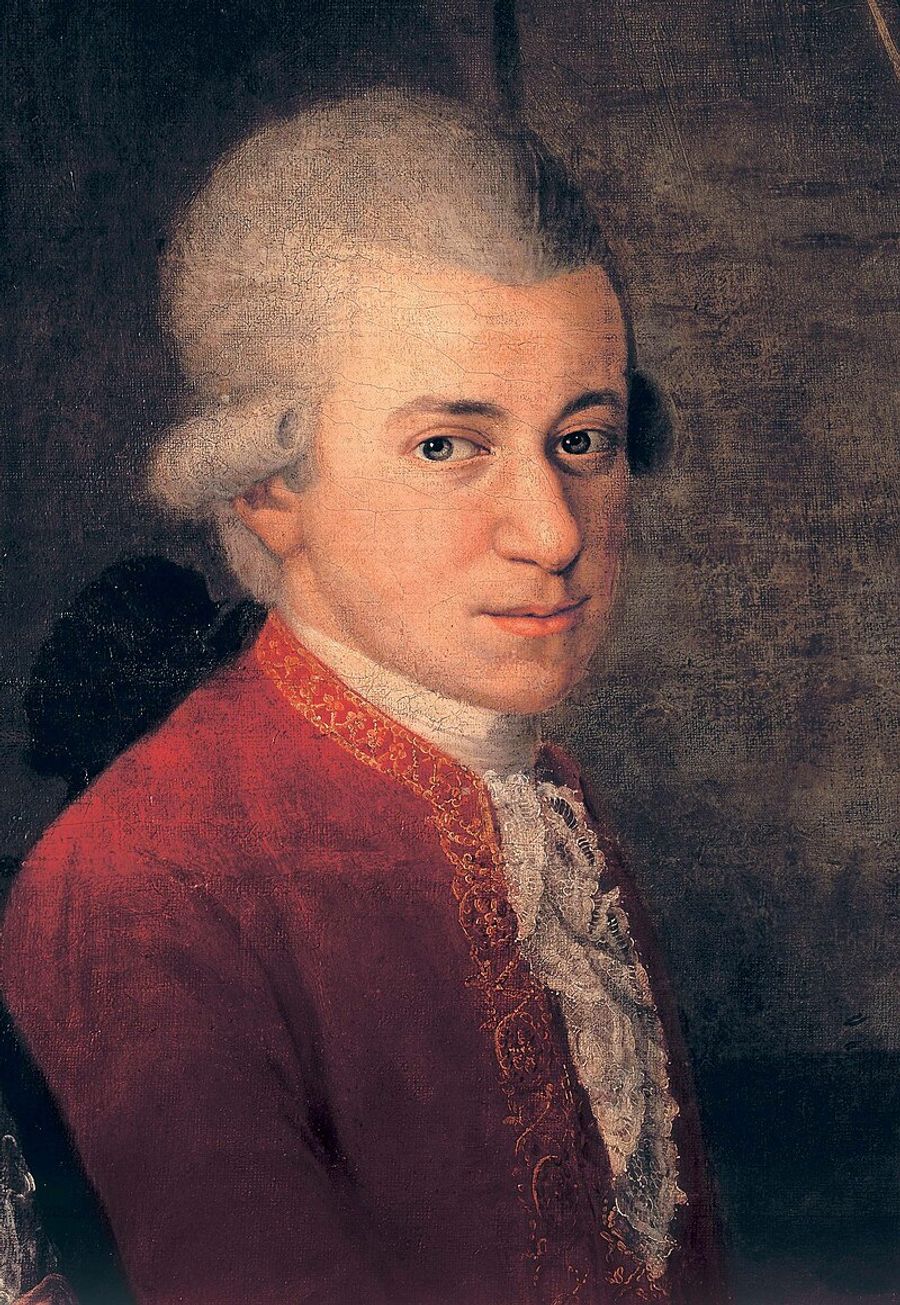
- Köchel Number
- K9 321a | K6 321a
- Genre
- Sacred Music
- Form
- Litanies & Vespers
- Key
- C Major
- Date
- 1779
- Place
- Salzburg
- Age
- 23
Mozart’s Magnificat in C major (K. 321a) is a tiny surviving scrap from his Salzburg church-music work of 1779, written when he was 23. What remains is too incomplete to establish the work’s intended scale with confidence, but it points toward the festive, orchestral Vespers style cultivated for the Salzburg cathedral.
What Is Known
The Magnificat in C major, K. 321a, survives only as a short autograph fragment dating from Salzburg in 1779.[1] A single extant leaf—described in an auction catalogue as seven bars on ten staves—carries Mozart’s title and the tempo indication Allegro con spirito.[2] Beyond this, neither the intended overall length nor the liturgical context can be fixed from the surviving material alone, though a stand-alone Magnificat would naturally belong to Vespers practice in Salzburg.[1]
Musical Content
What survives suggests an opening conceived on a bright, public scale: the manuscript description implies writing laid out for multiple vocal and instrumental lines rather than a simple organ accompaniment, with the music launched at an energetic Allegro con spirito.[2] Because no continuation is known, the fragment cannot be securely mapped onto the customary internal divisions of a complete Magnificat setting, and any reconstruction of forces or structure remains conjectural.