- Köchel Number
- K9 305 | K6 293d
- Genre
- Chamber Music
- Form
- Violin Sonatas & Variations
- Key
- A Major
- Date
- Spring 1778
- Place
- Mannheim
- Age
- 22
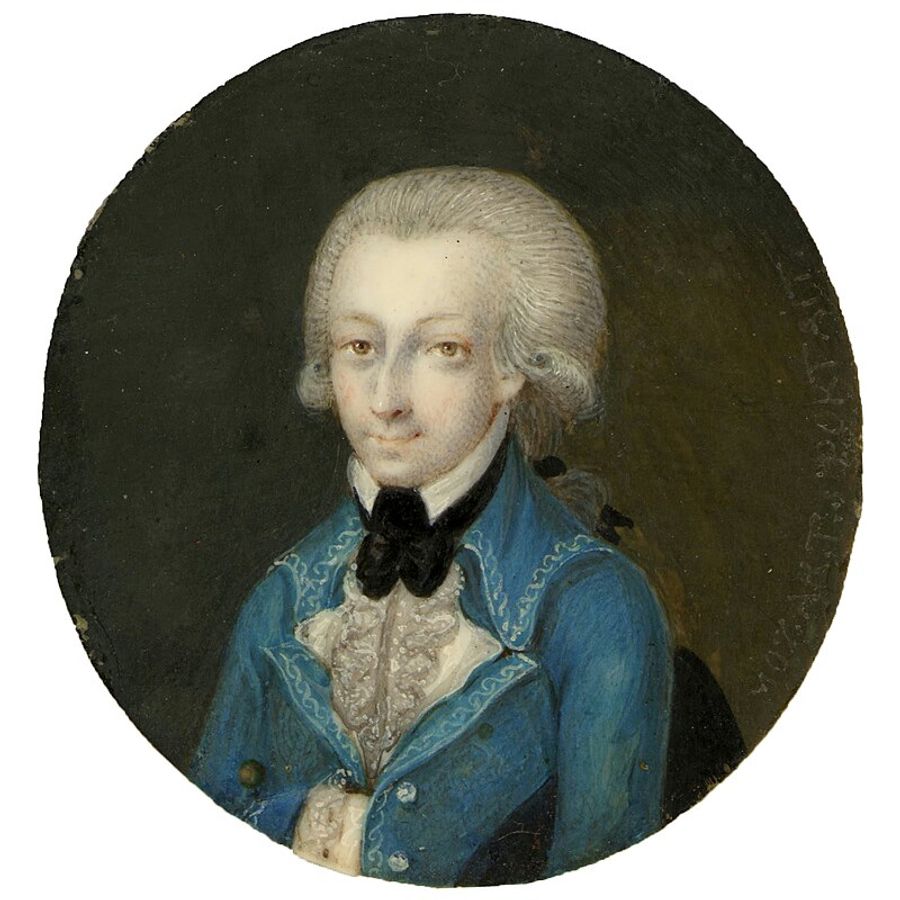
Mozart’s Violin Sonata No. 22 in A major, K. 305 is a compact, radiant duo from 1778, written when the composer was 22 during his decisive journey through Mannheim and Paris. Cast in just two movements—an exuberant Allegro di molto and a variation finale—it shows Mozart testing how much character, elegance, and surprise he could pack into the then-fashionable “keyboard sonata with violin accompaniment” genre [1] [2].
Background and Context
In the late 1770s Mozart was searching for a post that could free him from the constraints of Salzburg employment, and Mannheim—renowned for its orchestra and cultivated musical life—was a crucial stop. The sonatas K. 301–306 belong to this travel period and are closely associated with Mannheim and the subsequent Paris months, when Mozart was writing with an eye to publication and to elite amateur markets [2] [3].
K. 305 deserves attention because it is both deliberately public-facing and quietly experimental. Public-facing, because it offers immediate tunefulness and a “sunny” A-major brilliance; experimental, because Mozart builds the entire second half of the work as a theme with variations—an unusually weighty ending for a short two-movement sonata. The result is music that can sound effortless in performance, yet is tightly engineered for contrast, pacing, and instrumental color.
Composition and Dedication
K. 305 (also catalogued as K. 305/293d) dates from 1778 and is part of the set of six keyboard-and-violin sonatas Mozart issued as his Op. 1 in Paris [1] [4]. Modern reference tradition frequently labels these as the “Palatine Sonatas,” linked to their dedication to Maria Elisabeth, Electress of the Palatinate [5] [6].
The scoring reflects the era’s market: keyboard (fortepiano in Mozart’s world) carries most of the thematic argument, while the violin alternately doubles, dialogues, and decorates. Yet K. 305 is more than mere accompaniment music; its violin writing is strategically placed to sharpen rhythm, brighten timbre, and intensify climaxes—especially in the first movement’s unison rhetoric and in the variation movement’s increasingly ornate surface.
Form and Musical Character
K. 305 has two movements [1]:
- I. Allegro di molto
- II. Tema con variazioni: Andante grazioso
I. Allegro di molto
The opening is striking for its assertiveness: violin and keyboard launch together in unison, immediately projecting a “concertante” energy rather than a private salon murmur. This first movement is often described as extroverted within the Mannheim/Paris group, and its brilliance is part of its point: Mozart writes music that can sparkle in an intimate room while borrowing the rhetorical confidence of orchestral style [7].
Even when the keyboard leads, the violin’s presence changes the harmony’s profile and the music’s bite—reinforcing cadences, tightening rhythmic articulation, and turning repeated material into something freshly colored. For listeners, the movement’s pleasure lies in how quickly Mozart moves between “bright daylight” themes and brief, more searching turns that keep the exuberance from becoming generic.
II. Tema con variazioni: Andante grazioso
Rather than supplying a simple slow movement, Mozart ends with a theme and variations—an approach that makes the finale the structural and expressive counterweight to the fast opening. The theme is poised and singable, and each variation rebalances the partnership: sometimes the keyboard becomes filigree around a violin line, sometimes the violin animates the texture with rhythmic or ornamental sparkle.
A particularly Mozartean touch is the way the variations create the illusion of growing freedom while remaining formally controlled. Commentators often point to a brief, cadenza-like moment near the end as a “breath” in the narrative—an instant that frames the preceding virtuosity and prepares the close with a theatrical sense of timing [8].
Reception and Legacy
Historically, K. 305’s set (K. 301–306) had a clear practical destiny: publication and circulation among skilled amateurs and professionals in the cosmopolitan centers Mozart was trying to enter. It was issued in Paris in 1778 as Op. 1, a notable sign of Mozart’s ambitions to be known not only as a performer but as a composer with marketable chamber works [3] [4].
In modern concert life K. 305 is sometimes overshadowed by the darker, exceptional E-minor Sonata, K. 304 and by later, more “equal” late-Vienna duo sonatas. Yet K. 305 remains a persuasive entry point into Mozart’s chamber music with keyboard: it is concise (often around a quarter hour in performance), grateful to play, and rich in compositional wit—especially in its decision to let variation form, rather than a conventional finale, provide the last word [1].
For performers, its challenge is stylistic rather than merely technical: to keep the first movement’s brilliance buoyant, and to shape the variations as a single arc rather than a string of charming episodes. Heard that way, K. 305 reveals Mozart at 22: not yet the late master of expansive duo writing, but already a composer who could turn a “useful” genre into a miniature drama of character and proportion.
Sheet Music
Download and print sheet music for Violin Sonata No. 22 in A major (K. 305) from Virtual Sheet Music®.
Sources
[1] IMSLP — score page and basic work data for the Violin Sonata in A major, K. 305/293d (movements, cataloguing).
[2] Köchel Verzeichnis (Mozarteum) — contextual notes for the keyboard-and-violin sonatas around K. 301–306 (work group and travel/publication context).
[3] Cambridge University Press index (Mozart chamber music with keyboard) — identifies K. 301–306 as Sonatas for keyboard and violin (Op. 1), published 1778.
[4] French Wikipedia — K. 305 page (dedication and publication note: Op. 1, Paris/Sieber; general reference).
[5] Da Vinci Edition release note — discusses Op. 1 (Paris, 1778) dedication to the Electress of the Palatinate and the “Palatine Sonatas” label (secondary but useful overview).
[6] Navona Records catalog note — describes the “Palatine Sonatas” (K. 301–306), dedication to Electress Elizabeth Maria, and publication in Paris (secondary overview).
[7] Noteworthy Sheet Music article — overview of the Mannheim sonatas, characterizing K. 305 as especially extroverted within the set (commentary).
[8] ClassicalConnect program-style note — describes K. 305’s two-movement plan and highlights the cadenza-like Adagio moment near the end of the variation movement (commentary).