- Köchel Number
- K9 304 | K6 300c
- Genre
- Chamber Music
- Form
- Violin Sonatas & Variations
- Key
- E Minor
- Date
- Early Summer 1778
- Place
- Paris
- Age
- 22
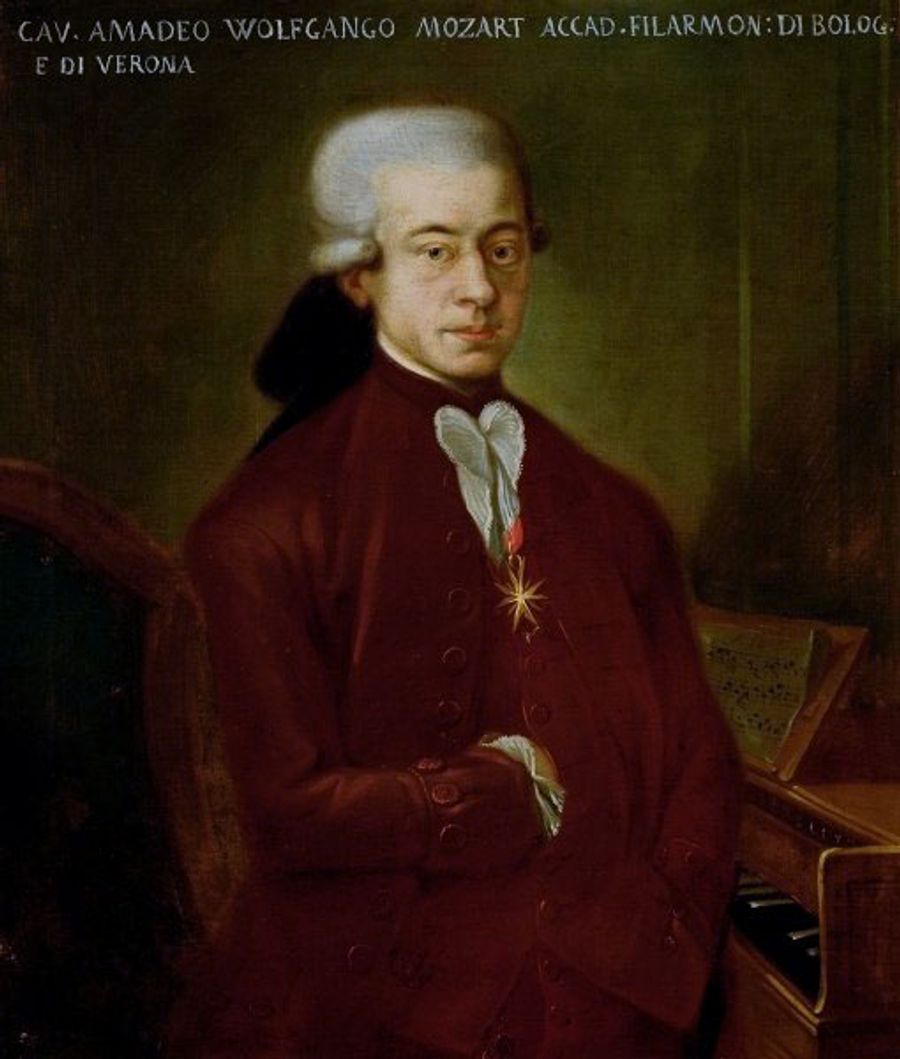
Mozart’s Violin Sonata No. 21 in E minor, K. 304 (300c) was written in Paris in 1778, when the composer was 22, and stands apart within his violin-and-keyboard sonatas for its unclouded minor-key seriousness. Compact, two-movement, and unusually inward, it shows Mozart treating the “accompanied sonata” genre not as salon brilliance but as chamber drama in miniature [1].
Background and Context
Mozart’s Paris stay of 1778 is often remembered as a period of ambition checked by disappointment: he sought a secure post and wider recognition, yet found Parisian musical life difficult to navigate and, tragically, endured the death of his mother, Anna Maria Mozart, in the city on 3 July 1778 [2]. The Sonata in E minor, K. 304 belongs to this Parisian cluster of violin sonatas (K. 301–306), works that helped redefine Mozart’s approach to the duo sonata—more poised and conversational than the child-prodigy “keyboard sonatas with violin accompaniment” issued in the 1760s.
What makes K. 304 instantly distinctive is not virtuosity or scale, but tone. It is Mozart’s only violin sonata in a minor key, an exception that listeners have long heard as expressive evidence of a darker emotional climate [1]. Even without committing to a biographical “reading,” the work’s restraint, its lean thematic profile, and its refusal of easy radiance set it apart from neighboring Paris sonatas in major keys. In short, it deserves attention as a rare moment when Mozart lets the accompanied-sonata medium speak with the gravity more commonly associated with his later minor-key masterpieces.
Composition and Dedication
K. 304 (sometimes listed as K. 300c) was composed in Paris in 1778 [1]. It forms part of the group K. 301–306, first issued in Paris in 1778 as Mozart’s Opus 1—a publication that, in its very title (“for harpsichord or fortepiano with accompaniment of a violin”), still reflects the era’s conventional hierarchy, even as the musical substance increasingly encourages partnership [3]. The first edition of these sonatas was published by Jean-Georges Sieber, who also issued other Mozart works during the Paris period; Sieber’s role as publisher of K. 301–306 is explicitly noted in reference accounts of his career [4].
A specific dedicatee for K. 304 is not always singled out independently of the set; in practice, the sonata is most often discussed as one component within the Op. 1 publication grouping. For performers and listeners, that context is musically useful: K. 304 can be heard as the expressive “shadow” within a set otherwise oriented toward clarity, elegance, and public appeal.
Form and Musical Character
Instrumentation
- Keyboard: harpsichord or fortepiano (today typically piano)
- Strings: violin
Movements
Although cast in just two movements, the sonata is anything but slight. The first movement’s Allegro projects a taut, searching energy, with phrases that seem to question rather than to “present” themselves. In the mid-1770s Mozart had already experimented with minor-key intensity in other genres, but K. 304 is striking for concentrating that affect into the polite framework of a violin-and-keyboard duo.
The second movement, labeled Tempo di Menuetto, is one of the work’s most telling strokes: Mozart chooses a dance type associated with social grace, yet keeps it in E minor, creating a sense of formality under strain. The result is not a tragic outburst but a controlled lament—music that suggests feeling carefully held in balance. This unusual pairing (minor-key affect plus minuet tempo) helps explain why K. 304 is often remembered even by listeners who do not closely track the numbering of Mozart’s many violin sonatas.
Equally important is the duo writing. While contemporary title pages might imply the violin is “accompanying,” K. 304 invites a more chamber-like equality. The violin frequently carries expressive line and rhetorical weight, while the keyboard shapes harmony and momentum with material that is far more than mere support—an approach characteristic of Mozart’s maturation in this genre around 1778.
Reception and Legacy
Because K. 304 appeared within Mozart’s first substantial, self-conscious publication project of adulthood (the Paris Op. 1 set), it belongs to a moment when the composer was testing how his chamber music could circulate beyond immediate patrons and performances [3]. Its long-term reputation has grown less from historical “firstness” than from expressive singularity: it remains the lone minor-key outlier among the mature violin sonatas, and thus a natural focal point in recital programming and recordings [1].
Modern commentary frequently links the sonata’s mood to the hardships of the Paris visit and the death of Mozart’s mother that summer (3 July 1778) [2]. While such associations can never function as proof of intention, they do point to something real in the notes: K. 304 seems to remove the genre’s customary ornamental smile, replacing it with a plain-spoken eloquence. Within Mozart’s output, it is a reminder that his expressive range in 1778 already encompassed not only the brilliant public voice of the Paris Symphony but also an intimate, private mode—compressed, concentrated, and quietly unforgettable.
Sheet Music
Download and print sheet music for Violin Sonata No. 21 in E minor, K. 304 (300c) from Virtual Sheet Music®.
Sources
[1] Wikipedia — overview of the work, composition place/year, and movement list (K. 304/300c; Allegro; Tempo di Menuetto).
[2] Mozarteum Foundation (mozarteum.at) — biographical note confirming Anna Maria Mozart’s death in Paris on 3 July 1778.
[3] Chandos booklet (PDF) — discussion of the first edition of Mozart’s violin sonatas K. 301–306 as “Opus 1” and its period title wording.
[4] Wikipedia — Jean-Georges Sieber entry noting he published the first edition of the sonatas for piano and violin K. 301–306 in 1778.