Sinfonia Concertante for Four Winds in E♭ major, K. 297b (Paris, 1778)
by Wolfgang Amadeus Mozart
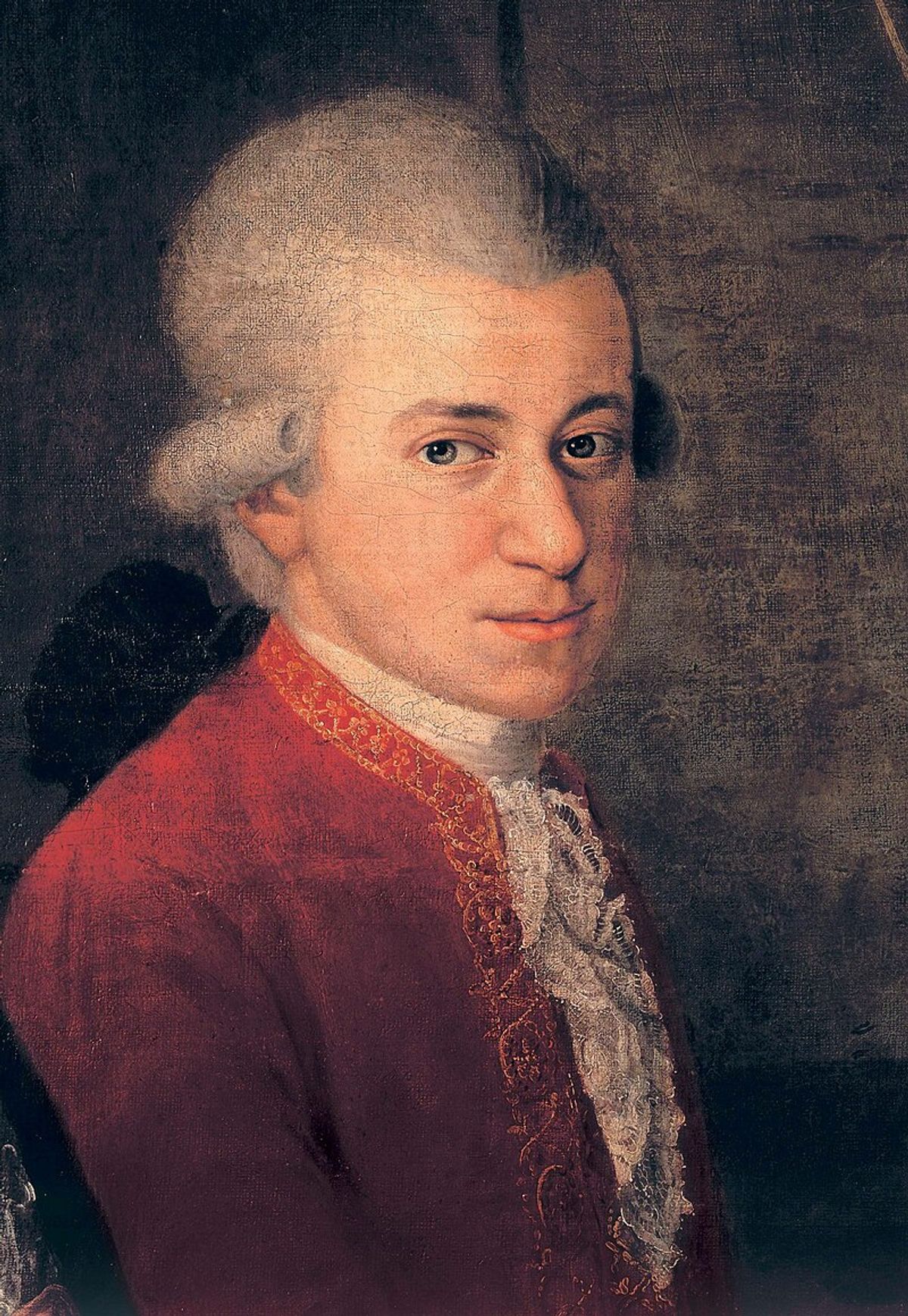
Mozart’s Sinfonia Concertante for Four Winds (K. 297b), associated with Paris in 1778 when he was 22, is best understood as a lost original known principally through contemporary correspondence and later reports.[1] It is therefore distinct from the spurious, extant concertante often performed under the same Köchel number (Anh. C 14.01), which survives in anonymous transmission and is treated as incorrectly assigned.[2]
Background and Context
In the spring of 1778, Wolfgang Amadeus Mozart (1756–1791) was in Paris—an ambitious, professionally difficult stop in his long search for stable employment—yet still alert to the city’s appetite for fashionable orchestral display.[1] In an April letter to his father, he describes a new sinfonia concertante intended for the Concert Spirituel and names the four featured soloists: flute (Johan Wendling), oboe (Friedrich Ramm), horn (Giovanni Punto), and bassoon (Georg Wenzl Ritter).[1] That lost Parisian work—the one meant for these players—is the focus of K. 297b as a historical object, even though it cannot be reconstructed in detail today.



As an Amazon Associate we earn from qualifying purchases.
The familiar “K. 297b” heard in many modern performances is a different matter: an extant, anonymous Sinfonia concertante in E♭ major for oboe, clarinet, horn, and bassoon (Anh. C 14.01), whose authenticity the Mozarteum catalogue explicitly labels “incorrectly assigned.”[2] Editorially, it is crucial not to conflate this surviving score with Mozart’s lost Paris composition.
Musical Character
Because Mozart’s original Paris work is lost, its movement plan, solo writing, and orchestral detail cannot be described from primary musical text. What can be said, however, is that the very choice of soloists (flute–oboe–horn–bassoon) points to the Paris taste for brilliant, conversational concertante writing: alternating display, paired dialogues (especially among the winds), and tuttis designed to frame the solo group rather than oppose it in strict concerto rivalry.[1]
By contrast, the spurious extant concertante (Anh. C 14.01) is transmitted as a complete three-movement work and is scored with solo oboe, clarinet, horn, and bassoon.[2] Its continued presence in the repertory can be useful as a window onto late-18th-century symphonie concertante style, but it should not be cited as firm evidence for the musical substance of Mozart’s lost 1778 score.
Place in the Catalog
Whatever its precise musical content, the lost K. 297b belongs to Mozart’s Paris period, close to the time of the “Paris” Symphony, K. 297/300a, and reflects his ongoing engagement with public, virtuoso orchestral genres for the French capital.[3]) In that sense, it stands as a tantalizing counterpart to the securely authenticated concertante tradition Mozart later fulfilled on a grander scale in the Sinfonia concertante for violin and viola, K. 364.[1]
[1] Wikipedia: overview of the lost Paris work, Mozart’s April 1778 letter naming Wendling/Ramm/Punto/Ritter, and the distinction between the lost original and later surviving version.
[2] Mozarteum (Köchel-Verzeichnis online): Anh. C 14.01 entry with status (“incorrectly assigned”), dating (Paris, 1778), key (E♭ major), and instrumentation of the extant spurious work.
[3] Wikipedia: Symphony No. 31 “Paris”, K. 297/300a—context for Mozart’s Paris stay in 1778 and the Concert Spirituel milieu.