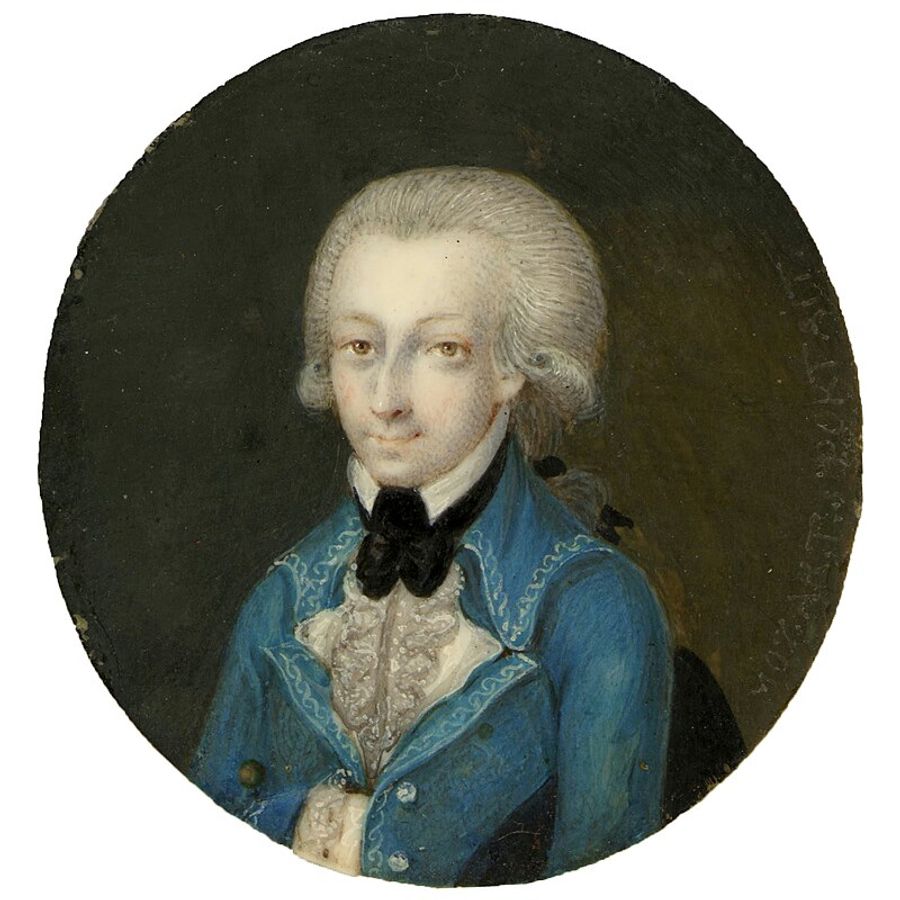
- Köchel Number
- K9 282 | K6 189g
- Genre
- Piano Music
- Form
- Piano Sonatas
- Key
- E Flat Major
- Date
- Early 1775
- Place
- Munich
- Age
- 19
Mozart’s Piano Sonata in E♭ major, K. 282 (1775) stands out in his early sonata set from Munich for an unusually slow, lyrical opening movement and a finale that favors elegant wit over bravura. Written when the composer was 19, it shows an operatic sense of melody brought into the intimate world of solo keyboard writing.
Background and Context
Mozart’s six “Munich” keyboard sonatas (K. 279–284) belong to a formative moment: late 1774 to early 1775, when he was in Munich for the production of his opera La finta giardiniera (premiered 13 January 1775) and was absorbing the city’s theatrical life at close range [1]. K. 282 is often presented as “Piano Sonata No. 4” in modern numbering, and in both scale and technical demands it looks like music intended as much for cultivated domestic performance as for professional display [2].
These sonatas also sit at an important keyboard crossroads. Mozart could still expect his music to be played on harpsichord, but the fortepiano’s dynamic shading—so congenial to singing lines and nuanced accompaniment—was increasingly central to high-end musical life. K. 282 rewards exactly that kind of touch: cantabile right-hand writing, softly articulated bass lines, and sudden shifts of affect that feel almost “staged,” as if characters were changing their tone mid-sentence.
Composition
Mozart composed Sonate in Es (K. 282) in Munich in 1775, during the same general period as the other sonatas of the set [3]. The Köchel catalogue’s entry confirms the work’s identity and its place within the standard critical tradition (including its presence in the Neue Mozart-Ausgabe) [3].
Although early Mozart sonatas are sometimes treated as “apprentice” works, K. 282 is securely attributed and complete—and, more importantly, it is idiosyncratic. Its design suggests that Mozart was already willing to bend inherited keyboard-sonata expectations if the musical rhetoric demanded it.
Form and Musical Character
K. 282 is in three movements [2]:
- I. Adagio (E♭ major)
- II. Menuetto I – Menuetto II – Menuetto I (with contrasting trio-like middle minuet)
- III. Allegro
The first movement is the sonata’s great surprise: an Adagio in the opening position. In the mid-1770s, a fast opening movement was the norm for keyboard sonatas; Mozart instead begins with an extended, vocal line whose phrasing often feels like an aria without words. For listeners, the effect is immediate: rather than “announcing” the sonata in public, extrovert terms, Mozart invites a more private, listening-in sensibility. The writing is richly expressive without being dense; it leaves space for the performer to shape breath-like pauses and to color repeats.
The second movement, a minuet-within-minuet design, reinforces the work’s courtly elegance while adding tonal contrast and a subtly theatrical sense of return (A–B–A). Instead of treating the minuet as merely conventional, Mozart uses it to refine character: outer grace contrasted with a more inward middle panel, then the familiar opening reappearing like a remembered scene.
The finale (Allegro) restores forward motion, but it does so with clarity and buoyancy rather than virtuoso storm. Its charm lies in conversational textures—quick exchanges between hands, neatly balanced phrases, and clean cadential punctuation—anticipating the classical poise that would later animate Mozart’s mature piano concertos.
Reception and Legacy
K. 282 has never had the universal cultural profile of Mozart’s late sonatas (such as K. 457), yet it has long been valued by pianists and teachers because it spotlights musical essentials: legato tone, phrase architecture, and tempo control—especially in the opening Adagio. Its “backward” dramatic plan (slow–dance–fast) is also a reminder that Mozart’s early keyboard music is not simply a prelude to later achievements; it is a laboratory where he tests how form can serve expression.
Today, the sonata’s distinctive opening movement is often the reason it deserves a second look. Heard in sequence with the neighboring Munich sonatas, K. 282 sounds like Mozart pausing the usual public rhetoric of the genre to begin, quietly and insistently, with song.
Sheet Music
Download and print sheet music for Piano Sonata No. 4 in E♭ major, K. 282 from Virtual Sheet Music®.