- Köchel Number
- K9 28 | K6 28
- Genre
- Chamber Music
- Form
- Violin Sonatas & Variations
- Key
- C Major
- Date
- February 1766
- Place
- The Hague
- Age
- 10
Mozart’s Sonata for Keyboard and Violin in C major, K. 28 was written in The Hague in early 1766, when he was just ten years old, and belongs to the Op. 4 set of six Hague sonatas (K. 26–31). Typical of these juvenilia, it treats the violin chiefly as a bright, responsive partner to a keyboard part that carries most of the musical argument.
Mozart's Life at the Time
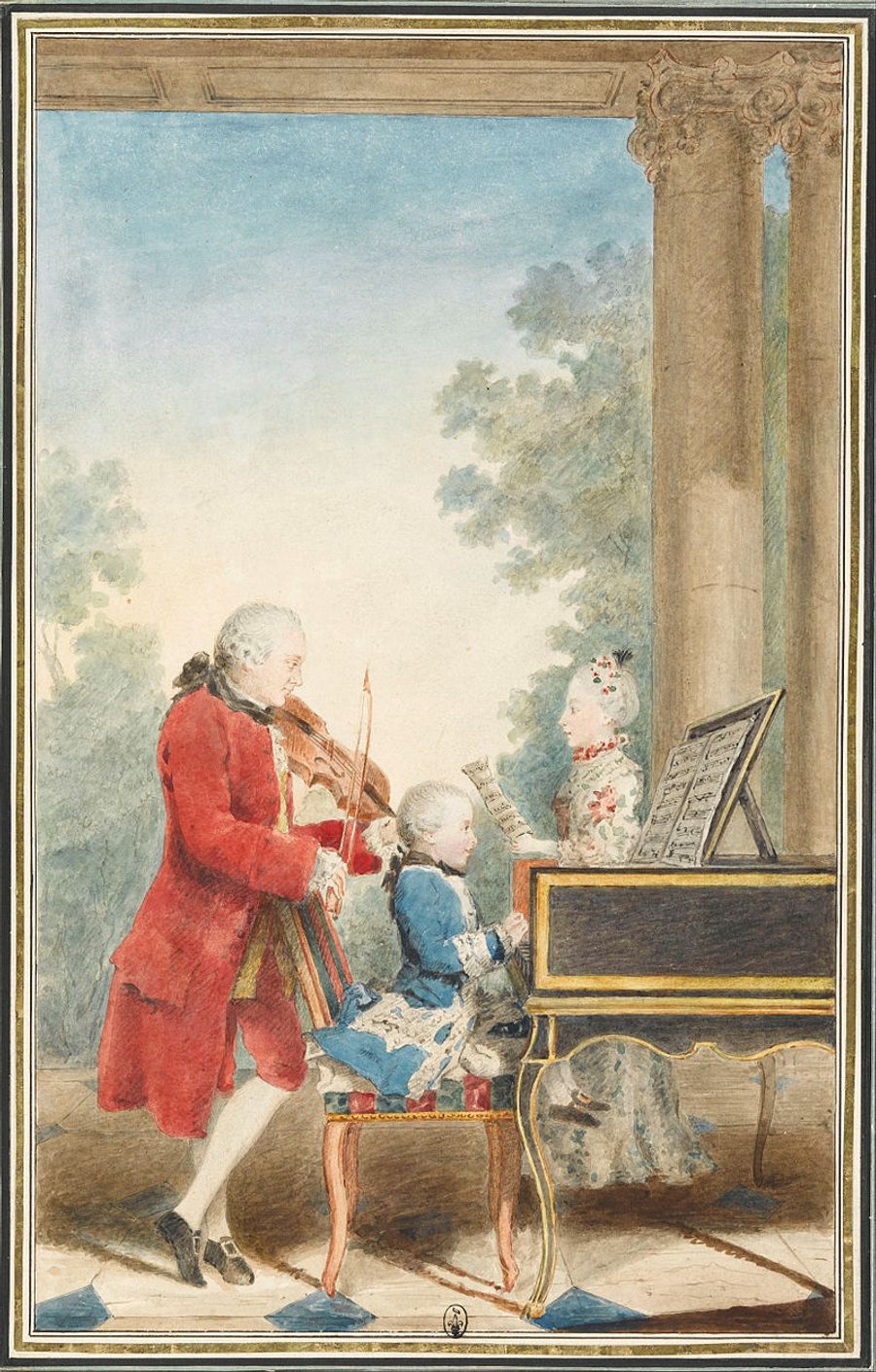
In early 1766, the Mozart family was in The Hague during their extended European tour, and the ten-year-old Wolfgang Amadeus Mozart (1756–1791) produced a compact set of keyboard-and-violin sonatas (K. 26–31) associated with that stay and later issued as Op. 4. The group was dedicated to Princess Caroline of Nassau-Weilburg for the birthday festivities of William V, Prince of Orange—courtly circumstances that help explain the works’ polished, audience-friendly tone.[1]
Musical Character
K. 28 is notated for keyboard with violin, a layout that reflects mid-18th-century practice: the keyboard typically states themes, drives modulations, and supplies much of the texture, while the violin often doubles, answers, or ornaments the melodic line.[1] Within its C-major frame, the sonata favors clear phrase structure (balanced, “spoken” four-bar units) and uncomplicated harmonic routes, projecting the graceful directness of a child composer writing for cultivated amateurs rather than for virtuoso display. Even so, the violin part occasionally steps forward with small imitative replies and registral sparkle—gestures that hint at Mozart’s quickening sense of dialogue, soon to become far more adventurous in his mature sonatas.[2]