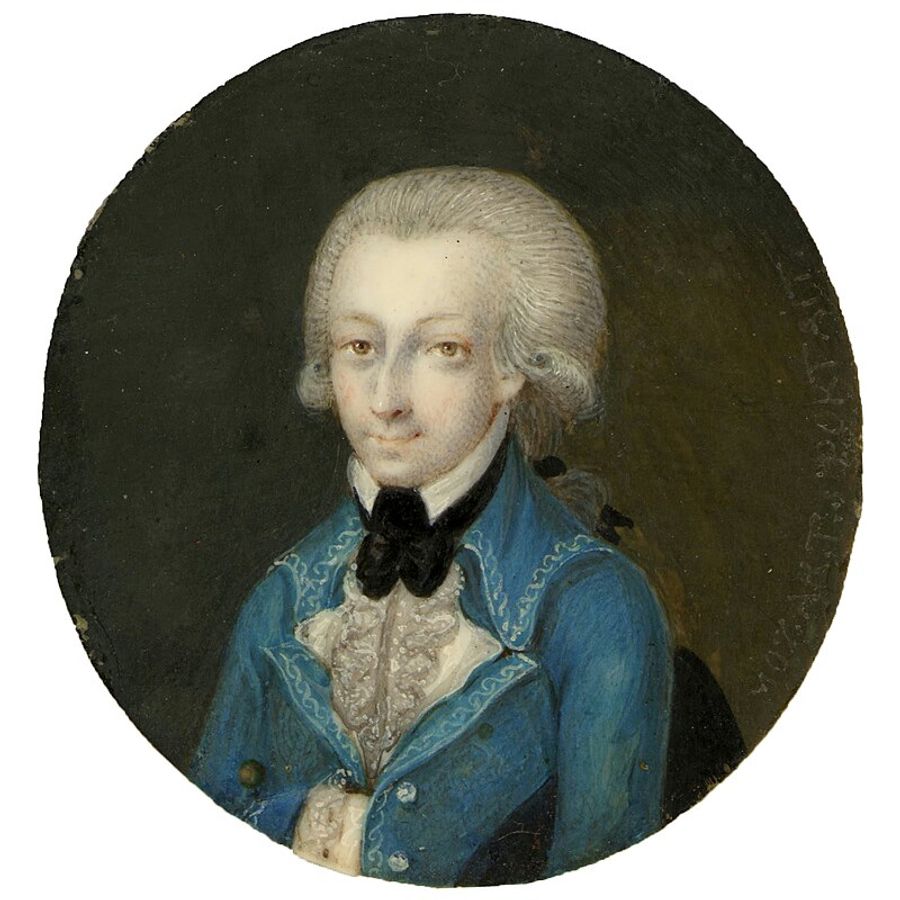
- Köchel Number
- K9 263 | K6 263
- Genre
- Sacred Music
- Form
- Church Sonatas
- Key
- C Major
- Date
- December 1776
- Place
- Salzburg
- Age
- 20
Mozart’s Church Sonata No. 12 in C major (K. 263) is a compact, single-movement epistle sonata—music written to fill a brief interval during Mass—composed in Salzburg in December 1776, when the composer was 20. Within a genre often treated as purely functional, K. 263 stands out for its festive C-major brilliance and its unusually expanded scoring, which brings a touch of cathedral “ceremonial” into a miniature form.
Background and Context
Mozart’s seventeen church sonatas (also called epistle sonatas, sonate da chiesa) belong to the practical musical life of Salzburg in the 1770s: short instrumental movements designed for the liturgy rather than the concert hall.[2] They were inserted during Solemn Mass between the Epistle and the Gospel, covering the time it took for the celebrant to move across the choir to proclaim the Gospel.[2] In other words, they had to be concise, immediately engaging, and adaptable to whatever forces were available.
K. 263 dates from December 1776, a period in which Mozart—still in the Salzburg court establishment—was writing abundantly across genres while refining an unmistakably personal, high-Classical syntax.[1] The church sonatas are sometimes overshadowed by the Mass settings and Vespers, yet they show Mozart thinking like a dramatist under strict time constraints: how to create a clear tonal journey, a sense of arrival, and a convincing cadence in only a few minutes.
Composition and Liturgical Function
Like its companions, Church Sonata No. 12 is a single-movement work (typically headed Allegro in modern catalogues), intended to function as a liturgical interlude rather than as an independent “sonata” in the later, multi-movement sense.[2] The work is securely attributed and transmitted in the modern critical tradition; the Neue Mozart-Ausgabe (NMA) includes it among the Sonatas for Organ and Orchestra, and IMSLP’s catalogue data reflects the standard scholarly dating to December 1776.[1]
What makes K. 263 especially noteworthy within the set is its scoring. While many Salzburg church sonatas use a lean “church quartet” texture (two violins, bass line, and organ), K. 263 is among the minority that enlarge the palette with festive instruments.[2] This slightly grander sound world helps explain why K. 263 can feel less like background “processional” music and more like a concentrated burst of public rejoicing—ideal for a C-major cathedral atmosphere.
Musical Structure
K. 263 is best understood as a miniature in brisk, affirmative C major—music that must make its point swiftly and clearly. Though compact, it draws on the rhetoric of sonata-allegro form (exposition, development, recapitulation) in a highly compressed, liturgy-friendly span: stable opening gestures, energetic sequential writing, and a decisive return that prepares an unambiguous cadence.
A distinctive feature is the relationship between organ and ensemble. In the church sonatas, Mozart sometimes treats the organ as chordal continuo, but in a select group—including K. 263—the organ part is more soloistic (obbligato), sharpening the dialogue and brightening the texture.[2] In practice, this encourages a performance style halfway between chamber music and concerto rhetoric: the organ’s figurations can articulate structure (arrivals, transitions, cadences) with a clarity that suits a resonant church.
Instrumentation (as typically catalogued)[1]
- Brass: 2 trumpets
- Strings: 2 violins; cello/bass line (often realized with cello and double bass)
- Keyboard: organ
This combination—C major plus trumpets—places the sonata closer in affect to Salzburg’s “ceremonial” church idiom than many of its more modest companions, yet Mozart’s gift is to keep the writing taut: festive without becoming ponderous, brilliant without exceeding the liturgical time-window.
Reception and Legacy
K. 263 has never occupied the public imagination like the great late Masses or the best-known instrumental masterpieces, partly because the epistle sonata itself is a situational genre—music attached to a specific liturgical moment that later fell out of everyday use.[2] Even so, these works have enjoyed a quiet modern revival in recordings and in historically informed cathedral programming, where their original function—brief, luminous, and architecturally “placed” within the service—can again be felt.
Heard today, Church Sonata No. 12 deserves attention not as a curiosity but as a lesson in Mozart’s craft under constraint. In a few concentrated minutes, he balances ceremonial color (trumpets in the “bright” key of C major) with formal focus and crisp harmonic direction. K. 263 reminds listeners that Salzburg’s liturgy was not merely a backdrop to Mozart’s “real” achievements: it was also a workshop in which he learned, week by week, how to make musical time speak—quickly, clearly, and memorably.