- Köchel Number
- K9 23 | K6 23
- Genre
- Opera & Stage Music
- Form
- Arias, Scenes, Ensembles & Choirs
- Key
- A Major
- Date
- October 1765 & January 1766
- Place
- The Hague
- Age
- 10
Mozart’s “Conservati fedele” (K. 23) is an Italian aria for soprano and strings, written in The Hague in January 1766 when he was ten. Modest in scale yet alert in musical rhetoric, it belongs to the family’s grand tour years, when vocal miniatures could serve as both study and display.
Mozart's Life at the Time
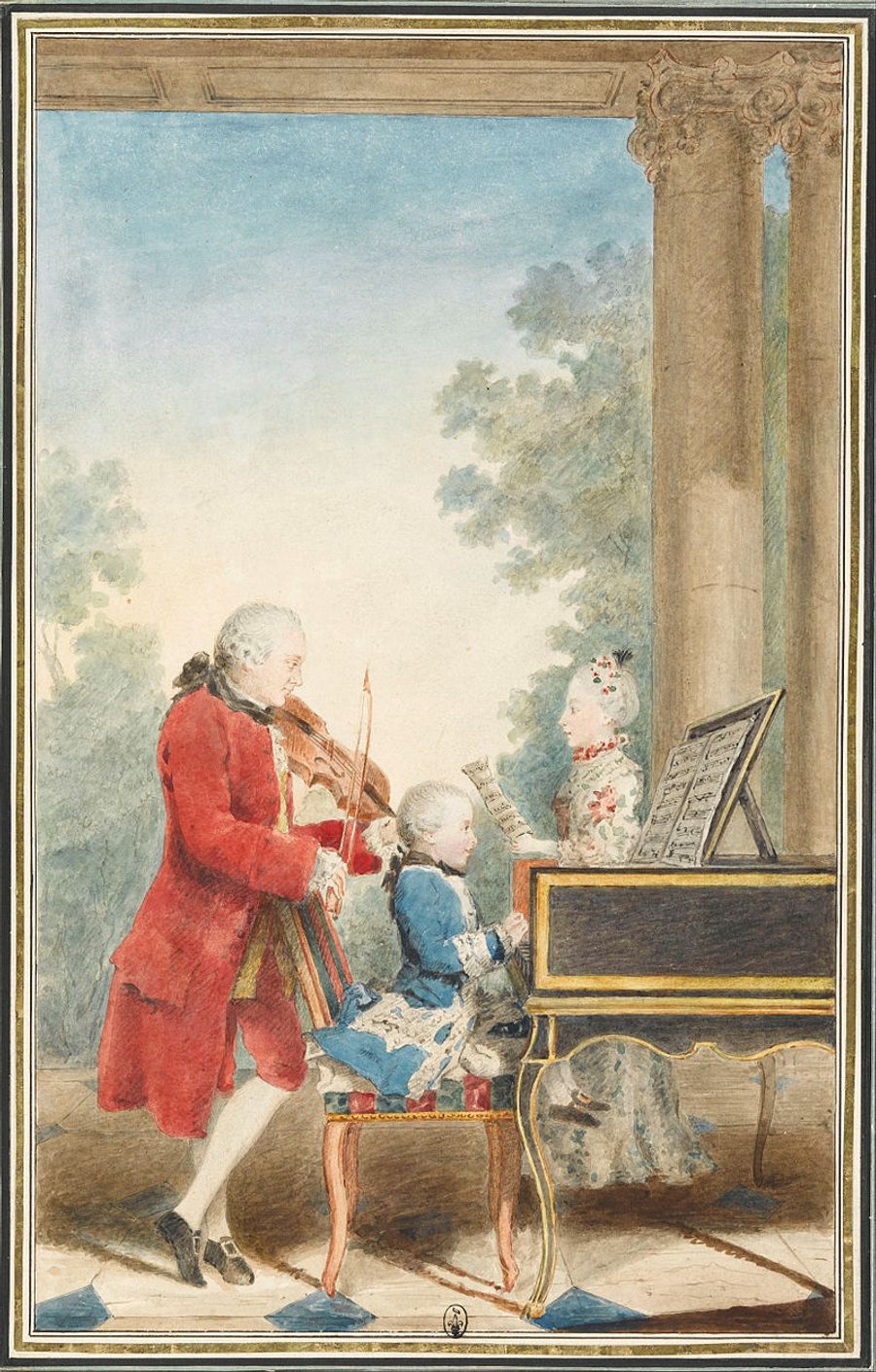
In early 1766, Wolfgang Amadeus Mozart (1756–1791) was still in The Hague as the family’s long western European tour drew to a close. At ten, he was already producing short vocal works alongside keyboard and orchestral pieces—music intended to be practical, performable, and flattering to a young composer’s reputation for quick mastery.[1]
Musical Character
“Conservati fedele” is set in A major for soprano with strings (violins I & II, viola, and bass line). The text is by Pietro Metastasio, and Mozart shapes it as a single, concise aria (about seven minutes in performance).[2] The vocal writing favors clear phrasing and balanced cadence points, with the orchestra functioning less as dramatic antagonist than as a supportive frame—an early instance of Mozart learning how Italian declamation, melody, and accompaniment can be made to speak together.[2]