Mozart’s “Symphony No. 52 in C” Finale (from *Il re pastore*, K. 208): Why an Opera Excerpt Became a ‘Symphony’
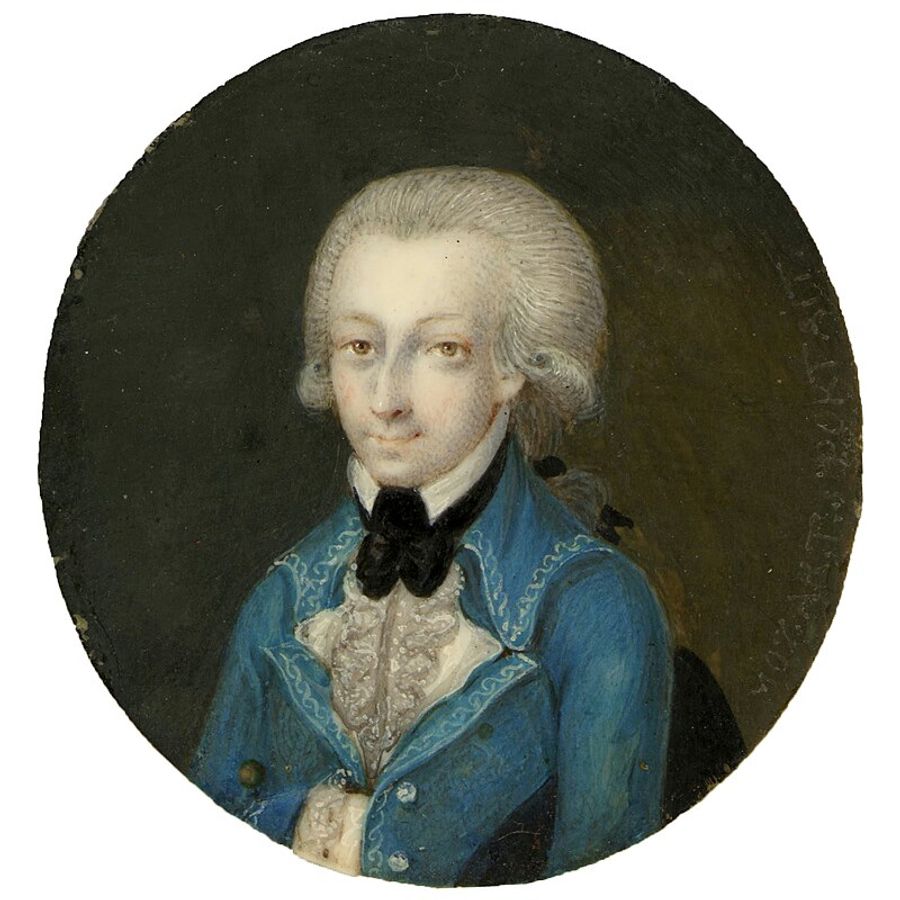
- Köchel Number
- K9 208 | K6 213c
- Genre
- Opera & Stage Music
- Form
- Operas & Singspiels
- Key
- C Major
- Date
- 23 April 1775–Late 1775
- Place
- Salzburg
- Age
- 19
The so‑called “Finale of Symphony No. 52 in C” is not, in origin, an independent Mozart symphony at all, but a later-assembled concert piece drawn from Il re pastore (K. 208), Mozart’s Salzburg serenata of 1775. The label persists because nineteenth-century editors and publishers circulated orchestral extracts and pasticcio “symphonies” built from overtures, arias, and added finales—music that, in Mozart’s case, can sound strikingly symphonic even when it began life in the theatre [1] [2] [3].
Background and Context
In April 1775 Wolfgang Amadeus Mozart (1756–1791) was nineteen, employed in Salzburg, and writing dramatic music for a specific courtly occasion: the visit of Archduke Maximilian Franz (youngest son of Empress Maria Theresa) to the city [2] [4]. The resulting work, Il re pastore (K. 208), is often described today as an opera, but contemporaries and later commentators have frequently classed it as a serenata—a festive, semi-dramatic genre that sits between opera seria and ceremonial cantata [2].
The curiosity addressed here—the “Finale of a Symphony No. 52 in C”—belongs to this same world of flexible genre boundaries. Mozart’s Salzburg theatre pieces were routinely mined for concert use: overtures could travel on their own, arias could be repurposed, and finales could be attached to create a three-movement “symphony” suitable for the concert hall. What makes this particular case compelling is that the resulting construct is musically persuasive: the theatre-derived movements project the brightness, harmonic confidence, and formal clarity listeners associate with Mozart’s symphonic manner—while retaining an operatic instinct for gesture and propulsion.
Composition and Commission
Il re pastore sets an Italian libretto by Pietro Metastasio, in a version prepared for Salzburg by Giambattista Varesco [2]. It was composed in Salzburg in 1775 for the Archbishop’s court festivities connected with the Archduke’s visit [2] [4].
The “Symphony No. 52” label stems from later publishing history, not from Mozart’s intentions. In a nineteenth-century numbering tradition that extended beyond the familiar 1–41 sequence, various unnumbered symphonies (and symphony-like assemblies) were assigned numbers in the 42–56 range; within that scheme, the composite C-major work built from Il re pastore material was dubbed “No. 52” [1]. In its commonly described form, the first movement is the opera’s overture, the second movement derives from the opening aria (with the vocal line replaced), and a separate C-major finale—catalogued as K. 102/213c—rounds the whole off [1].
For practical purposes, this article treats the “finale” in two overlapping senses that modern listeners encounter:
- as the concert finale (K. 102/213c) that completes the later three-movement assembly [1]
- and as the culminating burst of orchestral rhetoric that makes the assembled “symphony” feel complete, even though its core material is theatrical.
Libretto and Dramatic Structure
Metastasio’s Il re pastore is a pastoral drama of identity and virtue: a rightful ruler raised in simplicity must decide between private affection and public duty. The story’s ethical center—rule as enlightened responsibility rather than mere birthright—made it well suited to courtly celebration, especially when performed for a visiting Habsburg archduke [4].
As a two-act serenata, the work is more compact than a full-scale three-act opera seria. That compression shapes Mozart’s musical thinking: numbers tend to make their point quickly, with crisp contrasts of affect (affetti) and a premium on immediacy. Even in purely orchestral passages, one senses a dramatic hand—music that seems to “speak” and pivot, rather than simply develop abstractly.
Musical Structure and Key Numbers
Because the “Symphony No. 52” concept is an afterlife rather than an original genre, its fascination lies in how convincingly disparate functions can be made to cohere. The C-major frame is crucial here: for Mozart in Salzburg, C major often signals public brilliance—ceremonial trumpets, festive energy, and a strong architectural outline.
The orchestral frame: overture and its symphonic potential
The overture (often performed independently) opens with an assertive, courtly profile—music designed to raise the curtain, but also capable of standing on the concert platform [5]. In the assembled “symphony,” this becomes a first movement in all but name, projecting the forward drive and tonal clarity expected of a symphonic opening.
The ‘finale’ problem—and Mozart’s solution in later tradition
The decisive step toward a “symphony” is the provision of a true fast finale. In the modern description of “Symphony, K. 208+102,” that concluding movement is identified as K. 102/213c, composed separately and attached to the Il re pastore materials in later transmission [1].
What makes this finale worth attention is not merely catalog curiosity, but its function: it retrofits theatrical material into a three-movement concert arc that feels inevitable. The effect is a kind of Mozartian paradox: the finale sounds like a conventional symphonic necessity—quick, bright, and decisively cadential—yet it also carries the theatrical impulse toward a clean, crowd-pleasing finish.
Instrumentation (as heard in the later ‘symphony’ scoring)
Accounts of the assembled symphonic version typically give festive C-major forces:
- Winds: 2 flutes, 2 oboes
- Brass: 2 horns, 2 trumpets
- Strings: violins I & II, viola, cello, double bass [1]
Even when individual numbers within the opera may vary in active use of winds, the overall palette helps explain why this music so readily migrated into “symphonic” circulation: trumpets and a bright orchestral crown are exactly what nineteenth-century editors expected from a C-major public work.
Premiere and Reception
Il re pastore was first performed on 23 April 1775 in Salzburg at the Residenztheater (in the Archbishop’s palace complex), with the festivities for the archducal visit providing the immediate context [2] [3].
The later reception history that produced “Symphony No. 52” belongs to a different cultural moment: an era that sought to systematize Mozart’s symphonic output and to supply concert repertoire from theatrical sources. That the label survived says something important about the music itself. The finale’s success—its ability to close a concert work persuasively—shows how early Mozart, even at nineteen, could write in a musical language flexible enough to pass between stage and concert hall without losing its authority.
In sum, this “finale” deserves attention less as a footnote in symphony numbering than as a case study in Mozart’s compositional practicality and stylistic breadth. In 1775 Salzburg he was writing for a specific evening and a specific audience; yet the musical craftsmanship proved portable. The later “Symphony No. 52” may be an editorial mirage, but it is built from real Mozart—music whose theatrical origins only sharpen its brilliance when heard as concert rhetoric.
Sources
[1] Wikipedia: background on the composite “Symphony, K. 208+102” and the later ‘No. 52’ numbering; outlines movements and scoring.
[2] Wikipedia: Il re pastore (K. 208) — libretto (Metastasio/Varesco), commission context, and premiere date/location (23 April 1775, Salzburg).
[3] Mozarteum Foundation Salzburg event page: notes the 23 April 1775 Salzburg Residenztheater premiere and emphasizes the work’s orchestration and stature.
[4] Naxos booklet (SIGCD433) program notes: context of Archduke Maximilian Franz’s April 1775 visit and Colloredo’s commissions for the festivities.
[5] IMSLP work page for Il rè pastore, K. 208: access point for score materials and overture listings used to corroborate the work’s extant status and performance extracts.