String Quartet No. 11 in E♭ major, K. 171 — Mozart’s Viennese Experiment in Contrast
- Köchel Number
- K9 171 | K6 171
- Genre
- Chamber Music
- Form
- String Quartets & Wind Quartets
- Key
- E Flat Major
- Date
- August 1773
- Place
- Vienna
- Age
- 17
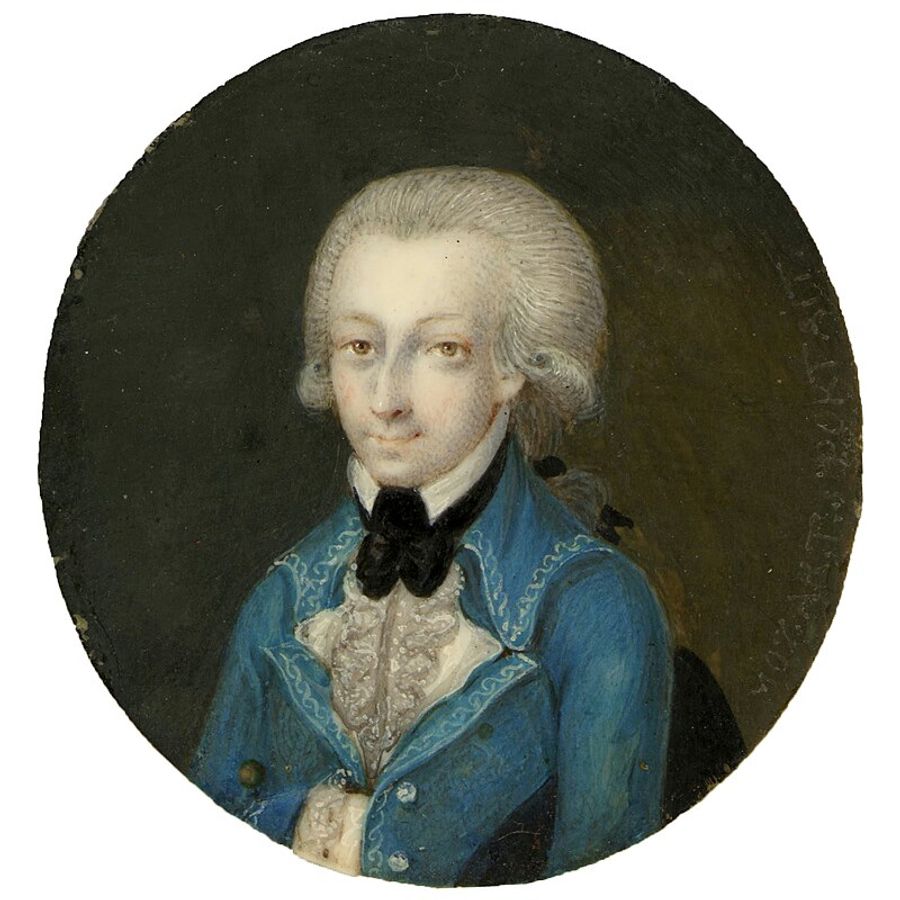
Mozart’s String Quartet No. 11 in E♭ major, K. 171 was composed in Vienna in August 1773, when he was just 17, and belongs to the set of six so-called “Viennese” quartets (K. 168–173). Compact, sharply characterized, and unexpectedly serious at its center, it shows the teenage Mozart testing how much drama and contrapuntal craft a “domestic” string quartet could contain.
Background and Context
Mozart’s String Quartet No. 11 in E♭ major, K. 171 stands in the middle of a decisive, if sometimes overlooked, moment in his chamber music: the late-summer 1773 Vienna visit that produced six quartets for two violins, viola, and cello (K. 168–173), later nicknamed the “Viennese” quartets.[1] In Vienna, the 17-year-old Mozart encountered a string-quartet culture already being reshaped by Joseph Haydn—music written not merely to accompany social life, but to sustain close listening and to reward performers with genuine conversation among the parts.[2]
K. 171 deserves attention because it is not “just” an apprentice work. It is a quartet that thinks in contrasts: slow introduction against brisk sonata motion; courtly dance against darker counterpoint; luminous E♭ major against a striking plunge into C minor. In a set often characterized as exploratory—Mozart learning the medium in public—it is one of the most strongly profiled individual statements.
Composition and Dedication
K. 171 was composed in Vienna in August 1773.[3] It is scored for the standard string-quartet forces:
- Strings: violins I & II, viola, violoncello[4]
No dedicatee is securely attached to the work, and (as with the rest of K. 168–173) the quartets seem to have circulated primarily in manuscript before later publication and broader dissemination.[1]
Form and Musical Character
K. 171 follows a four-movement plan whose proportions are economical but whose expressive range is unusually wide.[4]
- I. Adagio – Allegro assai – Adagio (E♭ major)
- II. Menuetto – Trio (E♭ major; Trio in A♭ major)
- III. Andante (C minor)
- IV. Allegro assai (E♭ major)[4]
I. Adagio – Allegro assai – Adagio
The opening is one of Mozart’s early quartet surprises: a slow Adagio introduction that frames the movement, returning at the end like a theatrical curtain.[4] The central Allegro assai proceeds in compact sonata-allegro form (exposition, development, recapitulation), but what lingers is not sheer length; it is the sense of rhetorical pacing—Mozart already understanding that a quartet can “speak” in paragraphs, not merely spin agreeable melodies.
II. Menuetto – Trio
The minuet keeps one foot in courtly convention, yet the writing is more conversational than purely accompaniment-driven. In the Trio (A♭ major), Mozart often redistributes interest among the inner voices, letting viola and second violin participate as real interlocutors rather than harmonic fill.[4] This is precisely the kind of ensemble thinking that, a decade later, would flower in the “Haydn” quartets.
III. Andante (C minor)
The emotional center is the third movement: an Andante in C minor—an arresting choice of key within an E♭-major quartet—that brings an unexpectedly inward, even austere tone.[4] Contemporary commentary on the Viennese quartets has often singled out Mozart’s contrapuntal ambitions here: the movement has been described as working “in the style of a double fugue,” signaling Mozart’s early fascination with learned technique as an expressive resource, not a classroom exercise.[5]
IV. Allegro assai
The finale returns to E♭ major with bright energy and quick-footed motivic play. Heard after the C-minor Andante, its wit and forward motion feel earned: less a polite closing than a deliberate restoration of daylight. The movement’s momentum also underlines one of K. 171’s best qualities—its ability to compress drama into a relatively small frame, a skill Mozart would refine continually across his chamber output.
Reception and Legacy
K. 171 has never competed in public fame with Mozart’s later quartets—especially the six dedicated to Haydn (K. 387, 421, 428, 458, 464, 465)—yet it matters historically because it documents Mozart’s early Vienna “workshop” with the quartet medium.[2]
For modern listeners, its appeal lies in proportion and profile: a slow introduction that gives the first movement unusual gravitas; a minuet that hints at true four-part conversation; and, most memorably, an Andante in C minor where a 17-year-old Mozart experiments with contrapuntal seriousness inside what many would have expected to be a lightweight genre. In short, K. 171 rewards attention as a portrait of Mozart not yet at the summit of quartet writing, but already thinking like a dramatist—and already learning how to make four string instruments argue, console, and agree.
Sources
[1] Wikipedia: overview of Mozart’s “Viennese Quartets” (K. 168–173), composed in Vienna in late 1773
[2] Cambridge University Press (book chapter PDF): discussion of Mozart’s early quartets and their stylistic context
[3] International Mozarteum Foundation (Köchel catalogue entry): Quartet in E♭ major, K. 171 — work details and dating
[4] IMSLP: String Quartet No. 11 in E♭ major, K. 171 — instrumentation and movement listing
[5] Christer Malmberg / The Compleat Mozart (Zaslaw-derived notes): remarks on the Viennese quartets and the C-minor Andante of K. 171 as contrapuntal (‘double fugue’ style)