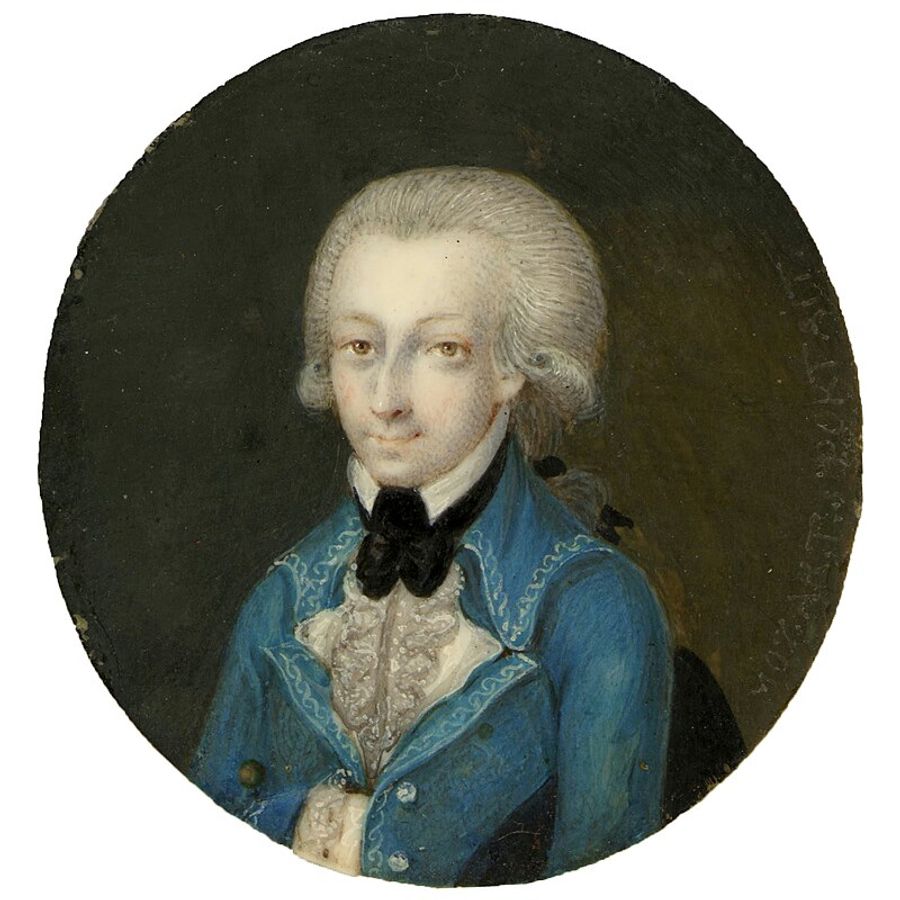
- Köchel Number
- K9 166g | K6 166g
- Genre
- Sacred Music
- Form
- Masses & Requiem
- Key
- D Major
- Date
- 1772
- Place
- Salzburg
- Age
- 17
Mozart’s Kyrie in D major (K. 166g) is a brief, unfinished setting of the Mass Ordinary, written in Salzburg around 1772–73, when he was about sixteen or seventeen. Preserved only in fragmentary form, it offers a small but telling glimpse of his Salzburg church style in the years just before the great run of missae breves for the cathedral.
What Is Known
Only a short fragment of a Kyrie in D major survives under the catalogue number K. 166g; it was evidently conceived as the opening movement of a Mass but breaks off before a complete design can be carried through.[1] The piece is transmitted and edited in the Neue Mozart-Ausgabe (Masses, Volume 6: single movements and fragments), where it occupies just two pages (pp. 29–30), underscoring how little material is extant.[1]
The dating is usually given as Salzburg, early 1770s; some commentary associated with the NMA and later discussions cite Wolfgang Plath’s handwriting-based view that the sketch may belong to the first half of 1772 (rather than mid-1773), though modern listings often continue to place it broadly in 1772–73.[2][3] In either case, it comes from the period when Mozart, still employed in Salzburg, was producing church music alongside symphonies, serenades, and other occasional works for the archiepiscopal city.[3]
Musical Content
What survives suggests a compact, practical Salzburg Kyrie: a choral-orchestral conception in which the traditional threefold structure (Kyrie–Christe–Kyrie) is at least implied, but not fully realized in the fragment as we have it.[2] Even in this curtailed state, the music points toward the clean, bright D-major ceremonial sound-world that Mozart would return to repeatedly in his Salzburg Mass writing—direct, syllabic choral declamation supported by straightforward harmonic motion, aimed at liturgical clarity rather than dramatic expansion.[2] In developmental terms, K. 166g stands as a workshop piece from Mozart’s late-adolescent Salzburg years: not a “torso” on the scale of his later unfinished sacred works, but a reminder that his mature ease in church forms was built on many such small-scale trials and drafts.[1]
Sources
[1] Digital Mozart Edition (Mozarteum): NMA I/1/1/6 (Masses, Vol. 6) table of contents listing “Kyrie in D (fragment) K. 166g” with page span (29–30).
[2] Neue Mozart-Ausgabe (NMA) Masses, Volume 6 — English preface/critical introduction PDF mentioning K. 166g and its fragmentary status and dating discussion (Plath).
[3] Wikipedia: List of compositions by Wolfgang Amadeus Mozart entry for “Kyrie in D major, K. 166g/Anh. 19 (fragment)” (broad dating reference).