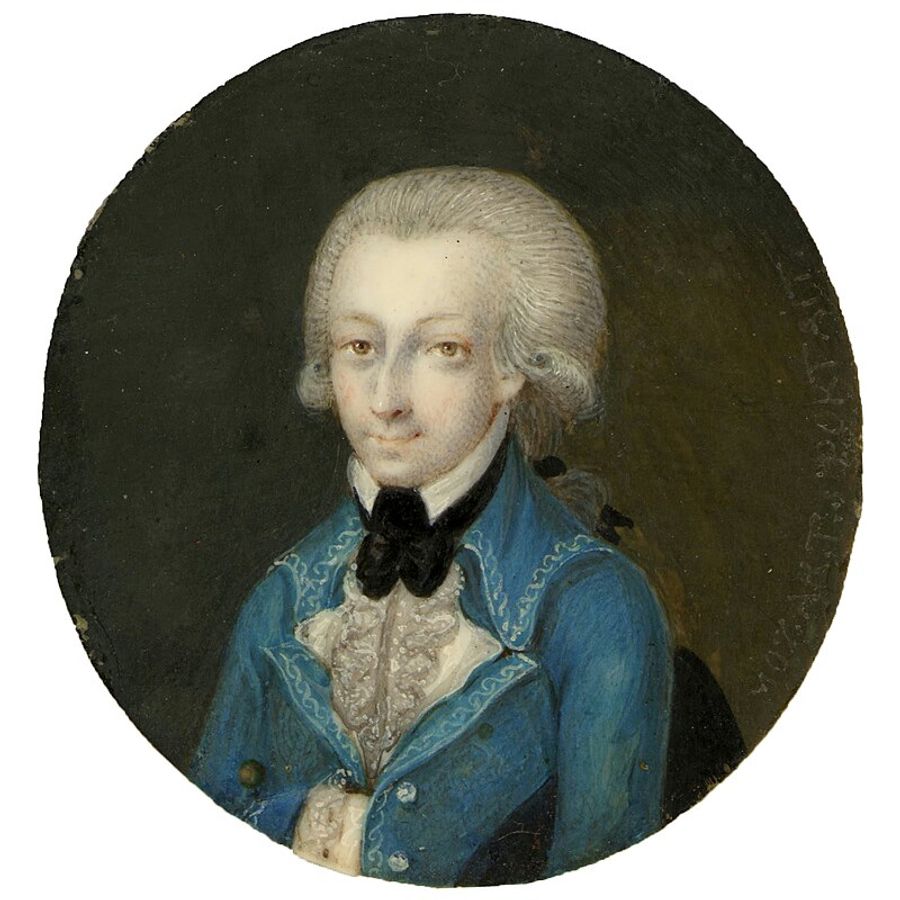
- Köchel Number
- K9 162 | K6 162
- Genre
- Orchestral Music
- Form
- Symphonies
- Key
- C Major
- Date
- 19 April 1773
- Place
- Salzburg
- Age
- 17
Mozart’s Symphony No. 22 in C major (K. 162) was written in Salzburg in 1773, when he was seventeen, and stands at a revealing crossroads between courtly function and growing symphonic ambition.[1] Compact in scale yet brightly “festive” in color through its trumpets, it rewards attention for the way it sharpens the rhetoric of the Italianate overture into something more symphonically purposeful.
Background and Context
In 1773 Wolfgang Amadé Mozart (1756–1791) was back in Salzburg, employed—often restlessly—within the musical establishment of the Prince-Archbishop’s court. The year is famous for the dramatic leap represented by the Symphony No. 25 in G minor, K. 183, but Mozart’s Salzburg symphonies of the same period are more various than that single “stormy” emblem suggests. Symphony No. 22 in C major, K. 162 belongs to this productive moment: music intended for practical performance conditions (court concerts and ceremonial occasions) yet shaped by a teenager who had already absorbed, through travel and study, the newest orchestral idioms.[1]
Although later concert life tends to prize the larger Viennese symphonies, works like K. 162 show Mozart learning to make an orchestra speak with economy: tight thematic profiles, clear cadential planning, and a knack for scoring that lends public brilliance without weighty forces. In that sense the symphony deserves attention not as a “minor” work, but as a concentrated document of style—how Mozart could turn the conventions of the early 1770s into music with a distinctive profile.
Composition and Premiere
The Köchel Catalogue (in its online presentation by the Internationale Stiftung Mozarteum) dates the work to Salzburg, with a range given as March 1773 to May 1775; the symphony survives and its authenticity is marked “verified.”[1] Many reference accounts, including IMSLP’s work page, place the composition more specifically in April 1773.[2]) In practical terms, that places K. 162 amid a cluster of Salzburg symphonies from spring and autumn 1773—works that chart Mozart’s rapid development in orchestral thought.
A specific premiere date and venue are not securely documented in the same way as for many later Viennese works. This is typical for Salzburg symphonies, which were often written for court use and could circulate in manuscript rather than through the public “event” of a single premiere.[1] What can be said with confidence is that the piece’s festive scoring (notably its trumpets) suits the court orchestra’s ceremonial and celebratory needs—music designed to sound well in the Prince-Archbishop’s spaces and to make an immediate effect.
Instrumentation
K. 162 calls for the classical Salzburg core—oboes, horns, and strings—augmented here by trumpets, a color that the Mozarteum’s Köchel entry associates generally with “especially festive” symphonies.[1] The instrumentation is given on the Köchel page in compact form and corroborated by IMSLP’s instrumentation listing.[1][2])
- Winds: 2 oboes
- Brass: 2 horns; 2 trumpets
- Strings: violins I & II, viola, cello & double bass
Notably absent are flutes, bassoons, and timpani. The resulting palette is lean but bright: oboes articulate melodic contours and reinforce tuttis; horns and trumpets supply brilliance and harmonic punch; strings provide the principal thematic and textural fabric.
Form and Musical Character
Despite its later numbering as “No. 22,” K. 162 is not a large, four-movement symphony in the mature sense. Its design is the compact three-movement plan closely related to the Italian sinfonia (opera overture) tradition: fast–slow–fast.[2]) That formal choice is itself historically revealing. In Salzburg of the early 1770s, Mozart could still write symphonies that retain overture-like concision while tightening musical argument within that smaller frame.
I. Allegro assai (C major)
The opening movement projects ceremonial energy without extended development. Its material is built for clarity: buoyant rhythms, bright C-major triadic gestures, and quick exchanges between strings and winds. Trumpets add a public sheen—less a “military” swagger than a courtly brilliance—helping Mozart to crown cadences and emphasize structural arrivals.[1]
In stylistic terms, K. 162 demonstrates a key Mozartian skill: writing music that can function as a confident opening in performance (immediate, direct, strongly profiled) while still giving each section enough contrast to prevent mere routine. Even within an overture-like span, the listener senses Mozart’s instinct for pacing—how quickly to move on, when to reiterate, and when to pivot harmonically for a fresh turn.
II. Andantino grazioso (slow movement)
The slow movement (titled Andantino grazioso on IMSLP’s listing) provides the symphony’s most intimate rhetoric.[2]) In many Salzburg symphonies, the slow movement becomes a testing ground for cantabile writing—Mozart’s ability to sustain melody with vocal poise. Here, the very idea of “grace” (grazioso) points toward a polished, courtly lyricism: balanced phrases, lightly ornamented turns, and textures that encourage transparency rather than density.
III. Presto assai (finale)
The finale (Presto assai) returns to the quick, brilliant manner expected of an overture-derived symphony, closing the work with compression and verve.[2]) If the first movement establishes public confidence, the finale supplies the decisive exit: rapid figuration, crisp cadences, and the kind of kinetic drive that can bring a court concert sequence to a clean conclusion. The festive brass again heightens the sense of occasion, clarifying the symphony’s outward-facing character.
Reception and Legacy
K. 162 is not among the Mozart symphonies that dominate modern concert programming, in part because later works—especially the late Viennese symphonies—set different expectations of scale and complexity. Yet the symphony’s survival, its secure attribution, and its preserved sources (including an autograph mentioned in the Mozarteum’s Köchel entry) underscore that it is a fully fledged work within Mozart’s Salzburg output, not a fragment or doubtful piece.[1]
Its legacy is therefore best understood as contextual rather than monumental. Heard alongside neighboring Salzburg symphonies of 1773, it clarifies how Mozart could alternate between differing symphonic “types”: not only the more dramatic, four-movement trajectories that point toward Vienna, but also the streamlined three-movement, overture-adjacent works tailored to immediate function. For listeners, K. 162 offers a particular pleasure: the sound of youthful mastery applied to a compact canvas—music that speaks quickly, shines brightly, and leaves no doubt that the seventeen-year-old Salzburg concertmaster already commanded the classical orchestra with ease.[1]