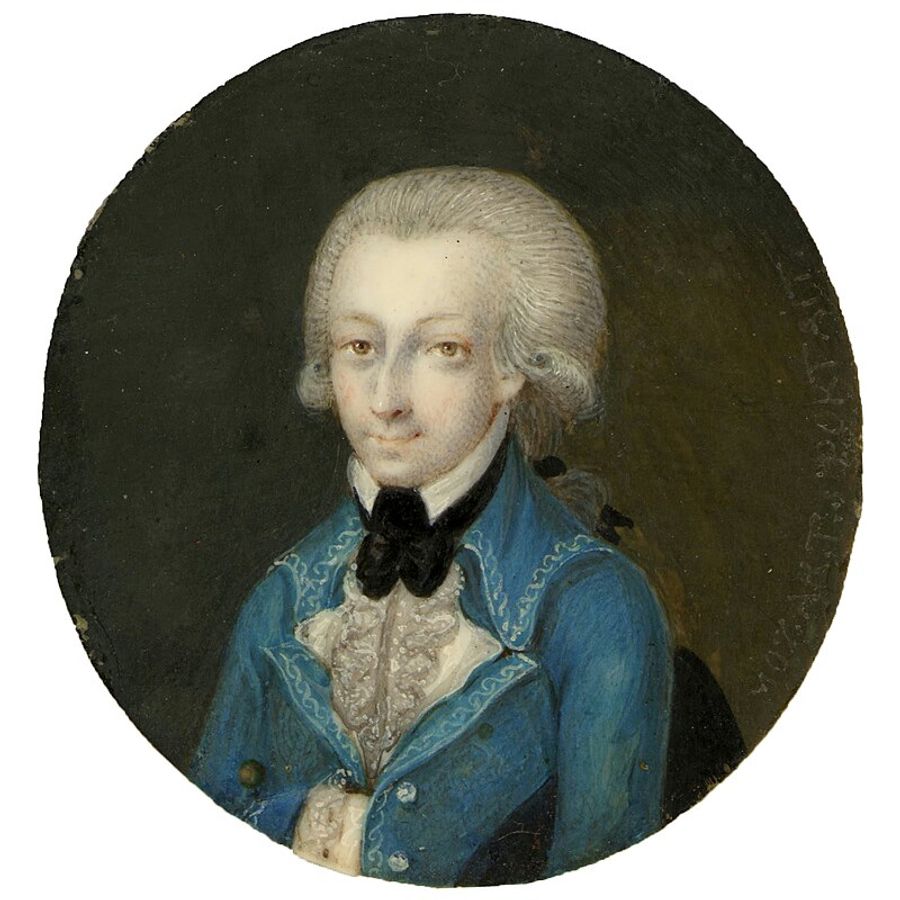
- Köchel Number
- K9 161 | K6
- Genre
- Orchestral Music
- Form
- Symphonies
- Key
- D Major
- Date
- 1772
- Place
- Salzburg
- Age
- 16
Mozart’s Symphony (Overture to Il sogno di Scipione) in D major (K. 161) belongs to the unusually fluid world of the early 1770s, when an opera overture could readily become a concert sinfonia. Assembled in Salzburg in 1772, when Mozart was 16, the work pairs an Italianate, stage-ready opening with a brilliantly quick finale (often associated with K. 163), offering a compact glimpse of his teenage orchestral imagination.
Background and Context
In Mozart’s Salzburg years of the early 1770s, the boundary between “symphony,” “overture,” and occasional theatre music was permeable. Court and civic events demanded music that could function both as ceremonial opener and as independent concert item—especially the three-movement sinfonia in the Italian overture tradition (sinfonia avanti l’opera). Within this practical culture, Mozart’s D-major K. 161 stands as a telling case: it is closely bound up with the overture to the allegorical serenata Il sogno di Scipione (K. 126), yet it also circulated (and still circulates) as a self-contained symphony.[1][2]
The year 1772 was prolific and stylistically exploratory for the 16-year-old composer. Even in works designed for immediate use, one hears Mozart testing how much drama, contrast, and orchestral sparkle he can compress into modest dimensions—an “overture-symphony” like K. 161 is, in that sense, less a minor offcut than a laboratory piece. More broadly, Mozart’s symphonies from around these Italian-journey years often move beyond mere lightweight curtain-raisers, showing increasing ambition in gesture, pacing, and orchestral rhetoric.[3]
Composition and Premiere
K. 161 is best understood not as a single-act of composition but as a compilation with a clear theatrical origin. The first two movements derive from the overture to Il sogno di Scipione (K. 126), a serenata linked with Salzburg court ceremony; later transmission commonly presents those movements together with a separate fast finale, K. 163, to create a three-movement symphony in Italian-overture layout (fast–slow–fast).[1][4]
Because the piece’s materials were repurposed across contexts (stage and concert), precise premiere circumstances are not always pinned to a single, well-documented date in the way they are for Mozart’s mature Vienna works. What is secure is the Salzburg nexus and the work’s function: music that could open an evening effectively, command attention quickly, and then yield to vocal numbers—or, equally, stand on its own in a concert sequence.[2][4]
Instrumentation
Surviving sources and modern cataloguing treat K. 161 as a compact early-classical orchestra score of the kind Mozart could count on in Salzburg.
- Winds: 2 oboes
- Brass: 2 horns (in D)
- Strings: violins I & II, viola
- Continuo/Lower strings: bass line (cello and double bass; bassoon and/or harpsichord may reinforce depending on local practice)
This scoring matters for how Mozart writes: with only oboes and horns beyond the strings, color must come from texture, articulation, and energetic rhythmic unison—precisely the arena in which the young Mozart already excels.[1][5]
Form and Musical Character
K. 161 follows the three-movement “Italian” pattern that had become a default operatic opener across much of Europe: a bright first movement designed to seize the room, a brief central slow movement offering contrast, and a finale that clears the stage with virtuoso speed.
I. Fast opening movement (D major)
The first movement behaves like theatre: it speaks in emphatic blocks, with brisk harmonic clarity and a preference for vivid, outward gesture over intricate development. The writing aims for immediacy—clean D-major brilliance, confident cadences, and orchestral punctuation from the horns.
What makes it more than functional, however, is Mozart’s feel for pacing. Even without the later symphony’s long-range architecture, he can energize a small span by rapid alternation of tutti statements and lighter responses, keeping the listener oriented while creating a sense of “plot” (tension, release, renewed push). In this respect, K. 161 foreshadows a lifelong Mozartian gift: dramatic rhetoric that does not require large forces.
II. Slow middle movement
The central movement supplies the expected contrast: a calmer, more lyrical space that—especially in strings-led scoring—can feel like an aria without words. In an overture context, such a movement momentarily suspends the bustle of the opening; in concert use, it provides the emotional reason the work can stand independently.
III. Presto finale (often linked with K. 163)
The finale, commonly attached to complete the symphony, is the work’s most overt display of kinetic wit. In quick meter and high tempo, Mozart leans into the “drive” of repeated-note energy and rapid string figuration, while winds and horns sharpen the outline. The overall effect is less grand than exhilarating—music that does not argue, but persuades by momentum.
Taken as a whole, the three movements illustrate why early Mozart overtures can be deceptively rewarding: they encapsulate theatrical instinct, melodic economy, and orchestral know-how in a concentrated form.
Reception and Legacy
K. 161 has lived a double life: historically tethered to Il sogno di Scipione and yet frequently encountered as a stand-alone symphony (sometimes with later, inconsistent numbering traditions applied in older editions and recordings).[1][4] That ambiguity is not a defect; it is, rather, a clue to how Mozart’s early orchestral music functioned—adaptable, pragmatic, and attentive to occasion.
Why does the piece deserve attention today? First, it offers a clear window into Mozart at 16: already fluent in the public musical language of his time, yet capable of raising its voltage with sharply judged transitions and a sure sense of orchestral impact. Second, it reminds modern listeners that “symphony” in the early 1770s could mean something closer to theatre than to the later concert-hall monument—and that Mozart’s mature symphonic voice did not appear suddenly in Vienna, but was cultivated in small, practical Salzburg forms like this one.[3]
Sources
[1] Wikipedia overview of Symphony in D major K. 161 (overture-derived origins; relationship to K. 126 and K. 163).
[2] International Mozarteum Foundation (KV) work entry for Il sogno di Scipione, K. 126 (context and overture listing).
[3] Encyclopaedia Britannica: Mozart’s Italian tours and Salzburg productivity around 1772 (context for symphonies and style).
[4] German Wikipedia article on Sinfonie KV 161 (two-movement overture expanded with a finale; numbering traditions).
[5] IMSLP page for Symphony in D major, K. 141a (K. 161/163) with available scores/parts (basic scoring reference).