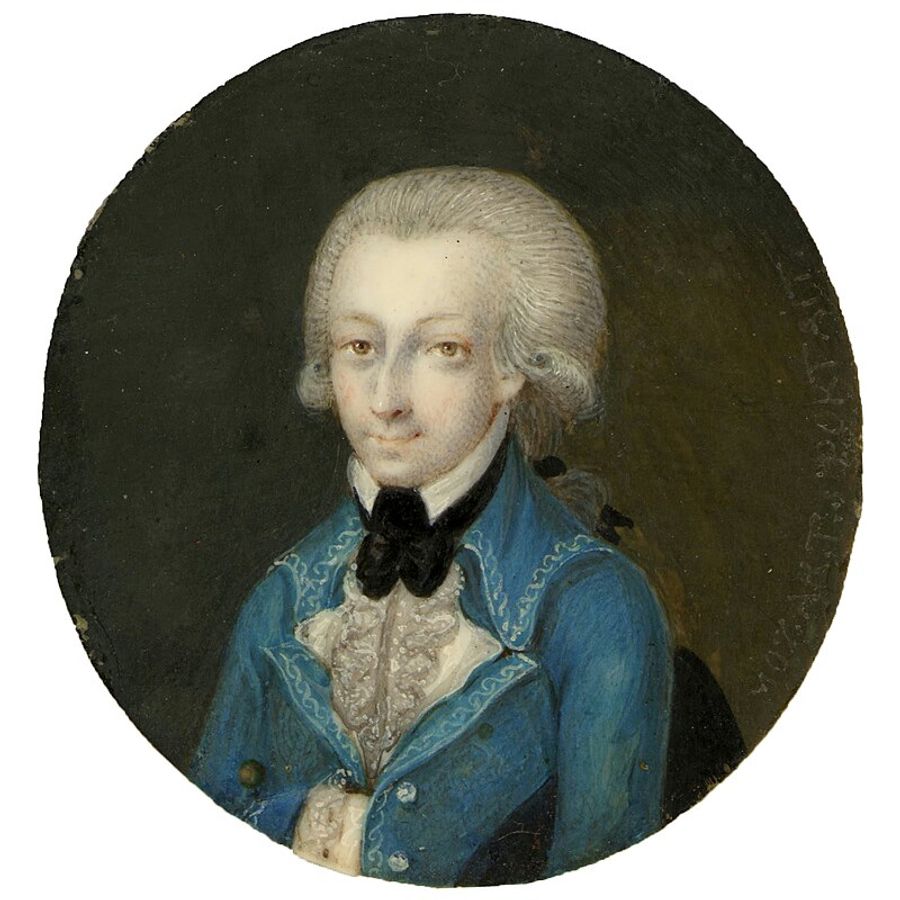
- Köchel Number
- K9 125 | K6 125
- Genre
- Sacred Music
- Form
- Litanies & Vespers
- Key
- B Flat Major
- Date
- March 1772
- Place
- Salzburg
- Age
- 16
Mozart’s Litaniae de venerabili altaris sacramento in B♭ major (K. 125), completed in March 1772 in Salzburg, is an early but fully accomplished example of his church music for soloists, choir, and orchestra.[1] Written when he was 16, it shows how quickly Salzburg’s liturgical “utility music” could become vivid, theatrical, and symphonically alert—without losing its devotional purpose.[4]
Background and Context
Mozart’s Salzburg sacred works were composed within a clearly defined institutional world: the court and cathedral environment of an archiepiscopal city where church music served regular worship, major feasts, and public devotions. Litanies occupied a special niche within this ecosystem—substantial, multi-sectional Latin texts that encouraged a responsive, almost processional rhetoric, and that could absorb operatic and concertante impulses without becoming “concert pieces” in the modern sense.[4]
K. 125 belongs to the group of Salzburg “litanies and vespers” works that Mozart composed intermittently from his teenage years through the later 1770s.[1] It is not juvenilia in any meaningful musical sense: the writing already assumes competent local forces, a trained chorus, and singers able to project soloistic lines in an ecclesiastical style that is, by turns, ceremonial and intimate.
Composition and Liturgical Function
The Litaniae de venerabili altaris sacramento is a litany “of the Blessed Sacrament,” devoted to the Eucharist. Mozart completed the work in Salzburg in March 1772.[1] The Köchel-Verzeichnis entry also records an early performance at Salzburg Cathedral (Dom) on 12 April 1772—useful evidence that the score was written for immediate liturgical use, not for private circulation.[1]
Scored for soloists, choir, and orchestra, K. 125 exemplifies Salzburg’s preference for bright, festive sonorities in public devotion. One widely reported scoring includes SATB soloists and SATB chorus with an orchestra of winds (including flutes and oboes), brass (horns and trumpets), timpani, strings, and organ continuo.[2][3] This is part of the work’s distinctiveness: Eucharistic devotion is presented not as private meditation alone, but as a communal, ceremonially “public” act.
Musical Structure
Like many litanies, K. 125 unfolds as a sequence of compact panels rather than a single large architectural span. A practical way to hear the piece is as a liturgical “cycle of affects”: each invocation is given a characteristic tempo, texture, and rhetorical profile, so that the long text remains intelligible and emotionally varied.
A commonly listed nine-part division is:[3]
- I. Kyrie
- II. Panis vivus
- III. Verbum caro factum
- IV. Hostia sancta
- V. Tremendum
- VI. Panis omnipotentia
- VII. Viaticum in Domino
- VIII. Pignus futuræ
- IX. Agnus Dei
What makes K. 125 especially worth attention is the way Mozart “modernizes” Salzburg church style from within. Rather than isolating “church music” as a separate, archaic language, he allows contemporary dramatic contrast and melodic immediacy to animate the devotional text—an approach that later becomes even more individual, but is already present here.[4] The result is music that can sound outwardly festive (B♭ major’s ceremonial profile is no accident) while still giving space for pleading, tenderness, and awe as the text turns from praise to supplication.
Reception and Legacy
K. 125 is not among Mozart’s most frequently excerpted sacred works, yet it survives complete and continues to circulate in modern choral-orchestral repertory through critical editions and performing materials.[1][2] Historically, its value lies in what it reveals about Mozart’s Salzburg apprenticeship at full strength: the ability to write efficiently for liturgical needs while shaping a compelling sequence of choral-and-solo tableaux.
In a broader view of his output, the piece stands as an early marker of a lifelong stylistic “porosity” between sacred and theatrical idioms. Even when the institutional constraints of Salzburg demanded brevity, clarity, and dependable forces, Mozart found room for sharply characterized sections and a sense of forward motion. Heard today, K. 125 offers a persuasive reminder that Mozart’s sacred music is not merely functional craft: it is one of the laboratories in which his mature classical language was refined—under the pressure of real services, real singers, and real deadlines.
Sources
[1] Mozarteum Foundation Salzburg, Köchel-Verzeichnis entry for KV 125 (dating; first performance; archival transmission notes).
[2] Bärenreiter (US) product page for the Urtext edition of K. 125 (edition information; original forces indicated for SATB choir and orchestra).
[3] Wikipedia (Italian) entry for K. 125 (movement list; commonly cited instrumentation overview).
[4] Christer Malmberg summary drawing on Zaslaw’s ‘The Compleat Mozart’ (context on Salzburg church music and Mozart’s litany style).