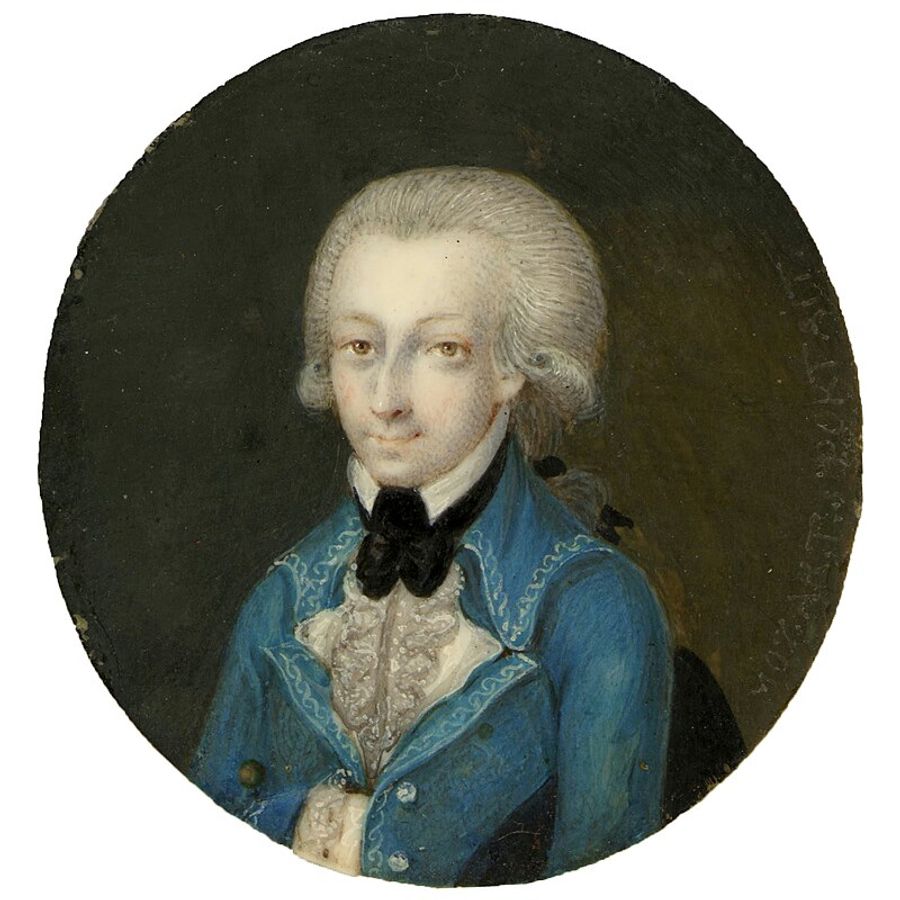
- Köchel Number
- K9 124 | K6 124
- Genre
- Orchestral Music
- Form
- Symphonies
- Key
- G Major
- Date
- 21 February 1772
- Place
- Salzburg
- Age
- 16
Mozart’s Symphony No. 15 in G major (K. 124) was completed in Salzburg on 21 February 1772, when the composer was just sixteen. Modest in scale but unusually purposeful in its four-movement design, it shows the young Mozart testing the symphony as a more “serious” public genre—especially in its energetic opening movement and brisk, tightly argued finale.[1]
Background and Context
In early 1772 Wolfgang Amadeus Mozart (1756–1791) was back in Salzburg after the third Italian journey (late 1771), again working under the constraints of the prince-archbishop’s court. The symphony in these years was typically written for practical court use—concerts, festive occasions, and institutional music-making—yet it was also becoming the main laboratory in which composers across Central Europe refined a new, high-contrast orchestral style.
Symphony No. 15, K. 124, belongs to the impressive run of Salzburg symphonies Mozart composed around 1772, a period in which his orchestral writing becomes more disciplined in phrase structure and more decisive about form. The piece is not a “child prodigy” curiosity: its four movements—fast, slow, minuet, fast—align it with the increasingly standard Classical symphony plan, and it already treats the finale as more than a perfunctory sprint to the finish.[1]
Composition and Premiere
The International Mozarteum Foundation’s Köchel-Verzeichnis entry gives a precise completion date and place: Salzburg, 21 February 1772.[1] That specificity is valuable, because the premieres of many Salzburg symphonies are not securely documented; K. 124 is typical in this regard. Modern reference summaries likewise focus on its Salzburg origin and early-1772 dating rather than a known first performance.[2]
Even without a documented premiere, K. 124 can be understood as written for the court’s available orchestra: a core string band reinforced by pairs of oboes and horns. This is “standard” only in retrospect; for Mozart it represents a dependable and flexible palette in which winds can alternate between doubling the strings, punctuating cadences, and stepping forward for brief conversational color.
Instrumentation
K. 124 is scored for the customary Salzburg orchestra of the period, as listed by the Köchel-Verzeichnis:[1]
- Winds: 2 oboes (ob1+ob2)
- Brass: 2 horns (cor1+cor2)
- Strings: violins I & II, viola, cello + double bass (basso)
Some performance traditions in early Mozart symphonies add a continuo keyboard or bassoon to reinforce the bass line when available, a practice reflected in reference listings and historical performance custom rather than being uniformly notated in every source.[3]
Form and Musical Character
Mozart’s Symphony No. 15 is in four movements, a layout confirmed by standard work catalogues and score repositories:[3]
- I. Allegro
- II. Andante
- III. Menuetto e Trio
- IV. Presto
I. Allegro
The first movement’s energy is immediate—brisk, bright G major rhetoric shaped by short motifs and clear cadential punctuation. While the movement works within the late-baroque/early-Classical overlap that Mozart inherited (where ritornello habits and emerging sonata-allegro form often coexist), the music’s momentum depends less on continuous sequence than on articulated “paragraphs” and contrasts of texture.
Especially telling is the handling of winds. The oboes do not merely thicken the string sound: they help define the profile of themes and transitions, giving the movement a public, outdoor brilliance—an aesthetic well suited to Salzburg’s courtly soundscape.
II. Andante
The slow movement offers the kind of cantabile moderation that Mozart often favored in these early symphonies: a lyrical line supported by unobtrusive accompaniment patterns. What makes K. 124 worth hearing here is not grand profundity but refinement—an instinct for vocal phrasing translated into orchestral terms. Wind colors, used sparingly, can read as moments of illumination rather than constant presence.
III. Menuetto e Trio
By 1772 the minuet was no longer an occasional add-on but a stable component of the symphony’s social identity—courtly, dance-derived, and structurally stabilizing. Mozart’s minuet writing in this period typically balances ceremonial sturdiness with quick-witted detail: symmetrical phrases, strong downbeats, and trio material that lightly reframes the texture.
IV. Presto
The finale is the movement that most strongly argues for K. 124’s stature within Mozart’s “moderately documented” early symphonies. Rather than serving as a mere closing flourish, the Presto presses forward with real compactness and purpose. In this respect the symphony participates in a broader 1770s trend: finales begin to carry more structural weight and to contribute decisively to a work’s overall character—a developmental step on the road toward Mozart’s later, more integrated symphonic thinking.
Reception and Legacy
K. 124 is not among Mozart’s repertory “brand-name” symphonies, and it rarely appears in standard concert seasons alongside the late trilogy (K. 543, 550, 551). Yet it has remained securely within the canon of authentic works—“verified” and extant in the Mozarteum catalogue—and it is readily accessible in modern editions and online score libraries.[1][3]
Its value today is twofold. First, it is a vivid document of Mozart at sixteen: not simply prolific, but already capable of shaping a four-movement symphony with clear theatrical timing—opening assertion, lyrical contrast, social dance, and a decisive sprint to the end. Second, it reminds listeners that Mozart’s symphonic mastery did not arrive suddenly in the 1780s; it was built through dozens of such Salzburg works, each modestly scaled yet cumulatively essential to the stylistic and formal confidence of his maturity.
Sources
[1] International Mozarteum Foundation, Köchel-Verzeichnis entry for KV 124 (dating, authenticity status, instrumentation).
[2] Wikipedia: Symphony No. 15 (Mozart) (overview and Salzburg/1772 context; secondary reference).
[3] IMSLP work page for Symphony No. 15 in G major, K. 124 (movement listing and reference details; access to score sources).