- Köchel Number
- K9 61h | K6
- Genre
- Orchestral Music
- Form
- Dances & Marches
- Key
- C Major
- Date
- 1770
- Place
- Salzburg
- Age
- 13
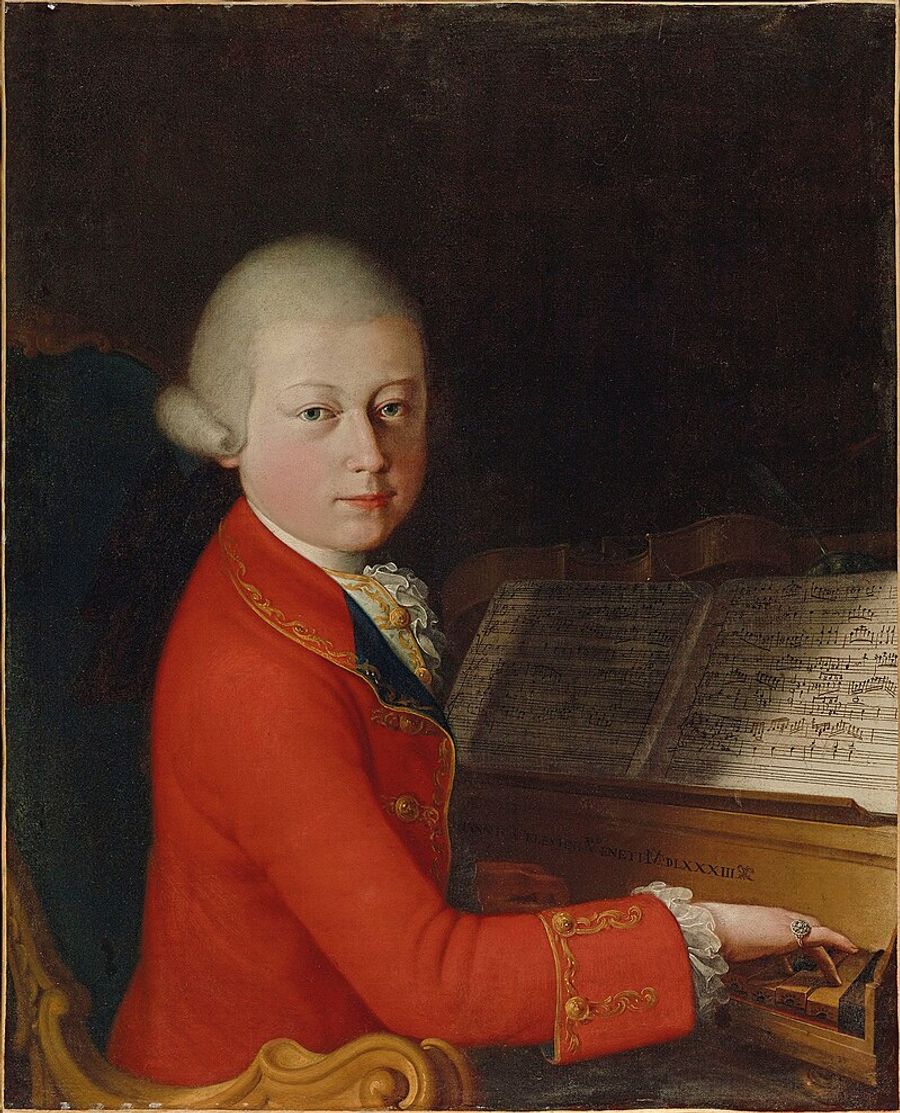
Mozart’s 6 Minuets for Orchestra (K. 061h) are a compact set of dance movements associated with Salzburg and traditionally dated to 1769, when the composer was 13. Preserved in later copies and long treated as minor occasional music, they nonetheless illuminate the quick, practical craft behind Mozart’s earliest orchestral writing.
Mozart's Life at the Time
In 1769, Wolfgang Amadeus Mozart (1756–1791) was living in Salzburg under the close guidance of his father, Leopold Mozart, and was writing steadily for the city’s ecclesiastical and courtly musical life. The 6 Minuets for Orchestra (K. 061h) belong to this everyday repertory—short, functional pieces designed for social dancing and festive occasions rather than the concert hall.[2]
Musical Character
K. 061h comprises six brief minuets—each essentially a self-contained dance number, sometimes discussed as “with or without trio” in reference lists.[4] The scoring transmitted with the set is that of a small Salzburg orchestra: pairs of winds and brass with strings (notably given as 2 oboes (or 2 flutes), 2 horns (or 2 trumpets), and strings), suggesting music that can be adapted to the players available.[1]
On the page, these minuets typically proceed in balanced, eight-bar phrases with clear cadences, the melody carried by the upper strings and reinforced (or lightly colored) by winds. Harmonically they remain straightforward—suited to dancers’ ears—yet they train the young Mozart’s sense of proportion, orchestral balance, and the art of making a memorable tune within tight limits.
Sources
[1] IMSLP work page for 6 Minuets, K. 61h (lists instrumentation; links to NMA score scan).
[2] Wikipedia: Köchel catalogue (entry listing K. 61h as “6 Minuets,” dated 1769, Salzburg).
[3] Wikipedia: Symphony, K. 135+61h (background on the doubtful transmission of K. 61h and dating proposals in secondary literature).
[4] FlaminioOnline Mozart catalogue list (brief genre note: “6 Minuetti con o senza trio per orchestra”).